Timor Leste's Earliest Pots: Unearthing Pottery's Southeast Asian Arrival
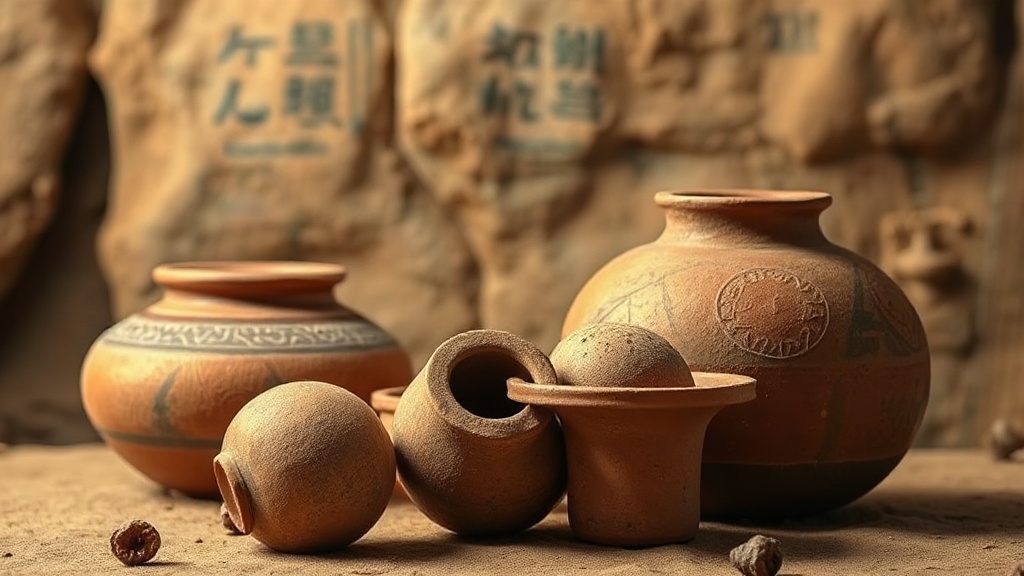
Archaeological finds in Timor Leste offer a glimpse into early pottery use in Southeast Asia, shedding light on ancient settlement and technology.
Indian history, plainly written.
Archaeological finds in Timor Leste offer a glimpse into early pottery use in Southeast Asia, shedding light on ancient settlement and technology.
The Tangut language, known from its unique script, offers a compelling case study for understanding how historical linguistics reconstructs language families and their relationships.
This article examines the recurring fish motif in Indus Valley Civilization artifacts, exploring its potential significance through linguistic and archaeological evidence, while carefully framing speculative interpretations.
Archaeology in India navigates a complex landscape where local needs, national narratives, and scientific inquiry intersect. This exploration examines how these dynamics shape fieldwork, interpretation, and the very understanding of India's past.
A recent hypothesis proposes deciphering the Indus script through Sindhi Prakrit. This exploration examines the methodology and its place in the enduring scholarly discussion.
Archaeogeneticists can now identify population shifts through ancient DNA. This method, exemplified by the Paris Basin, offers new perspectives on long-standing debates in South Asian history.
A new Pacific coast ossuary study shows how geneticists infer kinship from degraded bone—and why 'family burial' headlines often overreach on migration claims.
New archaeological insights are prompting a reassessment of the Naga's role in Vedic traditions, exploring potential links between serpent imagery and early South Asian celestial observation.
Examining early Sanskrit texts shows 'karma' shifted from ritual action to a principle of ethical consequence, a transformation rooted in linguistic shifts and philosophical development.
Examining loanwords in ancient Indian maritime texts reveals a complex linguistic history, pointing to extensive trade and cultural exchanges with Southeast Asia and beyond.
Kushana copper coins reveal imperial ambition, religious fusion, and trade connections through their imagery and inscriptions, offering tangible proof of rule and commerce across ancient lands.
New ancient DNA studies illuminate South Asian population history, revealing complex migration and admixture. Findings integrate genetic data with traditional evidence to refine our understanding of the region's past.