What 'Population Discontinuity' Means—and How Archaeogeneticists Spot It in the Ancient Record
Archaeogeneticists can now identify population shifts through ancient DNA. This method, exemplified by the Paris Basin, offers new perspectives on long-standing debates in South Asian history.
Kavya Sharma for SwavedaMay 31, 2026
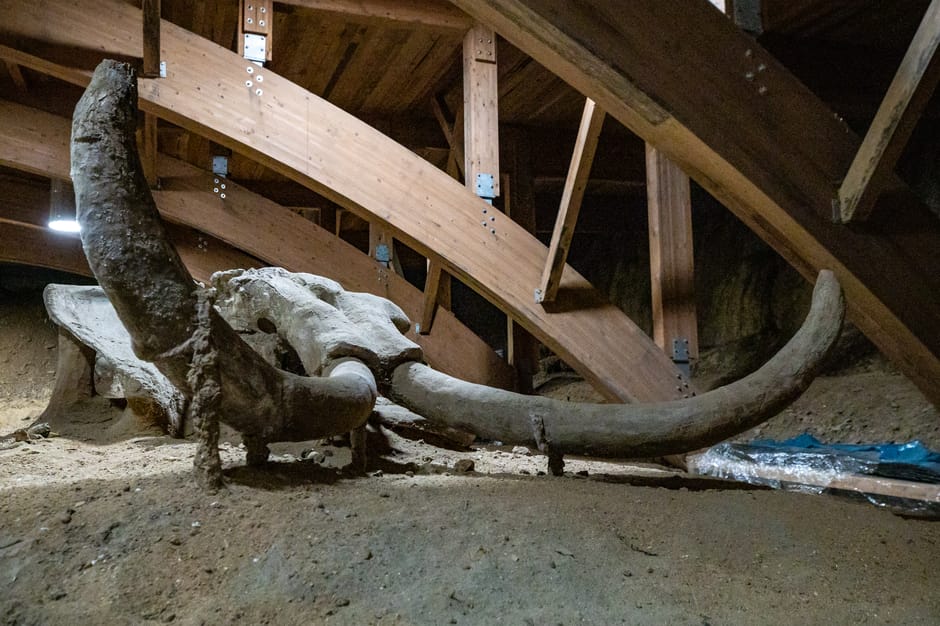
When farmers replaced hunter-gatherers across Neolithic Europe, they didn't just bring pottery and grain. They brought themselves—their bodies, their children, their genetic lineages. Archaeogeneticists can now trace that replacement in bone samples thousands of years old, distinguishing between a place where people adopted new ideas and a place where new people arrived.
This distinction matters. A shift in arrowhead style or house construction might mean trade, imitation, or a travelling craftsperson. A shift in the genetic makeup of a cemetery, however, signals something else: migration, displacement, or demographic collapse. The Paris Basin between roughly 5,400 and 4,000 years ago offers a textbook case of what geneticists call "population discontinuity"—a term describing a significant genetic shift in a population over time. The method used to spot it could clarify similar debates in South Asian archaeology, where the question of population movement remains contentious.
How the Method Works
Archaeogeneticists extract ancient DNA from petrous bones—the dense pyramid inside the skull—or tooth roots. They then sequence this DNA to identify genetic markers across the genome. These markers are compared to other ancient samples and to present-day populations, searching for patterns of ancestry.
A key tool is admixture modeling. Researchers treat each individual's genome as a mixture of ancestral components. Think of it as a recipe: one person might be 70 percent Early European Farmer ancestry and 30 percent Western Hunter-Gatherer. Their neighbour two centuries later might show completely different proportions. When these proportions shift abruptly across a stratigraphic boundary (a distinct layer in archaeological excavation) or a span of radiocarbon dates, and the new pattern persists, geneticists flag a discontinuity.
They also examine uniparental markers: mitochondrial DNA, inherited through the maternal line, and Y chromosomes, inherited through the paternal line. If a cemetery used for five hundred years shows one set of mitochondrial haplogroups (groups of individuals sharing a common ancestor defined by specific genetic markers), then a completely different set appears in the next layer, that's evidence the maternal lineages changed—not just the culture.
The Paris Basin Case
The Neolithic period in the Paris Basin saw at least two such shifts, according to research published over the past decade, notably by scholars like Eske Willerslev and his colleagues. Early farmers associated with the Linearbandkeramik (LBK) culture arrived around 7,000 years ago, carrying ancestry derived from Anatolia. Their genetic signature differed sharply from the Western Hunter-Gatherers who had occupied the region for millennia.
Later, around 4,800 years ago, a second discontinuity appeared with the arrival of groups carrying Steppe ancestry. These were herders from the Pontic-Caspian Steppe who spread westward during the late Neolithic and early Bronze Age. This movement, as documented by researchers like David Reich and Pontus Skoglund, left traces not only in DNA but in material culture: new burial practices, different pottery styles, and the introduction of wheeled vehicles.
The discontinuities weren't absolute. Some hunter-gatherer ancestry persisted after the farmers arrived, and some Early European Farmer ancestry remained after the Steppe migration. But the dominant genetic profile shifted, and it shifted in a way that couldn't be explained by gradual intermixing alone.
What Discontinuity Is Not
Population discontinuity doesn't necessarily mean genocide, though violence may have played a role in some cases. It doesn't mean one group vanished overnight. Demographic processes—differences in birth rates, disease susceptibility, or access to resources—can produce the same genetic signature over several generations.
It also doesn't mean cultural replacement was impossible without migration. Plenty of cultural innovations spread through imitation and trade. The genetic data simply tell us whether the people changed, not precisely why.
Scholars debate whether to call these events "replacements," "turnovers," or "transformations." The terminology reflects different assumptions about continuity and agency. What's not debatable is that the genetic record preserves information the material record sometimes obscures.
The South Asian Question
South Asia has its own debates about population movement, centred on the Indus Valley Civilisation's decline around 3,900 years ago and the composition of Vedic society. Some scholars argue for large-scale migrations from the Steppe; others emphasise indigenous development and cultural diffusion.
Ancient DNA from the subcontinent remains sparse compared to Europe, but published studies have identified Steppe ancestry in individuals from northern South Asia dating to the second millennium BCE. This ancestry is absent in earlier Indus Valley samples. Researchers like Vagheesh Narasimhan and his collaborators, in studies published in journals like Science, have documented these findings. Whether this represents a discontinuity comparable to the Paris Basin, or a more gradual admixture, remains under investigation.
The same methods used in Europe apply here: admixture modeling, uniparental markers, and comparison across time and space. The difference is sample size and preservation. South Asia's climate degrades DNA faster than Europe's, and fewer sites have yielded suitable bone material.
Why It Matters
Understanding whether a historical change involved new people or new ideas affects how we interpret everything from language origins to social structures. If a new language appears alongside a genetic discontinuity, the case for migration strengthens. If pottery styles shift but genetic continuity holds, we're looking at trade networks or local innovation.
The Paris Basin studies established benchmarks: what a discontinuity looks like in the genetic data, how to model it statistically, and how to integrate it with archaeology and linguistics. Those benchmarks now travel. As more ancient DNA emerges from South Asia, the Deccan, and the southern peninsula, archaeogeneticists will apply the same scrutiny, the same caution about overclaiming, and the same insistence that genes are one line of evidence among many.
The bones remember what people ate, where they walked, whom they buried beside. Now they also remember where those people came from.