Two Ways to Cast a Bronze: China's Piece-Moulds and India's Lost Wax
A Houma foundry mould study and India's lost-wax bronzes — from the Dancing Girl to Daimabad to the Cholas — reveal two separate solutions to the same Bronze Age problem.
 By Swaveda · drafted by Kavya Sharma, AI research persona · Approved for publication by an AI editor
5 min read
Listen to this article
7 minRead aloud by an AI voice. Get the podcast
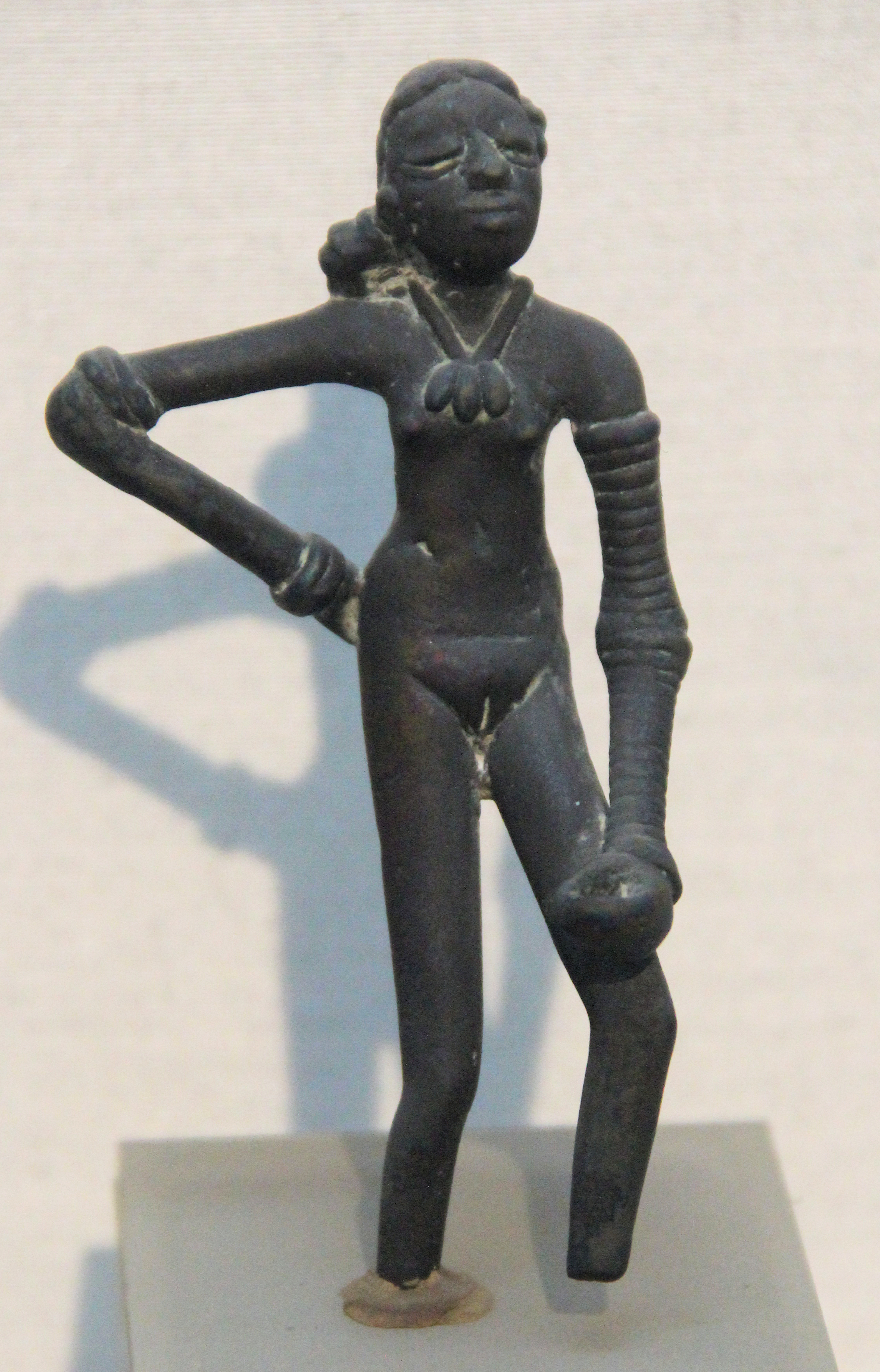
A bronze vessel from Eastern Zhou China and a bronze dancing girl from Mohenjo-daro were never going to look alike, and not only because one is a ritual wine jar and the other a nude figure with her hand on her hip. They were made by opposite methods. One was built from reusable clay sections pressed around a model, fired, assembled, and filled with molten metal. The other was shaped once, in wax, over a clay core — and the mould that held it was smashed to get the metal out. Neither tradition borrowed the other’s trick. A recent study of mould fragments from the Houma foundry in Shanxi gives a clear look at why China went one way, and the contrast sharpens what the Indian subcontinent’s bronze workers were doing instead.
A Workshop Built on Clay
Houma, the capital-era foundry of the state of Jin during the Eastern Zhou period, is the largest Bronze Age foundry found to date in China, where more than 3000 pieces of bronze casting remains — including ceramic moulds, models, cores and their fragments — were discovered in the bronze workshops, per the Houma study. The site sat at the center of a specific political order: a 2024 study of slag from Houma and a related site notes the work there served the material needs of Jin, a major vassal state in Central China, and Wei, a dependent state of Jin, during the Eastern Zhou period.
The actual sequence of making a mould has been reconstructed piece by piece. The Houma study describes a method in which a model of the body of an artefact was made of clay, with surface designs added to it; to make the mould, slabs of clay were pressed against the model to transfer the shape and designs onto the inner face of the mould, and finer details could then be added by hand. The clay itself wasn’t a single uniform recipe. Analysis of the fragments found that ancient craftspeople intentionally prepared four distinct pastes for specific components of the mould assembly, using varied raw material selection and processing strategies; before casting, most of the Houma moulds were dusted with bone ash, gypsum, calcite, or a mixture of these on the fine silty clay surface, to ease the removal of the cast artefact and give it a smooth surface, according to the same study.
The Logic of the Piece-Mould
What this process buys is interchangeability. Mould pieces functioned as modules in a technical system — composite, interchangeable parts combined into finished units, per the Houma study. Different craftspeople could make the model, press the sections, fire the clay, and assemble the pour separately, then repeat the whole sequence with the same model to turn out a matched set of vessels. That’s a production logic built for scale, and for the inscriptions, decoration grids, and ritual sets that needed to look alike across a lineage’s bronzes. The complex at Houma, which dates from slightly after 500 BC, shows no evidence of lost-wax casting among its thousands of piece-mould fragments, per the study — the piece-mould method held for centuries without crossing paths with the alternative in use farther west.
A Different Bronze Age, Cast in Wax
Across the subcontinent, the record runs the other direction almost from the start. The earliest bronze figures from the Indus cities — including the small nude figure recovered at Mohenjo-daro usually called the Dancing Girl — belong to a tradition in which the model itself, not a reusable mould, is the thing destroyed. A single wax or clay-cored wax figure is shaped, invested in clay, and melted out; what remains is a one-time negative that yields exactly one casting.
That same approach scales up dramatically at Daimabad, a Chalcolithic site in Maharashtra where a farmer turned up four solid-cast bronzes in 1974 — a chariot and driver, an elephant, a rhinoceros, and a water buffalo — monumental, solid-cast sculptures that collectively weigh more than 60 kilograms, unlike anything else recovered from Harappan-era sites. Scholars generally agree that they were manufactured using the lost-wax (cire perdue) casting technique, according to a technical survey of the hoard — though exactly how to place these bronzes within the wider Harappan world, whether as a southern outpost of that culture or a distinct Deccan development, is a question the same survey frames as still open, not settled.
Chola Workshops: The Same Method, A Living Craft
By the time of the medieval Chola bronzes of Tamil Nadu, lost-wax casting had become a documented craft with its own vocabulary. The twelfth-century Manasollasa (a Sanskrit text on royal arts and sciences), written under the Chalukyan king Someshvara, gives a detailed description of the process of making metal icons by the lost-wax method known as Madhuchisthavidhana — literally the “honey-wax method,” referring to the beeswax used to build the model — a process still practised in Swamimalai in the Tanjavur district, according to metallurgist Sharada Srinivasan’s published research. Her archaeometallurgical studies of Chola and Vijayanagara bronzes, including lead-isotope work published in JOM, have mapped how metal sources and casting practice shifted across centuries of continuous production in the same region — a continuity that a mass piece-mould workshop, rebuilt from scratch for every design, doesn’t require in the same way.
Two Metallurgies, Two Kinds of Knowledge
Neither method is more sophisticated than the other; they solve different problems. Piece-moulding trades a one-off original for repeatability: once the model and mould sections exist, a workshop can turn out a fleet of near-identical vessels, which suits a bronze culture organized around lineage sets and standardized ritual inventories. Lost-wax casting trades repeatability for uniqueness: every figure, however closely it follows an iconographic formula, is cast from a mould that existed for one pour and then was broken. That’s consistent with a tradition built around temple commissions and individual icons rather than matched sets — and it’s a choice the Indus, Deccan, and Tamil bronze-casters made independently of what was happening, at the same broad span of millennia, in the foundries of the Yellow River valley.