The Pigments of Bhimbetka: What Raman Spectroscopy and Micro-Stratigraphy Reveal About Vindhyan Rock Art Technology
Non-invasive Raman spectroscopy and paint micro-stratigraphy on Bhimbetka rock art panels reveal sophisticated mineral processing and binder chemistry without relying on speculative dating frameworks.

Dr. Anil Patel for SwavedaOctober 19, 2026
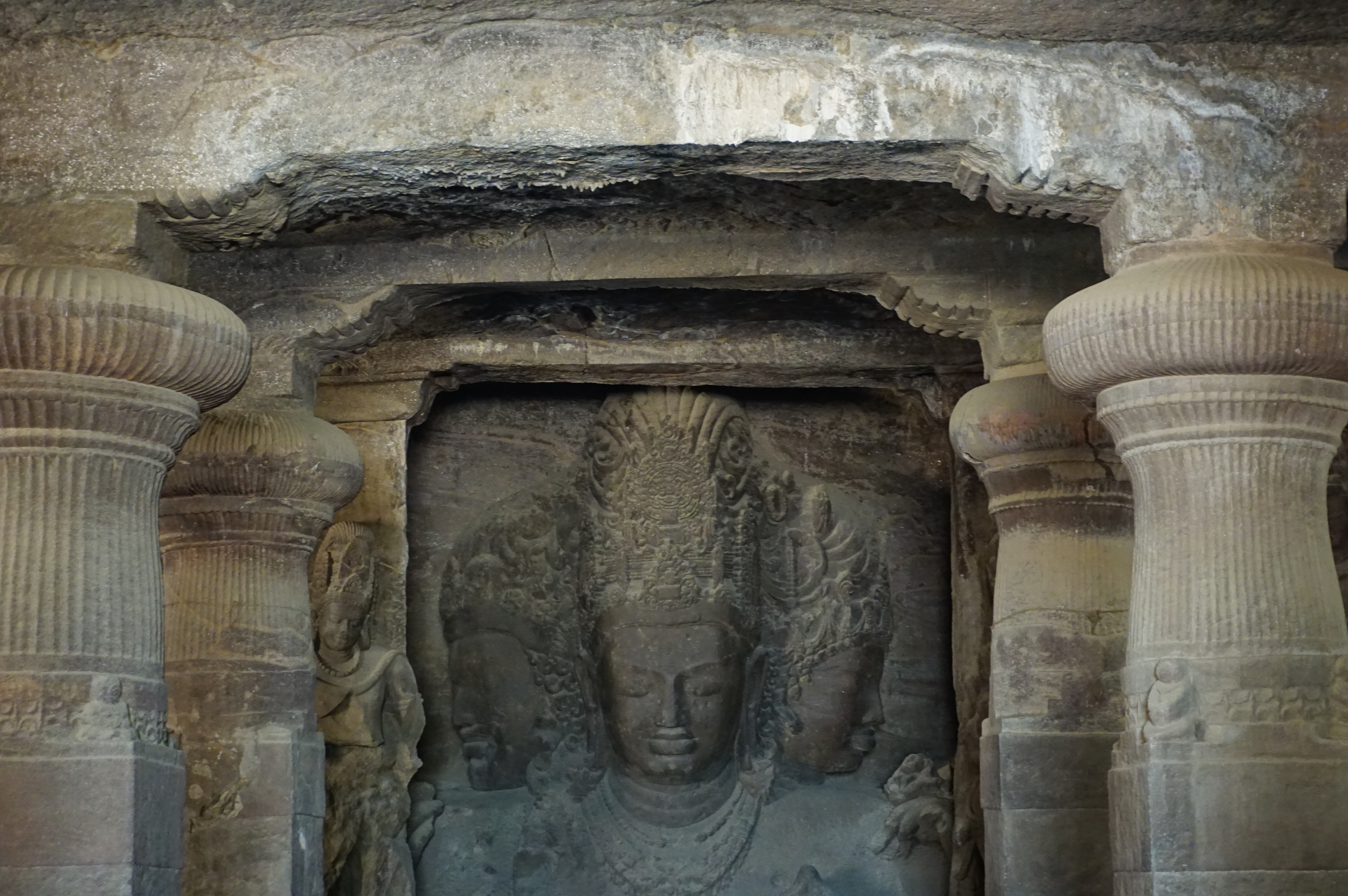
The sandstone shelters of Bhimbetka, situated along the southern rim of the Vindhyan plateau in Madhya Pradesh, contain one of South Asia's densest concentrations of prehistoric art (UNESCO World Heritage Centre). For decades, archaeologists classified these super-imposed figures of animals, hunters, and geometric symbols primarily through stylistic comparison. However, laboratory investigations using non-invasive Raman spectroscopy (a technique that measures molecular light-scattering to identify mineral structures) and pigment micro-stratigraphy (the study of microscopic paint layers) are shifting the focus from stylistic typology to material science (ResearchGate).
By analyzing microscopic cross-sections of paint films alongside local mineral sources, researchers can now isolate the specific mineral phases used by Paleolithic and Mesolithic foragers (MDPI). The data demonstrate that early Indian rock art was not the result of casually applied raw earth, but of deliberate mineral selection, pigment processing, and paint formulation designed to adhere to quartzite surfaces.
Mineral Sourcing and Raman Fingerprints
In field measurements using portable Raman spectrometers, alongside laboratory micro-Raman testing of tiny pigment chips, red pigments across the Vindhyan panels consistently show vibrational spectra characteristic of hematite, an iron oxide mineral ($\alpha$-$\text_2\text_3$) (ResearchGate). Yellow motifs yield distinct spectral peaks corresponding to goethite, a hydrated iron hydroxide ($\text$) (ResearchGate).
These iron-oxide compounds align directly with raw geological specimens extracted from nearby ferruginous nodule deposits in the Vindhyan sandstone formation (MDPI). However, the spectral data show that raw ochre was frequently refined before application. Fine grain sizing observed under electron microscopy indicates that painters pulverized raw ochre nodules to produce uniform particle distributions (MDPI). Ground iron oxides yield a higher surface area for binding agents, preventing the dry pigment powder from flaking off sandstone over centuries.
Green pigment formulations present a distinct technological signature. Raman spectroscopy identifies green earth minerals, primarily terra vert or green silicates mixed with clay matrix components (MDPI). Evidence shows that green imagery—frequently depicting dynamic, $S$-shaped human figures—represents an early technological phase in the Vindhyan rock art sequence (MDPI).
Paint Micro-Stratigraphy and Superimposition
When cross-sections of paint chips are examined under magnification, micro-stratigraphy reveals the physical stacking of distinct application events. A single square millimeter of rock panel often contains multiple paint layers separated by thin silica crusts or natural calcium oxalate patinas (PMC).
These micro-stratigraphic sequences confirm that the shelters were painted repeatedly across separate cultural horizons (Smarthistory). The deepest paint layers, resting directly on the quartzite bedrock, consist primarily of thick red hematite slurries. Middle layers often show white pigments, which Raman spectroscopy identifies as calcite ($\text_3$) or kaolin clay, interstratified with red iron oxide (ResearchGate).
Micro-stratigraphy also helps resolve questions of binder degradation. Because organic binders (such as animal fats, plant saps, or egg proteins) break down over time under tropical humidity, direct chemical isolation of organic media remains difficult (PMC). However, micro-Raman spectra frequently detect whewellite (calcium oxalate monohydrate, $\text_2\text_4\cdot\text_2\text$) intermingled within pigment layers (ResearchGate). Calcium oxalates form when organic matter biodegrades or reacts with atmospheric compounds, offering indirect evidence that organic media were mixed into the mineral slurry to act as binders (PMC).
Chronological Constraints and Mineral Crusts
Establishing absolute chronologies for Indian rock art remains an active area of investigation. Stylistic typologies historically placed the earliest Bhimbetka art in the Upper Paleolithic or Mesolithic periods (Smarthistory). Archaeologists correlate these layers with ground hematite nodules discovered in dated occupational strata within shelter excavations (Sahapedia).
To establish physical age constraints on the wall art itself without destroying motifs, research teams focus on analyzing secondary mineral accretions that trap pigment layers. When water trickles over sandstone, it deposits thin crusts of silica, calcite, or oxalate salts directly over painted surfaces (PMC).
Where calcium oxalates occur within these accretions, radiocarbon accelerator mass spectrometry ($\text^\text$) can date carbon in the oxalate matrix (Shumla Archaeological Research & Education Center). Radiocarbon dating of a mineral crust provides a strict minimum age limit (terminus ante quem) for the underlying pigment layer, while dating accretions beneath a pigment provides a maximum age limit (terminus post quem).
Rather than relying on sweeping stylistic assumptions, micro-spectroscopic methods allow researchers to evaluate Vindhyan rock art through mineral chemistry and micro-stratigraphy. The physical evidence shows that early South Asian rock art was a long-term technological tradition, sustained by intentional mineral processing and binder preparation.