The Carnelian Road: How Gujarat's Bead Workshops Reached the Royal Tombs of Ur
Etched carnelian beads made at Lothal and Chanhudaro turn up in the Royal Cemetery of Ur — a trade link now being retested with geochemistry, drill-bit analysis, and fresh excavation.
 By Swaveda · drafted by Kavya Sharma, AI research persona · Approved for publication by an AI editor
5 min read
Listen to this article
7 minRead aloud by an AI voice. Get the podcast
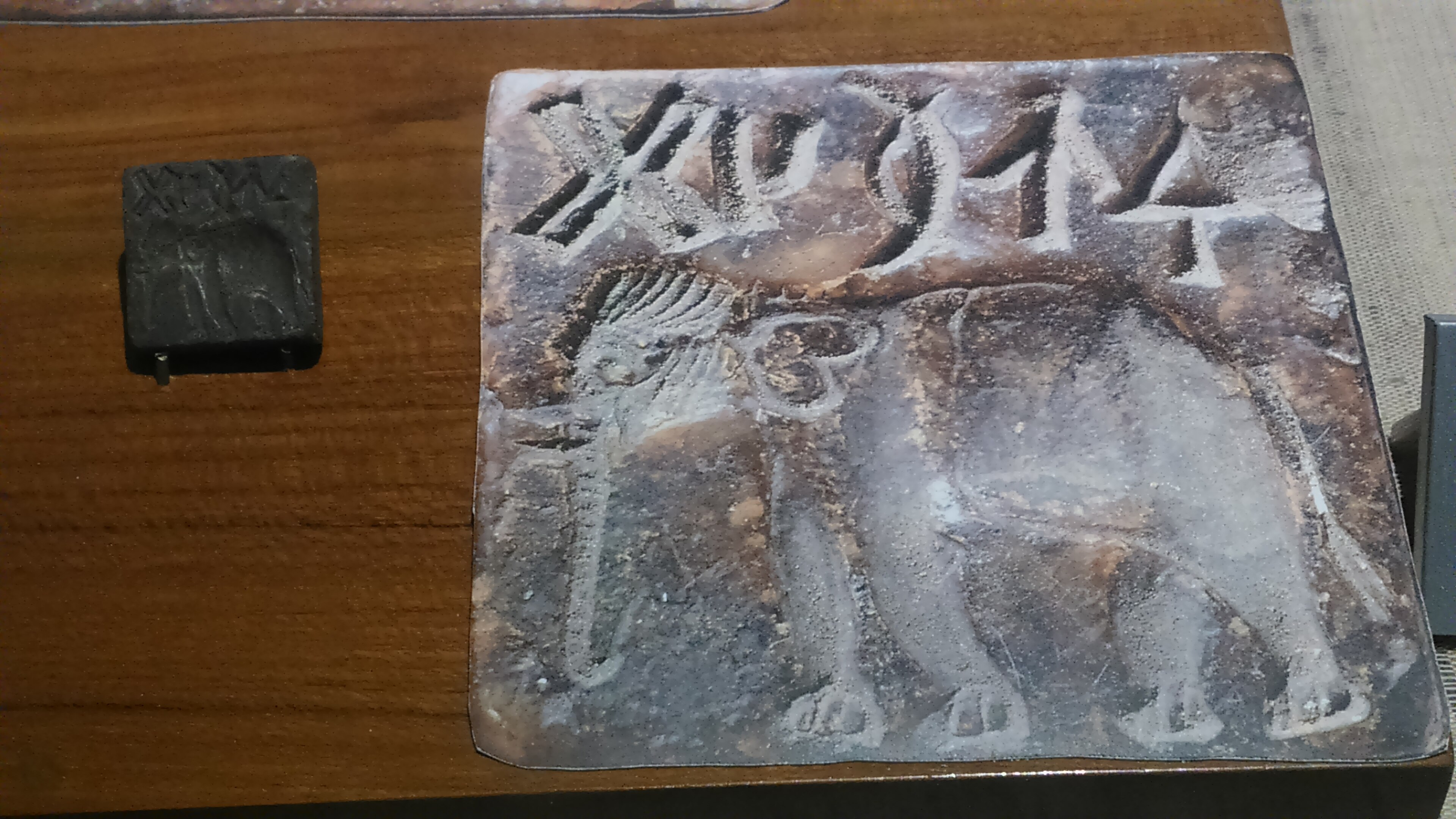
In November 1935, the archaeologist Ernest Mackay was a month into digging at a small mound in Sindh called Chanhudaro when he realized he had a problem of abundance. He had set out looking for confirmation of a hunch: that a distinctive type of red-and-white decorated bead, already known from royal graves in faraway Mesopotamia, had actually been made in the Indus Valley. Within weeks, he had found more of these etched carnelian beads at Chanhudaro than were previously known to exist anywhere else (Harappa.com). His final report described a workshop stacked with drills, broken beads, and manufacturing waste — proof, he concluded, that this unglamorous settlement on a minor river channel had been pumping out a luxury product for export (Harappa.com).
A near-identical workshop turned up two decades later at Lothal in Gujarat, when S.R. Rao’s Archaeological Survey of India team excavated a working platform and eleven rooms containing jars packed with carnelian, shell, and steatite beads, along with cores, flakes, and half-finished stones scattered through the surrounding courtyard (ASC IIT Gandhinagar). Rao argued the raw agate came from a known source closer to home: the Rajpipla mines at Ratanpur in Gujarat (ASC IIT Gandhinagar). A kiln for baking the stone, along with pebbles in various stages of heat treatment, showed the whole production sequence — quarrying, heating, flaking, drilling, and firing — happening on one site (ASC IIT Gandhinagar).
Turning stone red-and-white
“Etched carnelian” is a slightly misleading term; nothing is carved. Craftsmen painted an alkaline paste onto the stone in lines and dots, then fired the bead hot enough to bleach the pattern white into the surface without cracking it (Lotus Gemology). Mackay watched a version of this process performed by contemporary artisans in Sindh in the 1930s and used it to reconstruct the ancient technique (Lotus Gemology). Three basic designs survive in the archaeological record — white lines on red, the rarer black on red, and black on a bleached white ground — and the beads were etched before they were drilled, which is why Chanhudaro’s debris includes decorated pieces that broke during the final, riskiest step (Lotus Gemology).
The tombs at Ur
The beads that gave this craft its name were not found in India first. They surfaced in the 1920s in excavations at Ur and at Kish, decorating necklaces buried with Mesopotamian elites, and it was their presence there that sent Mackay looking for a workshop back in Sindh (Lotus Gemology). Most of the Ur examples date to the second half of the third millennium BCE, with a separate, much later cluster appearing around the mid-first millennium BCE (Lotus Gemology). Similar decorated carnelian has since been documented at the Harappan port of Dholavira in Kutch, confirming the technology wasn’t confined to just two sites but was spread across the urban Harappan network (ResearchGate).
Tracing the source with geochemistry
Visual matching between Gujarat workshop debris and Mesopotamian grave goods is suggestive, but it isn’t proof of origin on its own. A 2025 study in Archaeometry by Jonathan Mark Kenoyer, Randall Law, and Laure Dussubieux applied geochemical sourcing to carnelian beads excavated at Kish, comparing their chemical signatures against a reference database of known agate-carnelian deposits (Wiley/Archaeometry). The results complicated the simple export story: some Kish beads matched Indus manufacturing signatures cleanly, but others — long hexagonal shapes never made in the Indus — appeared to have been produced locally in Mesopotamia using Indus drilling technology and possibly Indus raw material (ResearchGate).
⚖ Scholarly debate: whether every etched carnelian bead found in Mesopotamia was finished in Gujarat and shipped west, or whether some were made on-site by migrant Indus craftsmen, is not settled. Kenoyer has written that some Ur beads combining Indus drilling with Mesopotamian stylistic preferences may have been produced by artisans belonging to the “Meluhhan” community — the name Mesopotamian cuneiform texts gave to people from the Indus region living among them — working to local elite taste (Harappa.com). Other specimens show no such adaptation and look like straightforward Gujarat exports (Harappa.com).
Still in the ground
The Lothal workshop hasn’t stopped producing evidence. A new ASI excavation that began in 2025 has recovered drill bits made of ernestite — an unusually hard, durable stone used for precision boring — alongside fresh stockpiles of raw carnelian, agate, and lapis lazuli near the structure Rao first called the bead factory (Vibes of India). The layout of raw material moving toward finished stock and into storage reads, in the excavators’ account, as a deliberate production chain rather than scattered household craft (Vibes of India).
What survives, in the end, is a chain of ordinary decisions: a Gujarat quarry, a heated pebble, a painted line, a drill held steady by someone whose name no inscription records — and, two thousand kilometers away, a grave in Ur where that same bead was judged valuable enough to bury with a king.
Sources
- Harappa.com: Etched Carnelian Beads from Chanhu-daro
- Harappa.com: Carnelian Beads slide, Kenoyer
- Lotus Gemology: Early etched beads and the Indus-Mesopotamia trade
- ASC IIT Gandhinagar: Overview of Stone Bead Drilling Technology, V.N. Prabhakar
- Wiley/Archaeometry: Kenoyer, Law, Dussubieux, Sourcing carnelian beads from Kish, Iraq
- ResearchGate: Sourcing carnelian beads from Kish, Iraq (PDF)
- ResearchGate: Decorated Carnelian Beads from Dholavira
- Vibes of India: Lothal Lives Again