Why the 'Sarasvati dried up in 1900 BCE' claim doesn't settle the Rigveda's date—and what river paleochannels actually show
Paleochannel studies confirm the Ghaggar-Hakra shrank after tectonic shifts, but the river persisted in reduced form into the first millennium BCE—making desiccation a poor clock for dating Vedic hymns.

Vikram Joshi for SwavedaMay 28, 2026
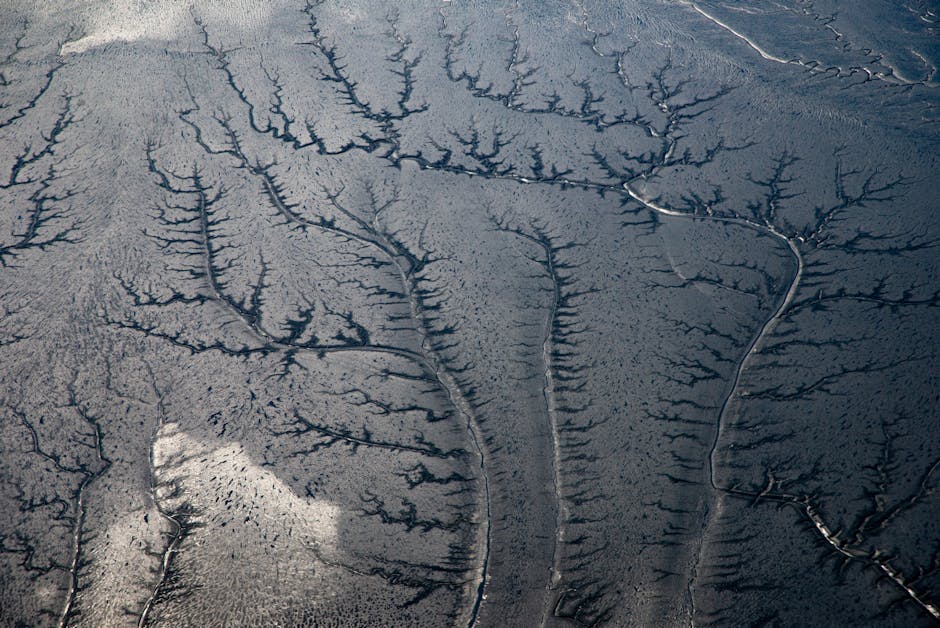
The Rigveda praises a mighty Sarasvati flowing "from the mountains to the sea." Tradition identifies this river with the Ghaggar-Hakra system in north-west India, and geologists confirm that system once carried far more water than the seasonal trickle visible today. Some writers claim the river "dried up around 1900 BCE," then use that date to anchor the composition of the hymns to the third millennium BCE—before the drying. The argument sounds clean: if poets sang of a big river, they must have seen it big.
The problem is that paleochannel evidence does not support a sudden desiccation around 1900 BCE, and the river system did not vanish. It shrank, persisted in diminished form, and remained significant enough to support settlements well into the first millennium BCE. The desiccation gives us a terminus ante quem—a "not later than" bound—but it is a loose and contested one, and it cannot by itself fix when the hymns were composed.
What the paleochannel studies actually show
Satellite imagery, ground-penetrating radar, and sediment cores have mapped relict channels across the Indo-Gangetic plain. The Ghaggar-Hakra system once drained Himalayan tributaries—principally the Sutlej and possibly the Yamuna—before tectonic shifts during the Holocene diverted those rivers eastward into the Ganges and westward into the Indus.
A widely cited 2012 study led by researchers at the Indian Institute of Technology Kanpur used satellite data and field surveys to trace the paleochannels. The study, published in Proceedings of the National Academy of Sciences, confirmed that the Ghaggar-Hakra was fed by Himalayan meltwater during the early to mid-Holocene. The authors noted that the river began to decline as monsoon patterns shifted and the Sutlej was captured by the Indus system, but they did not pin the abandonment to a single century.
A 2017 study in Nature Communications examined sediment cores from the region and found that the river system experienced reduced flow starting around 5,000 years ago, with further decline over the subsequent millennia. The authors concluded that the drying was gradual, not abrupt, and that smaller channels persisted long after the main Himalayan feed was lost.
Harappan settlement patterns support this picture. Archaeological surveys show dense urban and rural sites along the Ghaggar-Hakra during the Mature Harappan period (roughly 2600–1900 BCE), but also substantial post-Harappan and Painted Grey Ware culture occupation into the first millennium BCE. If the river had vanished entirely by 1900 BCE, the persistence of these settlements becomes difficult to explain.
Why this complicates the Rigvedic dating argument
The Rigveda describes Sarasvati in a handful of hymns using stock epithets: "best of rivers," "seven-sistered," "moving from the mountains to the sea." Tradition holds these verses as memories of a living, full river. If true, the hymns must predate the river's decline.
But the paleochannel record shows that decline was not a cliff. The river shrank over centuries, fed increasingly by monsoon runoff rather than glacial melt. A diminished Sarasvati still flowed seasonally. A poet in 1500 BCE, 1200 BCE, or even 1000 BCE could have inherited older epithets and reused them, or observed a smaller river and sung of it using traditional language, or transmitted hymns composed earlier without updating the geography.
Linguistic and internal evidence from the Rigveda complicates the picture further. The language of the hymns is archaic, and the text shows no knowledge of iron, rice agriculture, or the Gangetic plain—features associated with the later Vedic corpus. Scholars debate whether this implies early composition or simply reflects the conservative register of ritual poetry.
The Rigveda also mentions other rivers—Sindhu (Indus), Vipash (Beas), Shutudri (Sutlej)—that still flow today, so the mention of Sarasvati does not by itself require a pre-desiccation date. The question is whether the descriptions of Sarasvati demand it. And here the hymns are maddeningly vague. Most references are formulaic. The longest hymn to Sarasvati (RV 7.95) praises her abundance but gives no detail that would distinguish a glacial-fed channel from a monsoon-fed one.
What the desiccation evidence can tell us
If we accept that the Ghaggar-Hakra carried substantial Himalayan meltwater during the third millennium BCE and progressively less thereafter, we can say the following:
Hymns that presuppose a large, perennial, Himalayan-fed Sarasvati were more likely composed before 2000 BCE than after. But "more likely" is not "certainly," and the number of hymns that clearly presuppose such a river is small.
The desiccation does not give us a sharp cutoff. The river did not disappear in a single generation. Settlements persisted. Memory persisted. Formulaic language persisted.
Paleochannels tell us when the river shrank, not when poets stopped singing about it. Archaeology tells us when cities were abandoned, not when oral tradition froze.
Where this leaves us
The Ghaggar-Hakra evidence is valuable. It confirms that the region described in the Rigveda underwent real environmental change, and it narrows the window during which a large Sarasvati could have been directly observed. But it does not by itself solve the dating problem.
The text, the river, and the archaeology each give partial answers. The river shrank gradually after tectonic capture, sometime in the third or second millennium BCE. The Rigveda was composed in an archaic Indo-Aryan language and transmitted orally for centuries before it was fixed in writing. Tradition holds the hymns as ancient. Linguistics, meter, and internal references suggest a composition range spanning several centuries.
The desiccation of the Sarasvati provides a terminus ante quem only if we assume the poets composed from direct observation, updated their verses to match contemporary geography, and did not inherit older material. Those are assumptions, not evidence. The river paleochannels show us what happened to the water. They do not show us when the songs were made.