Why Jamison-Brereton translated Rigveda 10.95.18's 'purūravas' as 'crying many tears'—and why earlier translators missed it
The 2014 Jamison-Brereton Rigveda translation renders a key compound in the Purūravas-Urvaśī dialogue as a description of weeping rather than a name, turning on sandhi resolution.

Meera Iyer for SwavedaMay 28, 2026
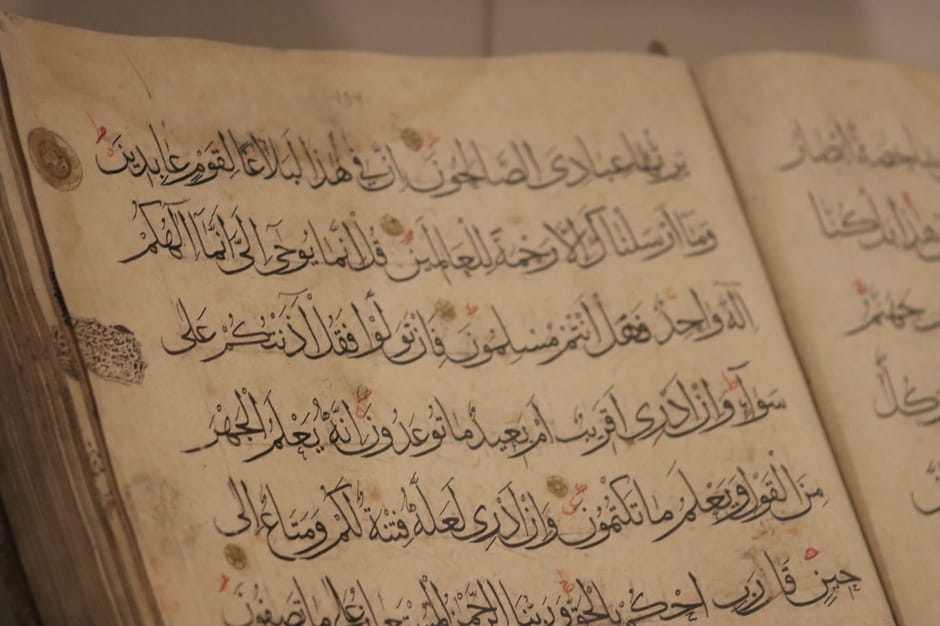
Rigveda 10.95 preserves the oldest surviving fragment of the Purūravas-Urvaśī story—a mortal king's dialogue with the celestial nymph who has left him. Verse 18 contains a compound that earlier translators read as the king's name: purūravas. Stephanie Jamison and Joel Brereton's 2014 translation for Oxford University Press reads it instead as purū́ ruvas, "crying many (tears)"—a deliberate parsing that changes the verse from third-person narration to direct emotional address.
The line in Devanagari: पुरूरवा इत्थाह मृत्युरित्था परावत
The compound at stake is purūravas (पुरूरवस्). The question is whether the sandhi—the phonetic fusion rules that govern how Sanskrit words blend—conceals a word boundary.
Two ways to resolve the sandhi
Read as a single word, purūravas (पुरूरवस्) is the king's name, meaning "crying loud" or "shouting much"—from purū́ (much, many) and ravas (noise, cry). This is how Ralph Griffith translated it in 1896, Max Müller in 1869, and Wendy Doniger in 1981. All three render verse 18 as a narrative tag: "Purūravas said thus."
But the identical sound sequence can be split differently. If you resolve the sandhi as purū́ ruvas, you get purū́ (much, many) + ruvas (crying, weeping)—a present active participle from the root ru, "to cry." The vocative would be addressing someone as "you who are crying much" or simply "crying many tears."
Jamison and Brereton parse it this way. Their translation of 10.95.18: "Crying many (tears), Death [said] thus from afar." The verse becomes part of the dialogue, not a frame around it.
Why context matters
The dialogue structure of hymn 10.95 is contested. The text does not mark speakers. Scholars infer who is talking from content and from later retellings in the Śatapatha Brāhmaṇa and the Mahābhārata, which expand the story.
Verse 17 is clearly Urvaśī speaking. Verse 19 appears to be Purūravas. The question is what verse 18 is doing.
If purūravas in verse 18 is the king's name, the verse is a narrative aside, like a stage direction. The poet steps out of the dialogue to tell us "Purūravas said this."
If purū́ ruvas is a vocative participle, the verse stays inside the dialogue. Someone—either Urvaśī or an unnamed third voice—addresses a figure who is weeping. Jamison and Brereton read "Death" (mṛtyú) as the subject: Death himself speaks from afar to the one crying many tears.
This reading treats the verse as part of the dramatic action, not commentary on it.
The philological fine print
Sanskrit sandhi makes both parsings phonetically legal. The sequence -ū r- can represent -ūravas (single compound) or -ū ruvas (two words). The meter does not decide the question; both scansions fit the triṣṭubh pattern of the hymn.
The root ru (to cry, to weep) is attested elsewhere in the Rigveda. The participle ruvas does not appear in this exact form in other hymns, but the root is productive and the formation is regular.
The vocative reading requires purū́ to govern a participle, which is grammatically sound. The accusative purū́ can modify participles in Rigvedic usage.
Earlier translators did not parse it this way, likely because they took Purūravas as a known name from later tradition and did not consider splitting the compound. The name appears in post-Vedic texts as a fixed form.
Jamison and Brereton's translation remarks briefly on the parsing in their notes but does not elaborate on why they prefer it. The choice appears to rest on context—specifically, their reading of the dialogue structure and the thematic role of weeping in the hymn.
What changes if the split is correct
If verse 18 is not a narrative tag, the hymn has no frame. The entire text is dialogue and dramatic speech. The weeping becomes not something described about Purūravas from outside, but something addressed to him—or to another figure—from within the scene.
The identity of the speaker in verse 18 becomes a question. Jamison and Brereton assign the line to Death personified, based on mṛtyú appearing as the subject. This reading has no parallel in other Rigvedic hymns, where Death does not speak as a character.
Other interpreters might assign the vocative to Urvaśī, addressing Purūravas directly as "you who cry many tears." That reading keeps the dialogue between the two named figures and avoids introducing Death as a third speaker.
Why earlier translators chose differently
Griffith, Müller, and Doniger all worked within a tradition of Rigvedic interpretation that assumed the hymn was a narrative frame around reported speech. Their translations reflect that assumption.
They also had access to the later Brāhmaṇa and epic versions of the story, which treat Purūravas as a fixed name. Reading back from those later texts, the compound in 10.95.18 looks like a name, not a description.
Jamison and Brereton's translation was the first complete English Rigveda to apply systematic linguistic and contextual analysis to every hymn, published in 2014 after decades of work. Their approach prioritizes Rigvedic grammar and usage over later tradition.
The difference matters because it shows how much interpretation is embedded in every translation of a text without punctuation, speaker tags, or glosses. The sound is fixed. The meaning is not.