What Was Actually on the Plate: Archaeobotany of Millets and Pulses in Early Historic Deccan Sites
Carbonized grains recovered at Deccan excavation sites are rewriting the everyday menu of Early Historic India — less rice, more millet and pulse, and a lot of careful sieving to prove it.

Kavya Sharma for SwavedaJuly 29, 2026
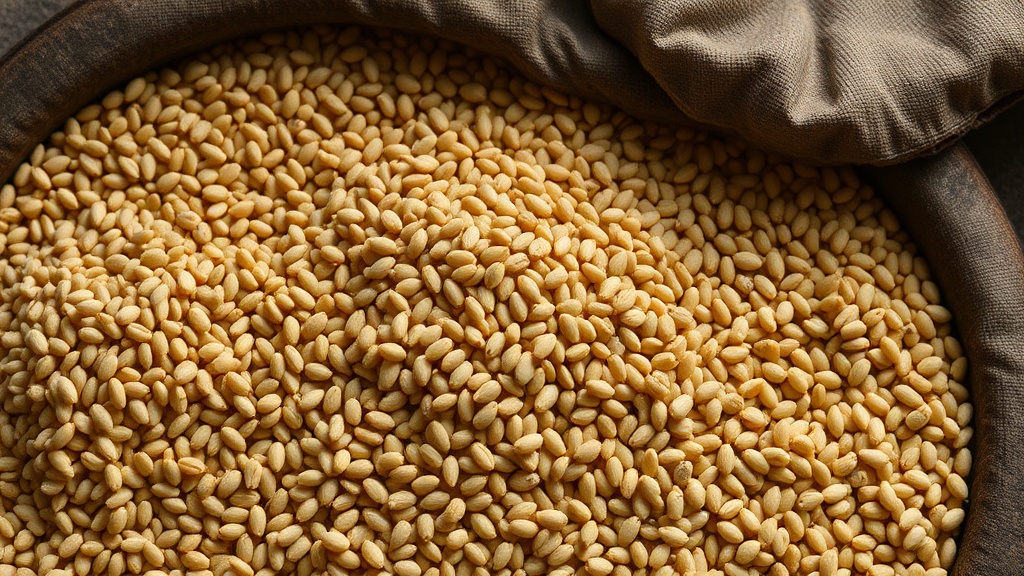
A charred grain of Setaria millet does not look like much. Under a microscope it is a dull, cracked husk, barely a millimetre across, the kind of thing a careless excavator could mistake for gravel and shovel into a spoil heap. But when archaeobotanists at sites across the Deccan plateau began systematically floating soil samples through water — a technique that lets carbonized (charred, and therefore preserved) seeds separate from heavier dirt — those unglamorous specks turned into one of the most direct lines of evidence historians have for what people in early historic India actually cooked and ate.
This is the quiet promise of archaeobotany: not monuments, not inscriptions, but dinner.
The technique behind the grain
Carbonization happens when plant material burns without fully combusting — in a hearth fire, a kiln accident, or a burnt granary — and turns to a stable black carbon shell that can survive in soil for thousands of years. Excavators recover these remains through flotation, dunking excavated sediment in water so light charred material floats free and can be collected in a fine mesh. The method has been used systematically at several Deccan and peninsular sites, and the resulting seed assemblages are published as archaeobotanical reports rather than left as a footnote in the main excavation volume.
One of the most cited long-term projects on this is the work associated with archaeobotanist Steven Weber and colleagues, whose research on South Asian agricultural systems draws on assemblages from sites including Balathal and other South Asian locations, tracing shifts between summer (kharif) and winter (rabi) cropping regimes across the second and first millennia BCE (Weber's published archaeobotanical research is summarized on his Washington State University faculty page). Dorian Fuller, an archaeobotanist at University College London, has written extensively on the spread of millet cultivation across peninsular India and its role in the transition from pastoral to settled agrarian economies, work synthesized in his co-authored overview of South Asian plant domestication (Fuller and Qin, "Water management and labour for the domestication of rice and dryland cereals," published in World Archaeology).
What actually turns up in the soil
The recurring cast of characters in Deccan assemblages is millet and pulse, not the rice-and-wheat diet that later texts and modern nostalgia sometimes project backward onto the ancient plate. Species identified across peninsular Indian sites include finger millet (Eleusine coracana), foxtail millet (Setaria italica), and browntop millet (Brachiaria ramosa), alongside pulses such as horsegram (Macrotyloma uniflorum) and green gram (Vigna radiata). Fuller's broader synthesis on South Asian crop history situates these small-seeded millets as staples of dry-farming systems that predate and coexist with rice cultivation in much of the peninsula (Fuller, "Agricultural Origins and Frontiers in South Asia," Journal of World Prehistory).
This matters because it complicts a simple story of "Indian food" centered on rice. Millets need less water, tolerate the Deccan's basalt-derived black soils and erratic monsoon better than rice does, and store well — properties that made them the sensible backbone of a household economy long before their recent rebranding as "superfoods." Scholars debate exactly how the balance between millets, pulses, and rice shifted over time and by region — the pattern is not uniform across the subcontinent, and archaeobotanical assemblages from Ganga plain and Deccan sites show different trajectories (Fuller, Journal of World Prehistory).
Reading a granary fire
Some of the richest assemblages come from accidental preservation — a granary or storage pit that burned, freezing a snapshot of what was actually stored rather than what people wished to be remembered eating. That distinction is worth holding onto: an inscription or a literary text tells you what someone thought worth writing down, often an idealized or elite version of diet. A carbonized grain in a burnt storage pit tells you what was actually there, in what quantity, mixed with what impurities and weed seeds — evidence, not tradition, in the strict sense the term deserves here.
Weed seeds recovered alongside crop grains are their own quiet informants. Species that thrive as agricultural weeds tell archaeobotanists something about field conditions, irrigation, and even the season of harvest, since different weeds flower and set seed at different times of year. This is the kind of granular, unglamorous data that rarely makes it into popular history but underpins reconstructions of cropping calendars in the peer-reviewed literature Fuller and Weber have built over decades of fieldwork.
The limits of the evidence
None of this adds up to a single, settled "ancient Deccan diet." Preservation is patchy — carbonization requires a specific accident of fire, so assemblages are shaped as much by what happened to burn as by what people actually grew and ate. Sites excavated decades ago, before flotation was standard practice, likely lost archaeobotanical evidence that would otherwise have survived. What the surviving grain does offer is a corrective to assumption: proof, seed by seed, that millet and pulse — not rice, not wheat — were doing the daily work of feeding people across large parts of early historic peninsular India.
That is not a small thing to learn from something that looks, at first glance, like a fleck of gravel.