What starch grains and phytoliths from Fa-Hien Lena reveal about rainforest foraging 48,000 years ago
Archaeobotanists extracted microscopic plant remains from stone tools in Sri Lanka to reconstruct what hunter-gatherers ate millennia before agriculture arrived.

Devika Menon for SwavedaMay 28, 2026
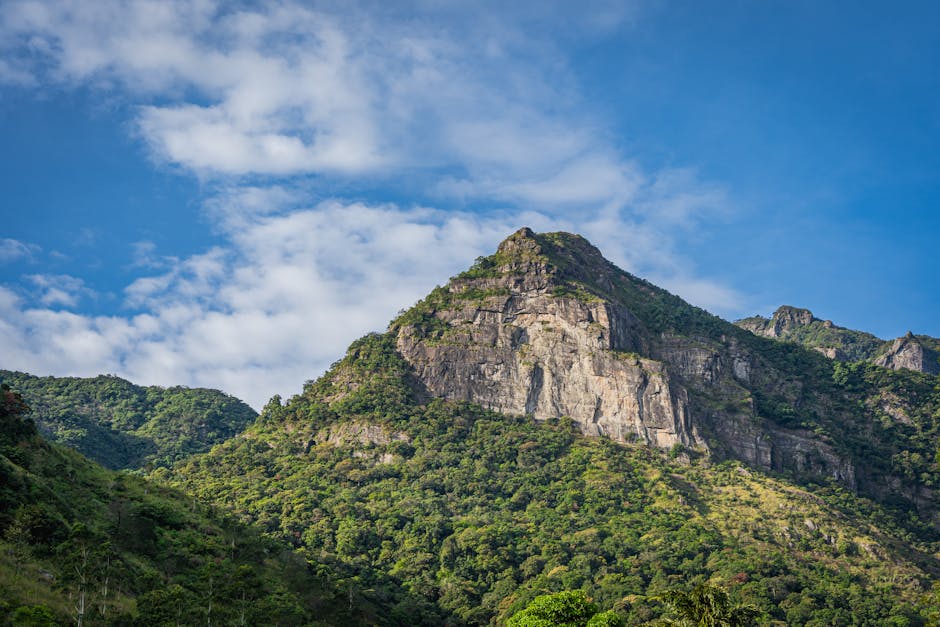
Fa-Hien Lena, a limestone cave in Sri Lanka's wet-zone rainforest, preserves the longest record of human occupation on the island—spanning roughly 48,000 to 3,000 years ago. For most of that time the people who sheltered there hunted monkeys and squirrels, fashioned tools from bone and stone, and collected plants from the surrounding forest. No crops. No pottery until much later. But figuring out which plants they ate, and whether they simply gathered windfalls or deliberately processed tubers and seeds, requires evidence invisible to the naked eye.
That evidence comes from two classes of microfossil: starch grains and phytoliths. Both survive for tens of thousands of years in tropical soils that destroy pollen, and both lodge in the nooks of grinding stones and flake tools. Archaeobotanists extract them by swabbing tool surfaces with distilled water, then examine the residues under high-magnification microscopes. Starch grains—polymerized glucose packets plants store for energy—retain distinctive shapes: bell curves for some yam species, polygonal platelets for certain palms, eccentric crosses for banana relatives. Phytoliths are silica skeletons that form inside plant cells; grasses, palms, and sedges each produce diagnostic shapes.
What the Fa-Hien Lena assemblage shows
In a 2020 study published in Nature Communications, a team led by Patrick Roberts and Nicole Boivin at the Max Planck Institute for the Science of Human History analyzed residues from ochre-processing tools and stone scrapers excavated from contexts dating between roughly 48,000 and 36,000 years ago. The researchers identified starch grains consistent with yams (likely Dioscorea species), seeds from Caryota palms, and other rainforest plants. Importantly, many grains showed damage patterns—swelling, cracking, gelatinization—that appear only when starch is exposed to grinding or heating above 64°C.
The presence of damaged starch on tools indicates processing, not accidental contamination. Wild yams are often toxic or unpalatable raw; roasting breaks down toxins and makes the tubers digestible. Grinding Caryota seeds may have served a similar purpose. The suite of evidence—residues on multiple tool types, damage consistent with cooking, association with hearth contexts—points to deliberate, repeated preparation.
Intensification is not agriculture
The study uses the term "rainforest subsistence intensification." That phrasing can mislead. Intensification in this context does not mean planting, weeding, or selecting for larger tubers. It means investing more labor—digging deeper for roots, returning to productive patches, processing plants that require roasting or leaching—to extract calories from a difficult environment.
Tropical rainforests offer year-round plant foods but in scattered, often small packages. Tubers hide underground. Nut-bearing palms may fruit sporadically. Extracting enough calories to support a group requires knowledge of plant ecology, tool kits for digging and grinding, and controlled fire. The Fa-Hien Lena residues show that foragers possessed all three by 45,000 years ago, millennia before agriculture appeared anywhere on Earth.
This matters because older models assumed rainforests were marginal habitats, avoided by Paleolithic humans until farming made them productive. The Sri Lankan evidence, along with parallel finds from Borneo, New Guinea, and the Amazon, overturns that assumption. Rainforests were not barriers but homelands for some of the earliest Homo sapiens populations outside Africa.
What counts as evidence versus guesswork
Residue analysis walks a narrow methodological line. Starch and phytoliths can enter the archaeological record through many routes: wind-blown dust, modern root intrusion, contamination during excavation. Rigorous studies include controls—sediment samples from the same layers, unwashed museum-stored artifacts, modern surface swabs—to rule out post-depositional contamination.
The 2020 Fa-Hien Lena study reported these controls. The researchers also relied on a reference collection of modern rainforest plants from Sri Lanka, since starch-grain atlases built from temperate or African species may not capture South Asian taxa. Without that reference work, a researcher might misidentify a yam as a lily or dismiss an unknown form as contamination.
Even with controls, residue studies cannot always distinguish deliberate use from incidental contact. A stone tool might pick up starch from a plant used as packing material or from a tuber sliced in passing. The strongest claims rest on clusters of evidence: multiple tools from the same context, damage patterns consistent with a specific process, ecological plausibility.
The wet-zone challenge
Sri Lanka's southwestern wet zone receives over two meters of rain annually. Organic preservation is poor; wooden digging sticks, fiber baskets, and plant macrofossils rarely survive. Microfossils, protected by silica or starch's chemical stability, fill that gap.
But even microfossils pose interpretive puzzles. A single Caryota phytolith might come from a deliberately processed seed or from palm fronds used to line the cave floor. Quantity and context matter. The Fa-Hien Lena team found starch grains on ochre-processing tools—objects unlikely to contact food by accident—and on flakes with edge-wear consistent with scraping tubers.
The resulting picture is provisional but grounded. People at Fa-Hien Lena collected and cooked rainforest tubers and seeds between 48,000 and 36,000 years ago. They used fire and stone tools to make plants edible. They returned to the cave across thousands of years, suggesting the surrounding forest provided reliable calories.
That conclusion rests on microscopic fragments catalogued grain by grain, cross-referenced against modern specimens, and evaluated for taphonomic plausibility. It is the numismatic approach applied to starch: each granule a small, durable token that, in aggregate, testifies to choices made long before anyone planted a seed.