The Steppe Road to the Altai: What Siberian Horse Burials Reveal About Late Vedic Rituals
A comparative analysis of Altai Pazyryk kurgans and late Vedic texts reveals deep, shared Indo-European pastoralist roots through horse sacrifice rituals.

Vikram Joshi for SwavedaAugust 5, 2026
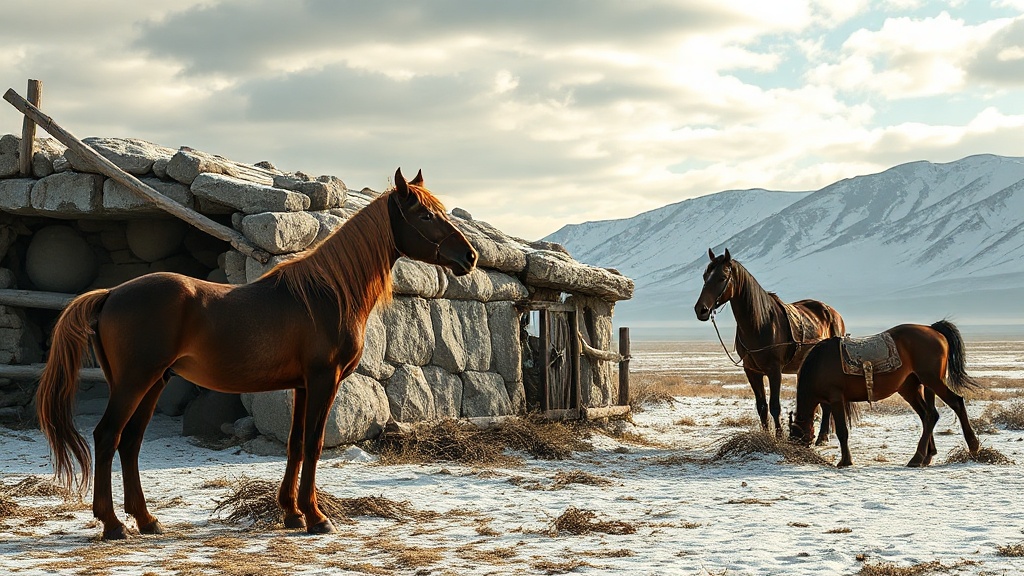
The frozen burial mounds, or kurgans, of the Altai Mountains in southern Siberia have long preserved the material remnants of nomadic life from the first millennium BCE. Among the most striking discoveries within these tombs, associated with the Pazyryk culture, are the remains of sacrificed horses. These animals were interred alongside elite warriors, complete with elaborate masks, bridles, and saddles.
For historians of ancient India, these physical finds offer a tangible point of comparison with the literary descriptions of the Ashvamedha (horse sacrifice), an elaborate royal ritual detailed in late Vedic texts. By placing the archaeological evidence from the Altai alongside the ritual instructions of the Shatapatha Brahmana (a late Vedic commentary text), researchers can analyze whether these parallels point to shared Central Asian pastoralist roots or independent, parallel developments.
The Archaeology of the Altai Kurgans
In the high-altitude valleys of the Altai, permafrost preserved the organic materials of Pazyryk burials in near-perfect condition. Excavations of these mounds reveal that elite burials were accompanied by the slaughter of multiple horses. These horses were not merely utility animals; they were carefully selected, highly decorated, and arranged in specific patterns within the grave shafts.
Archaeological analysis reveals that the sacrificed horses were often mature geldings, frequently displaying distinct coat colors. They were adorned with elaborate tack, including wooden horn-like masks that transformed the horses into mythical beasts, perhaps representing griffins or ibexes. The horses were placed to the north of the wooden burial chamber, facing east, which was the direction of the rising sun. The physical evidence shows that these animals were dispatched with a single, precise blow from a battle-axe to the forehead, minimizing disfigurement.
The Ritual of the Shatapatha Brahmana
The Shatapatha Brahmana, composed in northern India during the first half of the first millennium BCE, provides the most comprehensive textual description of the Ashvamedha. In this late Vedic tradition, the horse sacrifice was the ultimate assertion of a king's sovereign authority.
Tradition holds that a specially chosen stallion was allowed to roam freely for a year, accompanied by a guard of young warriors. Any territory the horse entered had to submit to the king or face war. At the end of the year, the horse was brought back to the sacrificial ground.
While the Pazyryk burials represent a funerary rite to accompany a deceased chieftain into the afterlife, the Vedic Ashvamedha was a rite of political expansion and cosmic rejuvenation performed during the king’s lifetime. Yet, beneath these different functional contexts lie striking structural and symbolic similarities.
Parallels in Horse Selection and Adornment
A comparison of the material evidence from the Altai with the Vedic texts reveals shared attitudes toward the sacrificial animal.
First, both traditions emphasized the color and physical perfection of the horse. The Shatapatha Brahmana specifies that the sacrificial horse should preferably be a white horse with dark spots, or possess specific markings that set it apart from ordinary draft animals. In the Altai kurgans, genetic and physical analysis of the preserved horse hides shows a preference for chestnut, bay, and palomino horses, often selected for their striking appearance.
Second, the ornamentation of the horses carries a shared symbolic weight. The Shatapatha Brahmana describes the horse being adorned with gold ornaments and beads woven into its mane and tail before the sacrifice. In the Pazyryk burials, horses were decorated with red-dyed felt, leather tassels, and gold-leaf wooden plaques depicting predators attacking prey. The transformation of the horse into a sacred, cosmic entity through physical adornment is a central feature of both the Siberian archaeological record and the Indian textual tradition.
Spatial Orientation and Cosmic Pathways
The spatial organization of both rituals reflects a shared cosmological framework. In the Pazyryk kurgans, the horses were consistently placed on the northern side of the burial pit, oriented toward the east.
In Vedic ritual geometry, as detailed in the Shulba Sutras (appendix texts geometry manuals), the sacrificial arena is strictly oriented along the cardinal directions. The eastern direction is associated with the gods and the rising sun, representing life and renewal, while the south is associated with the ancestors and the realm of the dead. The positioning of the horses toward the east in both the Altai graves and the Vedic Yajna (sacrificial ritual) suggests a shared belief in the horse as a vehicle destined to carry the deceased or the patron's prayers toward the solar realm.
Furthermore, the method of dispatching the animal shows a shared concern for ritual purity. While the Altai horses were killed with a swift axe blow to the head, Vedic texts mandate that the sacrificial horse must not be allowed to cry out or suffer needlessly; it was typically quieted through strangulation or suffocation using cloths, ensuring that its vital breath was contained.
Shared Ancestry or Independent Adaptation?
Scholars debate whether these parallels are the result of direct contact during the Iron Age or if they represent the divergent survival of a much older, common Indo-European heritage.
Genetics and linguistics indicate that the precursors to both the Vedic Indo-Aryans and the nomadic pastoralists of the Altai shared common ancestry originating in the Sintashta and Andronovo cultures of the Eurasian steppe during the Bronze Age. These early pastoralists developed the chariot, advanced horse-harnessing technology, and the complex horse-centered mythology that later spread both southward into the Indian subcontinent and eastward into the Altai region.
Therefore, the similarities between the Pazyryk burials and the Ashvamedha are best understood not as direct borrowings from one culture to another, but as cousin traditions. Separated by thousands of kilometers and several centuries, the nomadic chieftains of the Siberian Altai and the sedentary kings of the Gangetic plains maintained a shared ideological vocabulary. For both, the horse was the ultimate symbol of power, speed, and mediation between the earthly realm and the heavens.