The Smelters of Naikund: What Slag Micromorphology in Vidarbha Reveals About Early Deccan Iron Logistics
Recent analyses of iron smelting furnaces and tap slag at Naikund reveal a highly organized regional production and distribution network in the early Deccan Iron Age.

Rohan Bhattacharya for SwavedaAugust 24, 2026
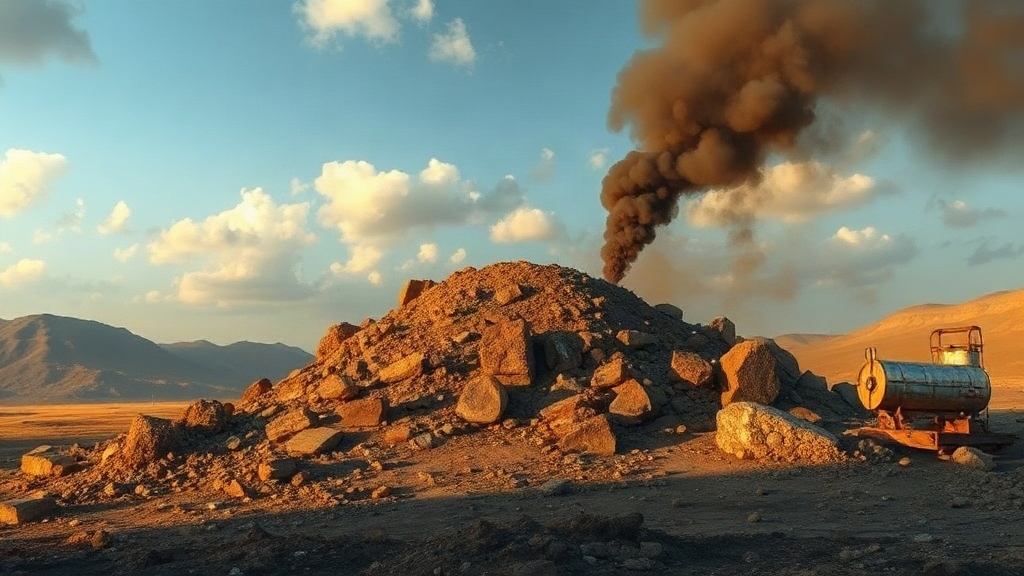
The Vidarbha region of Maharashtra has long been central to debates surrounding the antiquity and scale of metallurgy in the Indian subcontinent. While early antiquarian reports focused on the visible architecture of stone circles and burials, modern field archaeology has shifted toward the industrial waste left behind by ancient metalworkers. At the site of Naikund, located northeast of Nagpur, recent re-analyses of iron smelting furnaces and slag micromorphology (the study of undisturbed soils and sediments at a microscopic scale) show that early Iron Age communities managed a highly organized system of production and distribution long before the rise of the Mauryan state.
For decades, the standard narrative of Deccan prehistory treated these early communities as semi-nomadic pastoralists. However, the stratigraphy of Naikund reveals a different picture. Excavations conducted by the Deccan College Post-Graduate and Research Institute and the Department of Archaeology and Museums of Maharashtra, published in reports such as those by S.B. Deo and A.P. Jamkhedkar, exposed a distinct habitational layer directly associated with iron smelting.
Rather than sporadic, domestic-scale smithing, the evidence shows dedicated industrial areas. The discovery of a fully preserved circular clay furnace at Naikund remains one of the most complete structural records of early Indian metallurgy. The furnace, constructed from clay tempered with quartz powder and animal dung to withstand high temperatures, featured a cylindrical shaft, a hole at the base for tapping slag (the glassy byproduct of smelting), and terracotta tuyeres (nozzles used to blow air into the furnace).
The true nature of this early industry lies in the microscopic analysis of the tap slag. Under a microscope, the mineral composition of Naikund's slag reveals a high concentration of fayalite (an iron-rich silicate mineral) and wüstite (an iron oxide mineral). This specific mineral suite indicates that the ancient smelters achieved temperatures exceeding 1,100 degrees Celsius. To maintain these temperatures consistently, the craftsmen required a steady supply of high-grade charcoal and a precise ratio of iron ore to fuel.
Geological surveys around the Naikund site indicate that local iron ore deposits, primarily in the form of hematite pebbles, were selectively gathered from nearby riverbeds and hill slopes. The homogeneity of the slag compositions across different excavated trenches suggests that the smelting process was highly standardized. The smelters were not experimenting; they followed a structured, repeatable recipe.
In the pages of Puratattva (the journal of the Indian Archaeological Society) and Man and Environment (the journal of the Indian Society for Prehistoric and Quaternary Studies), scholars have debated whether this level of metallurgical sophistication required a centralized state authority. Traditional historical models often attribute the systematization of trade and technology in the Deccan to the administrative reach of the Mauryan Empire. However, the archaeological record at Naikund, which dates to the early first millennium BCE, predates Mauryan expansion by several centuries.
The distribution of finished iron tools across Vidarbha—such as axes, adzes, chisels, and horse bits found in Megalithic burials—further demonstrates a regional logistics network. The chemical signatures of the iron objects recovered from non-production sites in the region match the ore profiles and slag characteristics found at smelting centers like Naikund and Mahurjhari. This spatial pattern shows that Naikund did not operate in isolation. It served as a specialized manufacturing hub that supplied a wider network of farming and pastoral settlements.
This evidence of regional organization challenges the older view that early Deccan societies lacked complex economic structures. The coordination required to mine ore, harvest specific hardwood trees for charcoal, operate high-temperature furnaces, and distribute finished tools across dozens of kilometers points to a well-established guild-like organization or chiefdom-level coordination.
Skepticism remains necessary when interpreting the social hierarchy behind these operations. While some researchers have argued for the existence of powerful ruling elites based on the presence of rich grave goods in nearby stone circles, the domestic architecture at Naikund remains modest. The huts are circular or oval, made of wattle and daub (woven wooden strips covered with clay), with rammed earth floors. The lack of monumental administrative buildings suggests that the organization of iron logistics was embedded in kinship networks rather than a bureaucratic state.
By focusing on the boring details of slag micromorphology and stratigraphic sequences rather than looking for lost kingdoms, field archaeologists are reconstructing a clearer view of the early Deccan. The buried hearths and microscopic mineral crystals of Naikund show that the foundations of India's early industrial history were laid not by imperial decree, but by local communities of skilled metalworkers.