The Sanskrit of Sriksetra: What Pyu Epigraphy and Pali-Sanskrit Bilingualism Reveal About Early Southeast Asian Lexical Exchange
A re-evaluation of Pyu inscriptions at Sriksetra reveals how early Southeast Asian scribes adopted Sanskrit administrative titles alongside Pali liturgies across fifth-century brick monuments.

Rohan Bhattacharya for SwavedaOctober 8, 2026
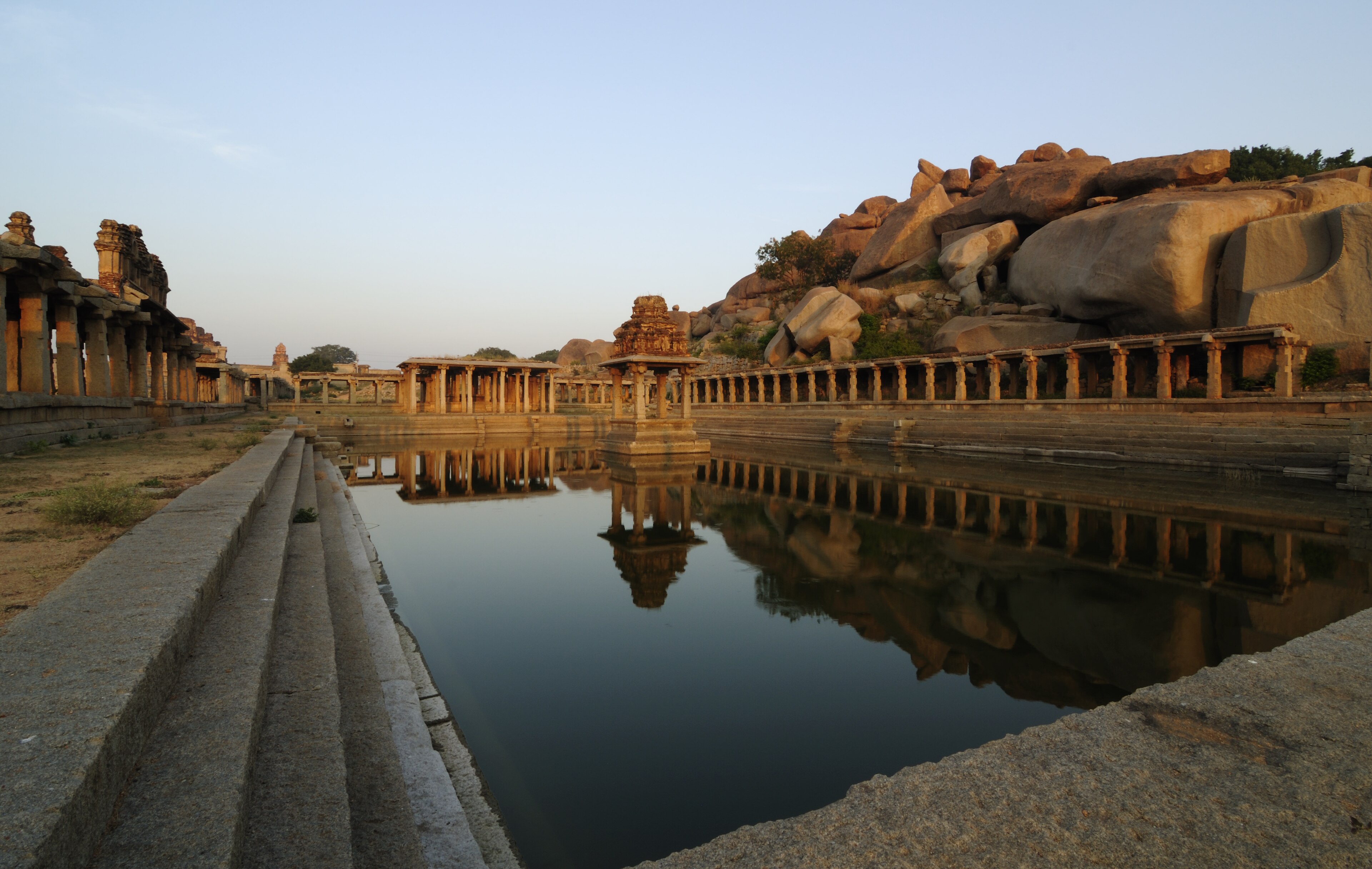
Establishing chronological sequences in the early urban centers of the Irrawaddy (Ayeyarwady) River valley is a notoriously slow exercise. At Sriksetra, located near modern Pyay in Myanmar, the archaeological record is largely built of fired clay. Its massive circular brick walls, enclosing an area of over 1,400 hectares, surround hundreds of unexcavated mounds, vaulted brick temples, and cylindrical stupas like the Bawbawgyi. Historically, popular consensus and early Burmese chronicles dated the heights of this Pyu city-state to between the seventh and ninth centuries CE. However, more careful stratigraphic excavations, paired with a modern philological re-evaluation of bilingual inscriptions, show that Sriksetra’s complex linguistic landscape was already mature by the fifth century CE.
The linguistic material found at Sriksetra does not represent a single, uniform introduction of Indian culture. Instead, the epigraphic record reveals distinct, layered corridors of lexical exchange. While religious specialists utilized Pali—the liturgical Middle Indo-Aryan language of Theravada Buddhism—for canonical scriptures, the Pyu ruling elite looked to Sanskrit for administrative vocabulary and royal titles. This deliberate division between the language of the monastery and the language of the court is written directly into the brick and stone monuments of the site.
The Stratigraphy of the Relic Chambers
Skeptics of early dates for Southeast Asian literacy have often pointed to the portability of small inscribed objects, which can easily slide down through archaeological strata or be deposited as heirlooms centuries after their manufacture. To establish a reliable dating framework, archaeologists look to undisturbed primary contexts.
The most critical of these contexts at Sriksetra is the relic chamber of the Khin Ba mound, excavated in 1926–1927. Sealed beneath a massive sandstone cover slab depicting an early stupa, the chamber remained completely untouched. Inside, archaeologists recovered a twenty-leaf manuscript made of beaten gold sheets, designed to mimic traditional palm-leaf manuscripts. The gold leaves contain excerpts from the Abhidhamma (buddhist philosophy) and the Vinaya (monastic rules) written entirely in Pali.
For decades, the paleography of these plates was compared to the Kadamba script of southwest India, leading to dating disputes. However, as noted in reports published in the journal Antiquity and discussed during the Cambridge Symposium on the Golden Pali Text, the script of the Khin Ba plates most closely resembles the early Telugu-Kannada scripts of the Pallava copper-plate grants from the late fifth century CE. This matches the style of the silver-gilt cylindrical reliquary found in the same chamber, which features a Pyu-Pali inscription around its rim. The undisturbed stratigraphy of the Khin Ba chamber anchors canonical Pali literacy at Sriksetra firmly to the second half of the fifth century CE.
The Bilingual Pedestal of Kan Wet Khaung
While the gold plates of the stupa mounds represent silent deposits of Buddhist scripture, the public stone inscriptions of Sriksetra tell a different story. The most significant of these is the Kan Wet Khaung mound inscription (cataloged as PYU016 in the Corpus of Pyu Inscriptions). Engraved on the four sides of a sandstone pedestal that once supported a seated Buddha image, the inscription is bilingual, featuring interlinear Sanskrit and Pyu.
Scholarly analysis of the Kan Wet Khaung inscription, edited by Arlo Griffiths and Bob Hudson in the Bulletin de l'École française d'Extrême-Orient, demonstrates how Pyu scribes handled the two distinct linguistic streams. The Sanskrit portions of the text do not contain Buddhist liturgical formulas. Instead, they record the activities of a local ruling lineage. The inscription mentions King Harivikrama and his successor, utilizing Sanskrit terms to define their political authority, lineage, and donations to the monastic community.
This is not a case of passive "Indianization." The Pyu vernacular—a Sino-Tibetan language—remains the primary grammatical framework of the text, but it selectively imports Sanskrit terms like varman (shield or protector) and vikrama (valour) to construct royal identities. Rather than adopting Sanskrit wholesale, the local elite used it as a specialized register for statecraft, while reserving Pali for religious merit-making.
Royal Urns and the Vikrama Dynasty
This division is further supported by the stone burial urns found near Sriksetra's Payagyi stupa and the Hpayahtaung temple. The Pyu practiced secondary cremation burials, placing the ashes of their dead in large earthenware or stone urns. Five large stone urns bear short, single-line inscriptions written in the Pyu script.
These epigraphs record the names of deceased individuals who belonged to what scholars call the Vikrama dynasty. The names end with the Sanskritized epithet -vikramavarman. By cross-referencing the names on these urns with the genealogy preserved on the Kan Wet Khaung pedestal, epigraphists have been able to trace a succession of rulers who reigned during the fifth and sixth centuries CE.
The choice of burial medium is highly telling. While the rulers adopted Sanskrit administrative names, they did not adopt classical Indian cremation rites, which typically called for scattering ashes in rivers. Instead, they deposited their ashes in stone urns buried near the foundations of Buddhist stupas. The archaeological context shows a hybrid culture where Sanskrit political vocabulary, Pali religious texts, and native Pyu funerary practices coexisted within the same monumental landscapes.
Reading the Layers of Sriksetra
The picture of Sriksetra that emerges from these investigations is not one of sudden, overwhelming cultural conversion. Instead, the stratigraphy of the stupa mounds and the philology of the bilingual inscriptions reveal a highly selective, two-pronged approach to importing Indian linguistic systems.
By separating the Pali of Buddhist liturgy from the Sanskrit of royal administration, the Pyu scribes created a sophisticated dual-layered system. This bilingualism allowed local rulers to participate in the broader, prestigious trade networks of the Bay of Bengal while maintaining their own distinct vernacular and funerary traditions within the brick walls of their city.