The Rigveda's Hidden Languages: Tracking 300 Non-Indo-Aryan Words Through Ancient Contact
The Rigveda contains roughly 300 words from Dravidian, Munda, and unknown substrate languages. Scholars debate which words, what they reveal about contact, and what happens when you read past the familiar loanword lists.
Meera Iyer for SwavedaMay 8, 2026
When the Hymns Speak in Someone Else's Tongue
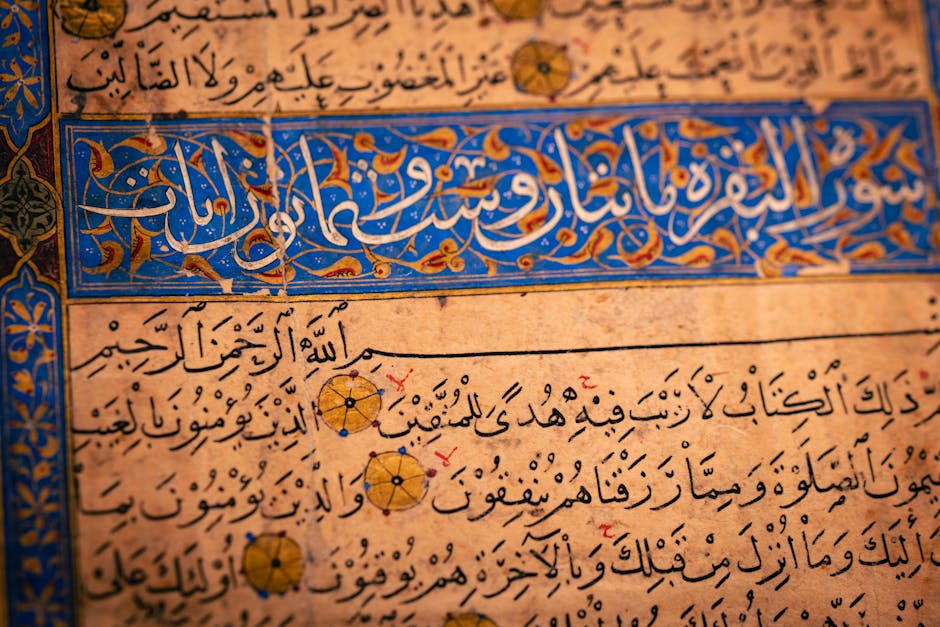
Open the Rigveda—the oldest sacred text of Hinduism, composed sometime between 1500 and 1000 BCE—and you are reading Sanskrit. Almost all of it. But about 300 words scattered across the 10 books are not Indo-Aryan. They are not Indo-European either. They belong to languages that have no surviving descendants, or they come from Dravidian or Munda families (Austro-Asiatic language systems) that still exist in South Asia today. According to Sanskrit scholar Frits Staal, about 300 words in the Rigveda are neither Indo-Aryan nor Indo-European, including words like kapardin, kumara, kumari, and kikata from Munda or proto-Munda languages, and others like mleccha and nir with Dravidian roots.
Most Rigveda scholarship treats loanwords as a curiosity—a footnote on language contact. This is where specialists go wrong.
These 300 words are not scattered noise. They cluster. They concentrate in domains that tell us exactly how early Indo-Aryan speakers encountered, learned from, and absorbed the knowledge systems of people already in South Asia. Flora. Fauna. Ritual objects. Music. Textiles. Domesticated animals. If you read carefully, the Rigveda becomes a phonetic record of cultural contact—one that specialists rarely examine in detail because it sits awkwardly between mainstream narratives and fringe claims.
Who Identified These Words, and How Many?
The counting itself is contested. This matters.
Linguist T. Burrow listed some 500 words in Sanskrit he considered loans from non-Indo-European languages in 1955, noting that in the earliest form of the language such words are comparatively few, but become more numerous over time. That was Sanskrit overall. The Rigveda specifically is older and narrower.
Kuiper identified 383 specifically Rigvedic words as non-Indo-Aryan—roughly 4% of its vocabulary—while Oberlies prefers to consider 344–358 "secure" non-Indo-European words in the Rigveda.
Even if all local non-Indo-Aryan names of persons and places are subtracted from Kuiper's list, that still leaves some 211–250 "foreign" words, around 2% of the total vocabulary of the Rigveda.
So: Staal says 300. Kuiper found 383. Oberlies calls 344–358 "secure." Strip out proper nouns and you have 211–250. The number depends on your standard of proof.
This matters because specialists argue fiercely about criteria. Some refuse to call a word a loanword unless you can trace it to a reconstructed proto-language with confidence. Others follow the logic: If a word appears in the Rigveda but no plausible Indo-European etymology exists, and Indo-European comparative material is abundant everywhere else, then the word is almost certainly foreign. That second approach—called the "default to foreign" principle by some, and criticized as sloppy by others—identifies more loanwords. Kuiper reasons that given the abundance of Indo-European comparative material and the scarcity of Dravidian or Munda, the inability to clearly confirm whether the etymology of a Vedic word is Indo-European implies that it is not.
Not all scholars accept this reasoning. The Indo-Europeanist and Indologist Thieme has questioned Dravidian etymologies proposed for Vedic words, for most of which he gives Indo-Aryan or Sanskrit etymologies. The debate is honest and technical. But it means that the number 300 is a scholarly consensus, not a fact.
What the Words Tell Us: Domains Matter
Forget the count. Focus on the shape of the data.
These loanwords cover local flora and fauna, agriculture and artisanship, terms of toilette, clothing and household. They do not describe the chariot, the war-horse, or the Indo-European gods. They name plants the speakers encountered. Tools made from unfamiliar materials. Animals with local names. This is the vocabulary of arrival, not conquest.
Many of these words—such as kapardin, kumara, kumari, kikata—come from Munda or proto-Munda languages found in the eastern and northeastern region of India, with roots in Austroasiatic languages. Munda languages today are spoken in central and eastern India. That means the Rigvedic speakers borrowed Munda words in the northwest—where the Indus Valley and the Panjab are—and preserved those words in hymns that were memorized and transmitted orally with extraordinary precision.
These are the earliest identifiable foreign words in Old Indo-Aryan, appearing in the oldest books of the Rigveda. The timeline matters. Some scholars argue for what Michael Witzel calls "layered" substrate influence. The Rigveda shows signs of Harappan influence in the earliest level and Dravidian only in later levels, suggesting that speakers of Harappan were the original inhabitants of Punjab and that the Indo-Aryans encountered speakers of Dravidian not before middle Rigvedic times.
But this claim remains debated. Krishnamurti deems the evidence too meagre for this proposal, stating that "The main flaw in Witzel's argument is his inability to show a large number of complete, unanalyzed words from Munda borrowed into the first phase of the Ṛgveda."
The Rigveda preserves what linguists call a substrate—the linguistic layer left behind when an incoming language absorbs speakers of local tongues. But scholars still debate what languages supplied the substrate. Was it a single lost language (the hypothetical "Harappan")? Was it Munda? Dravidian? A mix? The text itself does not say. We infer.
The Sound of Contact: Retroflexes and Gerunds
Here is where specialists disagree most sharply.
Vedic Sanskrit has retroflex consonants (ṭ/ḍ, ṇ) with about 88 words in the Rigveda having unconditioned retroflexes, including words like Iṭanta, Kaṇva, śakaṭī, kevaṭa, puṇya and maṇḍūka. A retroflex is a sound made with the tongue curled back. No other Indo-European language has this sound. Every major language family of South Asia does—Dravidian, Munda, Burushaski.
Did the Rigvedic speakers pick up the retroflex sound from the languages they encountered? Or did the sounds already exist in the Indo-Aryan they spoke before arriving in South Asia?
Retroflex phonemes are now found throughout the Burushaski, Nuristani, Dravidian and Munda families and are reconstructed for Proto-Burushaski, Proto-Dravidian and Proto-Munda, and are thus clearly an areal feature of the Indian subcontinent. They are not reconstructible for either Proto-Indo-European or Proto-Indo-Iranian. The acquisition of the phonological trait by early Indo-Aryan is unsurprising, but it does not immediately permit identification of the donor language.
The retroflex question exemplifies a problem in substrate studies: sound changes and borrowed words leave traces, but those traces have multiple explanations. This is why the debate has persisted for decades without resolution.
Evidence shows contact. The intensity and direction of that contact remain open questions.
What Does "Foreign" Even Mean?
This is where a careful philologist must slow down.
Consider mayūra, the Sanskrit word for peacock. This word appears in the oldest known Indo-Aryan language, the language of the Rigveda (c. 1500 BCE), and is one of over a dozen words borrowed from Dravidian, along with ulūkhala 'mortar' and khála 'threshing floor'. The peacock is native to South Asia. The Indo-Aryans came from the north and west. The word mayūra therefore almost certainly came from speakers already in the subcontinent.
But consider kuṇḍa, meaning a pit or hole. This is cited as a Dravidian word among several Dravidian words found in the Rigveda that do not occur in other Indo-Iranian languages. What makes kuṇḍa Dravidian? The sound shape. The morphology. The fact that no Indo-European etymology fits. The fact that similar words exist in modern Dravidian languages. But reconstructed Proto-Dravidian from 1500 BCE is itself a hypothesis. We are comparing a 3,500-year-old text to a reconstructed language, not to living attestations.
Scholars handling this data with rigor use the term "loanword" loosely. More precisely: These are words whose probable non-Indo-Aryan origin is inferred from absence of Indo-European cognates and presence of phonological or structural parallels to known non-Indo-European languages of South Asia. That is careful. It is not certain.
Why This Matters Now
The debate over Rigvedic loanwords sits at a junction of three disciplines: historical linguistics, archaeology, and ancient history. Each reads the evidence differently.
Tradition holds that the Indo-Aryans migrated into the subcontinent and composed the Rigveda there. Evidence shows they encountered and absorbed vocabulary from local speakers. Scholars debate when, where, and how much contact occurred, and what the Rigveda's loanword clusters tell us about Indo-Aryan settlement patterns.
What the careful reading does not support is either complete isolation from local populations or rapid conquest. The linguistic sharing provides clear indications that the people who spoke Rigvedic Sanskrit already knew and interacted with Munda and Dravidian speakers.
The 300 non-Indo-Aryan words are not archaeological finds. They are not genetic markers. They are something subtler and older: the preserved speech of people learning to live together. They tell us that language change in early South Asia was not top-down but collaborative—a process of two groups (or more) adjusting their speech, their sound system, their vocabulary, in response to each other. The Rigveda froze that process in place through oral memorization of exceptional fidelity.
To read the Rigveda without attending to these 300 words is to miss what the text actually says about the world it describes. To read them without acknowledging scholarly disagreement is to mislead. The careful answer is: The Rigveda preserves evidence of contact with multiple non-Indo-European language communities. Specialists debate the identity, timing, and intensity of that contact. The words themselves are real. The story they tell is still being interpreted.