The Potters of Black-and-Red Ware: Epigraphic and Archaeometric Evidence from Iron Age Adichanallur
Scientific dating and graffiti post-firing marks on Black-and-Red Ware ceramics at Adichanallur illuminate how Iron Age artisans produced pottery and organized local trade along the Tamirabharani river valley.

Kavya Sharma for SwavedaNovember 23, 2026
Listen to this article · 7 min · Read by an AI voice
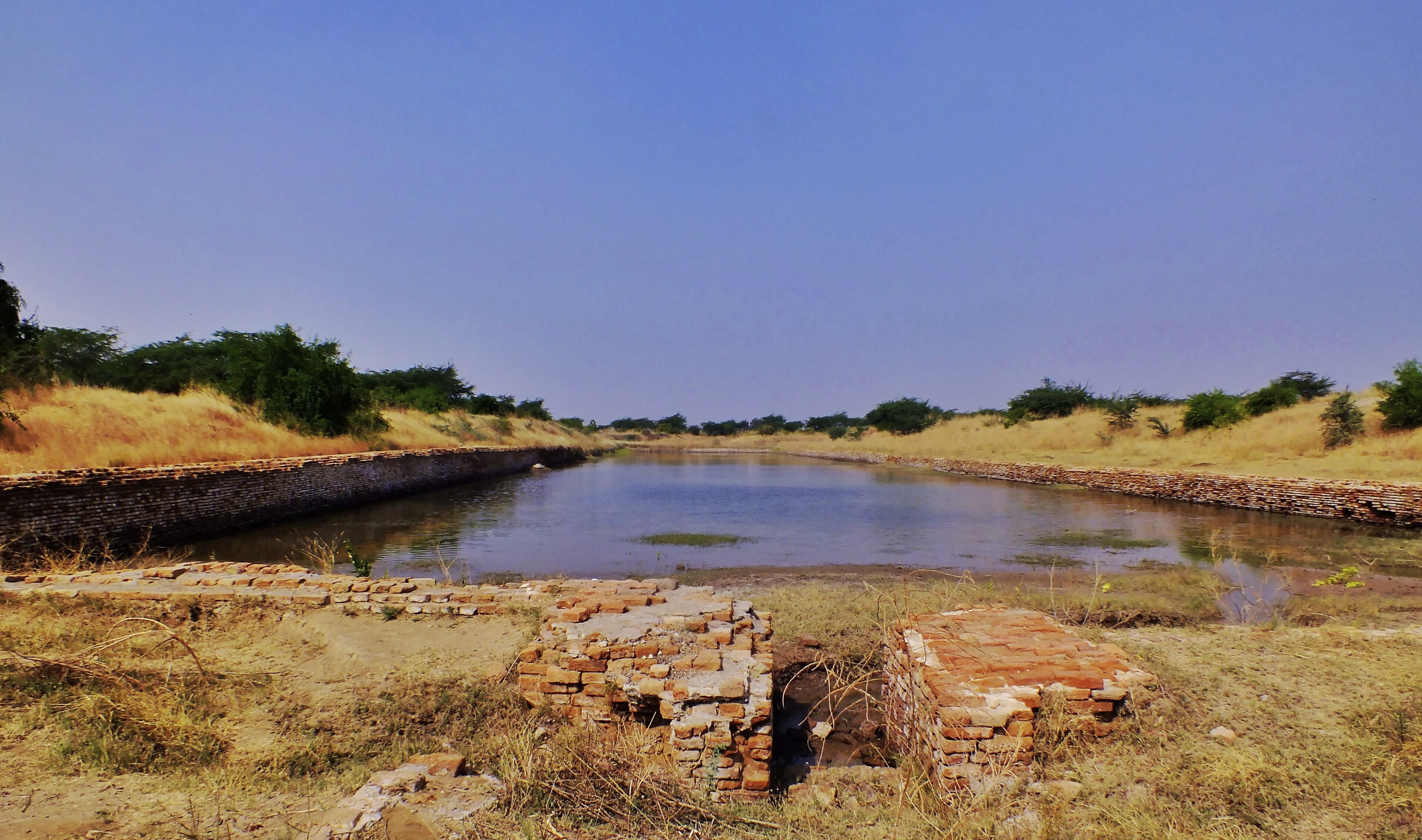
Along the gravel mounds flanking the Tamirabharani River in southern Tamil Nadu, thousands of red-and-black earthenware urns lie buried beneath the soil (Swaveda). At Adichanallur in Thoothukudi district, these ceramic vessels were crafted to hold human remains and grave offerings long before urban centers took root across South India (CAShorts). Modern archaeometric testing and epigraphic examination of these pots offer a clear look into the workshops and trade channels of the Iron Age river valley.
The signature ceramic of this era is Black-and-Red Ware (earthenware fired to produce a red exterior and a black interior and rim). Artisans achieved this contrast using inverted firing in open or pit kilns. Potters stacked vessels upside down, filling the interior with organic material like husks or dung. During firing, oxygen was restricted inside the pot, creating a carbon-rich reducing atmosphere that turned the interior black. Meanwhile, oxygen circulated freely around the exposed outer walls, oxidizing the iron oxides in the local clay to turn them red.
Pottery Techniques and Thermal Analysis
Thermoluminescence (TL) testing and Optically Stimulated Luminescence (OSL) dating conducted on potsherds from Adichanallur demonstrate that these vessels were subjected to high firing temperatures, often exceeding 600°C (OSTI.GOV). Artisans used silt collected directly from the alluvial banks of the Tamirabharani, mixing it with fine sand temper to prevent cracking during thermal contraction.
The resulting vessels range from massive burial urns (thazhi) measuring over five feet in height to delicate bowls, ring stands, and dishes placed inside as grave goods (The History Blog). Evidence shows that potters polished the surfaces with pebbles or bone smoothers before firing, creating a burnished glaze-like sheen without using a true mineral slip.
Radiocarbon Baselines and Historical Timelines
For decades after Alexander Rea's initial excavations for the Archaeological Survey of India (ASI) between 1889 and 1905, the precise age of the site was contested (Scribd). Chronologies rested on comparative ceramic typology until organic material extracted from the 2004–2005 ASI excavations led by T. Satyamurthy was submitted for Accelerator Mass Spectrometry (AMS) radiocarbon testing (The News Minute).
Testing performed by the Beta Analytic Testing Laboratory in Florida dated samples from Urn 58 and Urn 105 to between 905 BCE and 540 BCE (The News Minute), (Swaveda).
┌─────────────────────────────────────────────────────────┐
│              ADICHANALLUR CHRONOLOGY                    │
├─────────────────────────────────────────────────────────┤
│ 905–806 BCE  ─ Upper limit: Urn 105 AMS radiocarbon     │
│ 791–540 BCE  ─ Mid range: Urn 58 calibrated dates       │
│ 500–300 BCE  ─ Epigraphic window: Early Tamil-Brahmi    │
└─────────────────────────────────────────────────────────┘
Scholars debate the relationship between these early dates and the broader timeline of South Asian literacy, as some older OSL luminescence tests suggested ceramics from the site were even earlier, though AMS radiocarbon dating on organic remains inside the urns remains the accepted standard among field archaeologists (Wikipedia).
Epigraphy and Graffiti Marks
Beyond the physical composition of the clay, the surfaces of Adichanallur's Black-and-Red Ware carry crucial markings. These fall into two main categories: post-firing scratch marks (graffiti) and early Tamil-Brahmi letters (Blogger).
Incised after the pot had been fired, graffiti marks include geometric shapes, sun symbols, ladders, and star-like figures. Epigraphers note that these marks appear consistently across different urn burials in the Tamirabharani valley, indicating they functioned as owner signatures, clan emblems, or potters' marks used to identify specific workshop batches.
In 2004, excavation teams identified a pot placed inside an urn featuring a string of characters etched onto its interior wall (Blogger). Epigrapher M.D. Sampath tentatively read the script as an early form of Tamil-Brahmi (Blogger).
⚖ Scholarly debate continues over the precise paleographic reading of these early scratches. While some epigraphers view them as transitional proto-writing connecting pre-historic graffiti to fully developed Tamil-Brahmi scripts, others maintain that definitive script classifications require larger, multi-word inscriptions on non-sepulchral contexts.
Riverine Trade and Resource Networks
The grave goods interred inside the Black-and-Red Ware urns reflect a community with specialized production and access to raw materials:
- Iron implements: Iron chisels, daggers, axes, and arrowheads placed alongside burial vessels show local ironworking capabilities (Antiquity of Iron).
- High-tin bronze: Bowls, sieve vessels, and ornamental cup stands made of high-tin bronze demonstrate sophisticated metallurgical skills (The History Blog).
- Agricultural remains: Preserved paddy husks inside burial pots confirm active rice cultivation along the river plain (Swaveda), (The History Blog).
- Precious metals: Exceptional finds, such as a gold diadem recovered from an eight-foot burial urn, point to social stratification and long-distance access to precious metals (The History Blog).
Situated approximately 15 kilometers inland from the coastal port of Korkai, Adichanallur served as an inland node on the Tamirabharani trade corridor (Wikipedia). The distribution of standardized Black-and-Red Ware ceramics across nearby sites like Sivagalai reveals that rural craft production supplied both agricultural communities and coastal trading stations well before urban centers emerged during the Sangam period (The News Minute).
Through the physical record left in fired clay and iron implements, Adichanallur documents an organized Iron Age society where potters, metalworkers, and farmers sustained a distinct regional culture in South India.