The Potsherds of Alagankulam: Re-evaluating Sangam-Era Stratigraphy and Maritime Exchange
Excavations at the Vaigai estuary site of Alagankulam reveal early maritime networks operating independently of Roman imperial initiative, challenging old chronological assumptions.

Rohan Bhattacharya for SwavedaSeptember 30, 2026
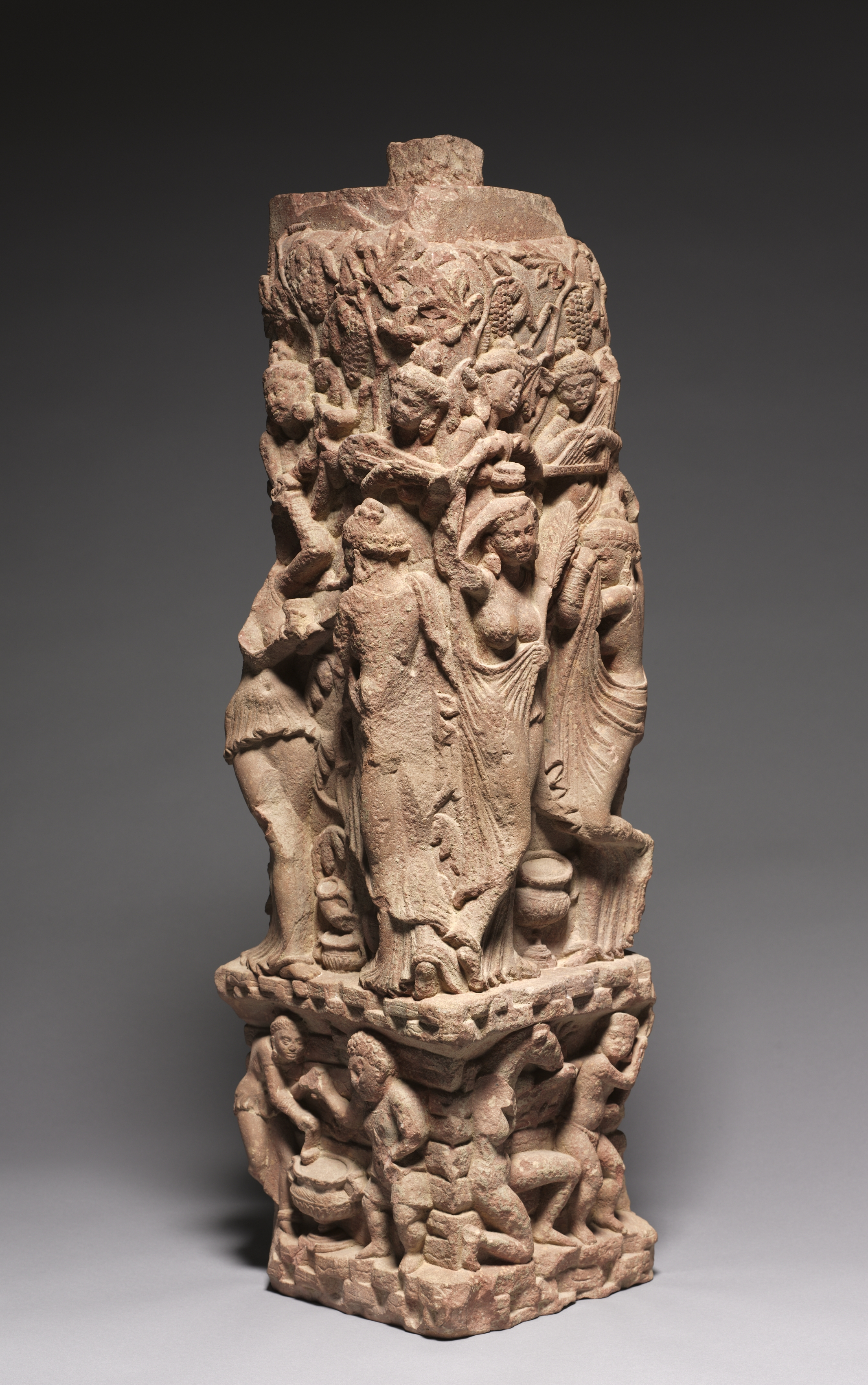
For decades, the chronologies of India’s early maritime trade with the Mediterranean have rested heavily on a single reference point: the site of Arikamedu. Excavated in the 1940s by Sir Mortimer Wheeler, Arikamedu's stratigraphy (the analysis of soil layers to establish relative age) was tied directly to imported Roman tableware, most notably Arretine ware. This led to a widely accepted model where South Asian international trade was treated as a consequence of the expansion of the early Roman Empire under Augustus Caesar.
However, systematic excavation reports and radiometric dates from sites along the Coromandel Coast (the southeastern coast of India) invite a reassessment. Chief among these is Alagankulam, located at the mouth of the Vaigai River in Ramanathapuram district. A close examination of Alagankulam's distinct cultural layers, its diagnostic pottery types, and its bilingual epigraphy challenges the chronological primacy of Arikamedu. The evidence shows that a highly organized trade infrastructure existed prior to, and independent of, Roman imperial initiatives.
The Stratigraphic Sequence of Alagankulam
At Alagankulam, the cultural deposits span several distinct occupational sequences, documented across multiple seasons of excavation by the Tamil Nadu State Department of Archaeology and the Archaeological Survey of India (ASI).
In Period I, the earliest phase of habitation, we find an assemblage dominated by local black-and-red ware (a traditional South Asian fine ceramic). Notably, this period also yields fine grey ware and a small number of Northern Black Polished Ware (NBPW) sherds. In papers published in Puratattva and Man and Environment, the occurrence of NBPW is critical. It links early Alagankulam with the trade networks of the late Mauryan period, dating to approximately the fourth to third centuries BCE.
Importantly, Period I shows absolutely no evidence of Roman contact. The early coastal populations were already participating in extensive domestic riverine and long-distance coastal networks before the first Western ships arrived.
It is in Period II that we see the introduction of foreign trade items, marked by the arrival of Mediterranean pottery, including Roman amphorae (large two-handled jars used to transport wine or olive oil) and rouletted ware.
Unlike Arikamedu, where the imported Roman Arretine ware was used to anchor the site’s chronology to the first century CE, the early layers of Period II at Alagankulam indicate a transition that occurred much earlier. Radiocarbon dating of charcoal samples from the deeper layers of Period I has yielded dates as old as 345 BCE and 2200 ± 140 before present (approximately the third century BCE). This indicates that the port's infrastructure was fully mature before Roman commercial interests began actively seeking eastern luxury goods, such as the famous Gulf of Mannar pearls.
The Problem of Rouletted Ware
The most abundant diagnostic ceramic associated with this trade is rouletted ware—a fine, polished pottery characterized by concentric circles of small, indented patterns on its flat interior base. For generations, scholars debated whether this ware was imported from the Mediterranean or manufactured locally. Early interpretations assumed the complex decorative technique was a direct imitation of Roman pottery imports.
However, mineralogical and chemical studies published in Antiquity and Heritage Science have altered this view. Geochemical analysis of rouletted ware samples from Alagankulam, Keeladi, and Anuradhapura in Sri Lanka reveals a consistent, singular clay source that does not match European geologies. Instead, the clay profile is indigenous to the Indian subcontinent, specifically the lower Ganges region and parts of the southeastern coast.
This means that "rouletted ware" is not a passive Roman import, but a highly standardized, domestic product. The presence of this ware across multiple Indian Ocean ports demonstrates a highly organized, pre-existing Indian coastal trade network. Mediterranean merchants did not create this maritime trade; they plugged themselves into an existing network that was already using Alagankulam as a major transshipment hub.
Epigraphy and the Bilingual Context
Beyond the physical vessels, the writing incised on the pottery provides crucial evidence of the human networks driving this trade. Excavations at Alagankulam have yielded numerous inscribed potsherds carrying Tamil-Brahmi script (the earliest regional script of South India) alongside Northern Brahmi and Prakrit (an early Indo-Aryan middle language) characters.
Most of these inscriptions are post-firing graffiti. They represent personal names scratched onto the vessels by their owners, rather than labels applied by potters at the kiln. The mixture of names is telling. We find local Tamil names alongside Prakrit names, pointing to a cosmopolitan community of resident merchants.
Particularly significant is a bilingual context found on personal items like ring seals. For instance, one inscribed gold ring unearthed in the region features a dual legend in both Tamil-Brahmi and Prakrit. The inscription reads sātaṉ sātevēgi, combining the Tamil personal name Sātaṉ with the Prakrit term sārthavāha (meaning a caravan leader or guild merchant).
This epigraphical evidence reveals that the local merchant guilds (srenis) were highly literate, multilingual, and capable of operating across regional linguistic boundaries. This level of internal organization challenges the old, colonial-era narrative that early Indian trade required Roman imperial administration to organize its ports and trade routes.
A Decentered Maritime History
When we synthesize the stratigraphy of Alagankulam with the latest reports from nearby inland sites like Keeladi—which has pushed back the dates of Tamil-Brahmi and urbanism in the Vaigai Valley to the sixth century BCE—the primacy of the Roman Empire as the primary catalyst for South Asian trade collapses.
The picture that emerges from the buried hearths, the local clay beds, and the discarded potsherds of Alagankulam is one of indigenous momentum. Long before the Roman fleet sailed from the Red Sea ports of Myos Hormos and Berenike, the merchants of the Vaigai Valley were already writing their names on their pots, refining their clay, and sailing the waters of the Bay of Bengal.