The Munich Devī: How a Bavarian Royal Collection Shaped the European View of South Asian Bronze Art
Archival records from Munich's Museum Fünf Kontinente reveal how 19th-century German curators and collectors shifted South Asian metalwork from bizarre curiosities to masterworks of fine art.

Kavya Sharma for SwavedaSeptember 30, 2026
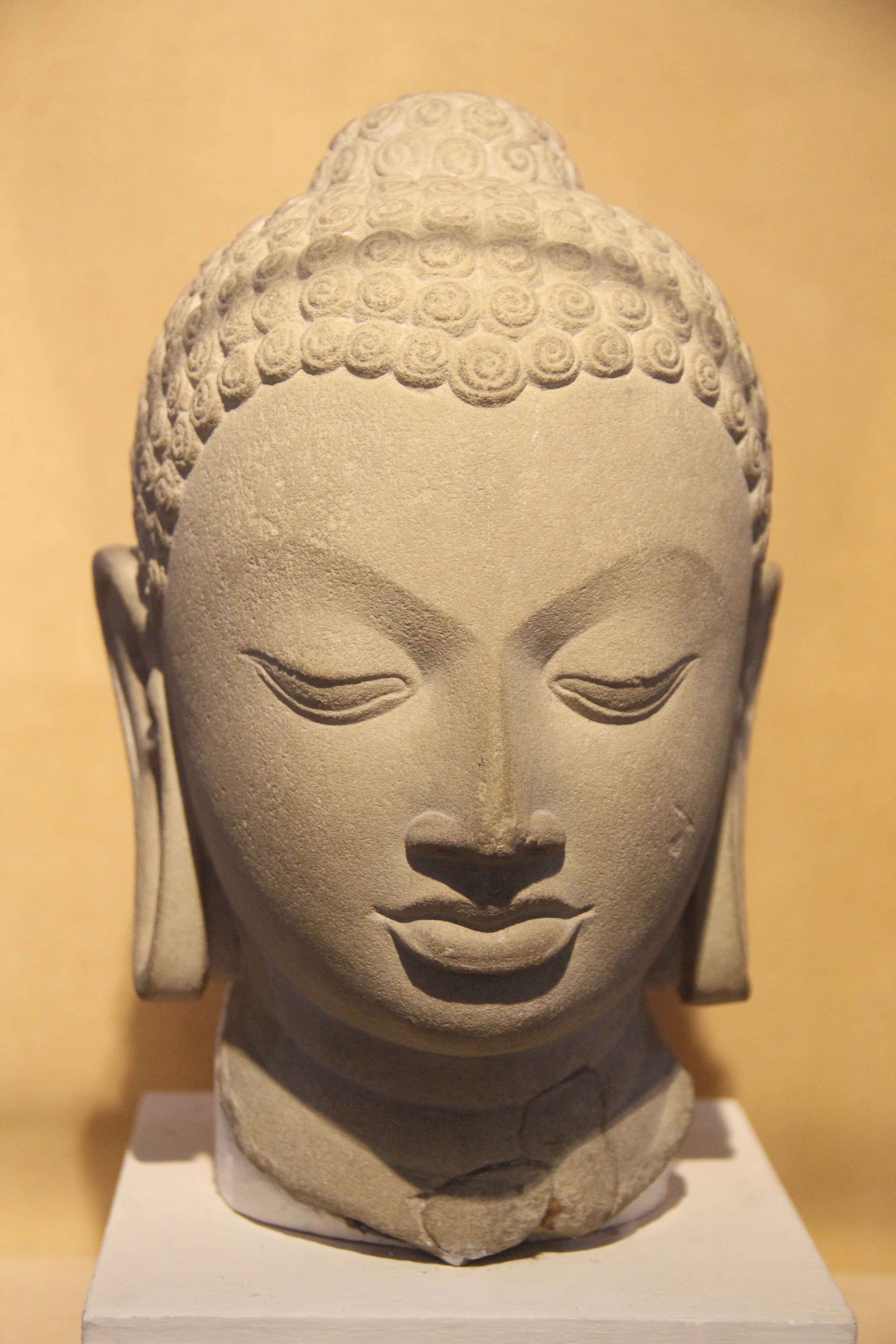
How does a metal image of a deity, cast in a workshop in the Deccan or Tamil Nadu to be carried through streets in the heat of a South Indian festival, end up behind a glass case in Bavaria, classified as fine art?
For centuries, European visitors to the Indian subcontinent struggled to comprehend the visual language of South Asian sacred metalwork. Early travelers frequently described the multi-armed, high-pointed iconographies of Hindu deities as "monstrous" or "grotesque," viewing them through a lens shaped by classical Greco-Roman ideals of anatomy. Yet, by the mid-20th century, these exact objects were being celebrated in European museums as masterpieces of world craft.
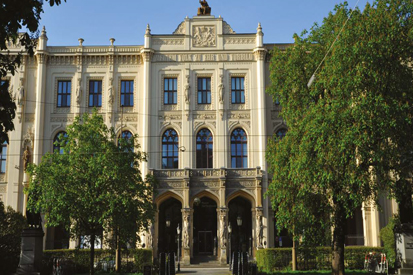
The mechanics of this transition are preserved in the archival records of Munich’s Museum Fünf Kontinente (Museum of Five Continents), Germany's oldest ethnological museum (Discover Germany). Research published by Anne Hartig, the museum's curator for South and Southeast Asia, traces how the display strategies of Munich’s curators systematically dismantled the old colonial categories of "foreign curiosity" and replaced them with those of fine art.
From Missionaries to Scientists: The Early Collectors
Before there was a dedicated public museum, South Asian bronzes and everyday objects entered Munich through haphazard channels, largely tied to the personal ambitions of Bavarian rulers and regional travelers.
In the mid-19th century, before the museum was officially established as the Königlich Ethnographische Sammlung (Royal Ethnographic Collection) in 1862 (Wikipedia), objects trickled in from various collectors (Taylor & Francis). Among the earliest contributors was Xaveria Berger, a Catholic sister belonging to the Congregatio Jesu (familiarly known as the English Ladies) (Congregatio Jesu). Berger, who was stationed as a missionary in Patna, India, sent a collection of South Asian items back to Munich before 1863, including paintings on ivory (Restauro).
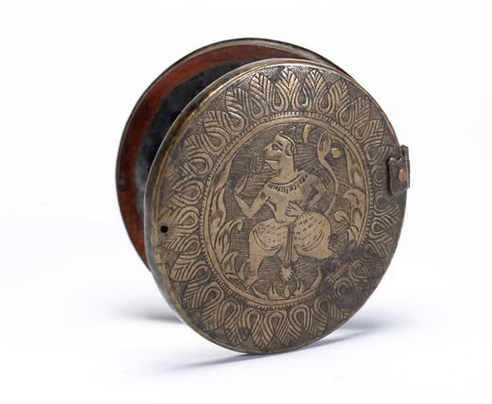
Similarly, the Schlagintweit brothers—Adolph, Hermann, and Robert—embarked on a massive scientific expedition to India and Central Asia in 1854 (Restauro). Supported by the Prussian king and the British East India Company, they gathered thousands of geological, botanical, and cultural objects. In 1859, the Bavarian state purchased approximately 1,000 of these items (Restauro).
At this early stage, these items were treated as scientific specimens. They were evidence of foreign technology, geography, or "exotic" religious practices, rather than works of high artistic achievement. Under the museum's first director, Moritz Wagner, the focus remained heavily ethnographic (ISBN.de). A bronze devī (goddess) or a household utensil was displayed alongside geological samples to illustrate the "natural history" of the Indian subcontinent.
Lucian Scherman and the Row of Gods
The perspective began to shift under the leadership of Lucian Scherman, who served as director from 1907 to 1933 (Taylor & Francis). Scherman was a Sanskrit scholar and ethnologist who brought a rigorous academic taxonomy to the collection.
In 1913, Scherman redesigned the fifth exhibition room of the museum, located in the old Galeriegebäude (gallery building) on the Maximilianstraße (Taylor & Francis). Archival photographs from this period show a highly ordered, symmetrical presentation (Taylor & Francis). Sculptures and bronzes from Mathura and Bodhgaya were arranged on a large, three-tiered wooden frame covered in monochrome fabric (Taylor & Francis). The largest and most complete pieces were placed in the center, flanked by smaller bronze deities.
This was a major departure from the chaotic, floor-to-ceiling "curiosity cabinet" style of the 19th century. By raising the bronzes onto individual steps and organizing them by regional style, Scherman forced the European viewer to look at them as distinct, structured compositions. However, the objects were still grouped as types—specimens of Buddhist or Hindu iconographical development—rather than as individual masterpieces of sculpture.
The White Cube and the Birth of "Asian Art"
The final, radical transformation in how South Asian bronzes were viewed occurred in the aftermath of World War II. On July 10, 1954, the museum officially reopened to the public with a landmark exhibition titled Asiatische Kunst (Asian Art) (Taylor & Francis).
The exhibition, which featured 713 objects spread across twelve rooms on the first floor, was spearheaded by Director Heinrich Ubbelohde-Doering and curator Andreas Lommel (Taylor & Francis). Ubbelohde-Doering and Lommel made a deliberate, controversial decision: they completely separated everyday ethnographic items from sacred stone and bronze sculptures (Taylor & Francis).
In the new layout, Room Ten was filled with domestic tools, textiles, and everyday objects (Taylor & Francis). Room Eleven, by contrast, was designed as a "white cube" (Taylor & Francis). The walls were painted a neutral, sterile white, and the historic stone and bronze sculptures were placed on minimalist pedestals under carefully directed spotlights (Taylor & Francis). All explanatory text, geographical maps, and ethnographic context were stripped away (Taylor & Francis).
The goal of this design was to eliminate any "distractions" and force the viewer to focus entirely on the physical, aesthetic qualities of the sculptures—their plastic form, the green patina of the aged copper-alloy, and the fluid grace of their limbs. By adopting the presentation style of modern art galleries, Munich’s curators completed the long journey of the South Asian bronze. The sacred icon, once dismissed as an idol and later cataloged as a scientific specimen, had finally been elevated to the status of timeless, universal art.
The Lived Object Beyond the Glass
While the "white cube" succeeded in gaining European respect for South Asian artistic mastery, it did so by stripping the objects of their living meaning. A bronze deity in India is not a passive ornament; it is a vessel for the divine, cared for, dressed, bathed, and carried among crowds.
This tension between the silent observation of the museum and the active devotion of lived religion remains a central challenge for contemporary curators. Recently, the museum hosted a major special exhibition, Krishna: Religion, Art, and Pop Culture, curated by Anne Hartig and Patrick Felix Krüger. Instead of isolating the historic bronzes, the exhibition brought back their context, using audiovisual media to show the deities in house shrines and active festivals (Berlin-Mitte Zeitung).
By showing the objects as both masterpieces of ancient metalwork and active participants in modern life, the museum continues to reshape how Europe looks at the sacred art of South Asia. The copper-alloy devī in her glass case is no longer just a beautiful, silent form—she is a survivor of a long intellectual journey across two continents.