The Mason's Chisel: How a Small Stone Inscription in Dholavira Rewrites Harappan Literacy
A 16.5 cm sandstone lintel fragment from Dholavira reveals Indus scribes carved script directly onto monumental stone, challenging long-held assumptions about ancient Harappan writing media.

Kavya Sharma for SwavedaNovember 2, 2026
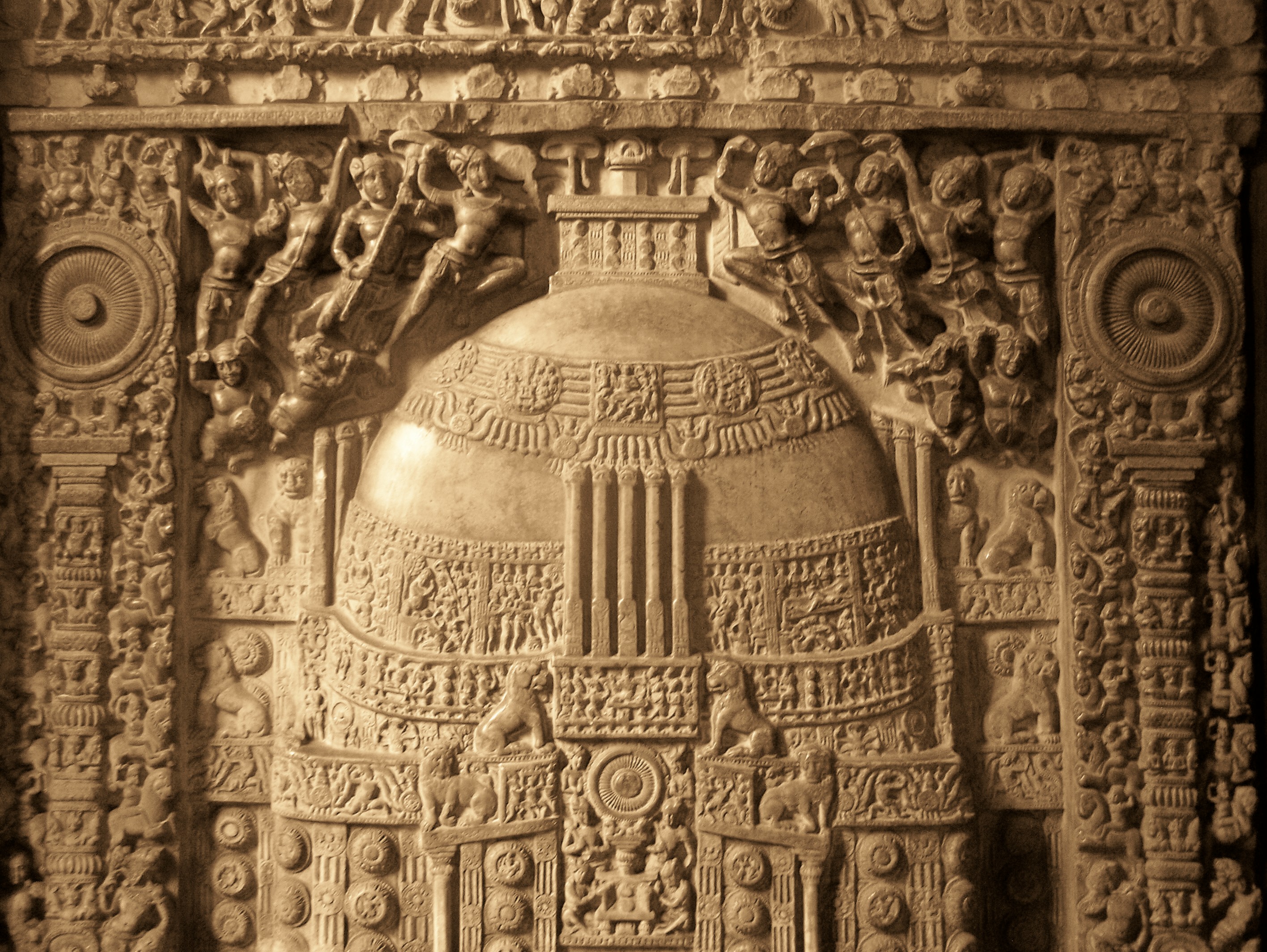
What did an administrative center sound like when its builders were at work? On Khadir Bet, a low island surrounded by the salt flats of the Great Rann of Kutch, the answer was the steady strike of bronze chisels against sandstone. The builders of Dholavira did not merely lay sun-dried mud bricks. They quarried fine white and pink rock from local outcrops, smoothing ashlar blocks for citadel walls, dressing pillars, and lining deep cisterns designed to catch every drop of monsoon rainfall.
For decades, archaeological tradition held that Harappan writing belonged to a very different category of craft. Physical evidence showed that script survived overwhelmingly on small, highly portable objects: polished steatite (talc) square seals, stamped terracotta clay tags, and incised pottery fragments. Because these delicate items dominated the record, modern scholars long assumed that administrative script was strictly confined to trade tokens or painted onto perishable organic media, such as birch bark and palm leaves, that rotted away in the subcontinent's damp soils.
That long-held assumption began to unravel as systematic excavations at Dholavira progressed under R.S. Bisht, former Joint Director-General of the Archaeological Survey of India (ASI). Bisht led fourteen field seasons at the site between 1989 and 2001, exposing a sprawling urban metropolis shaped by monumental architecture and sophisticated water harvesting reservoirs (Harappa.com).
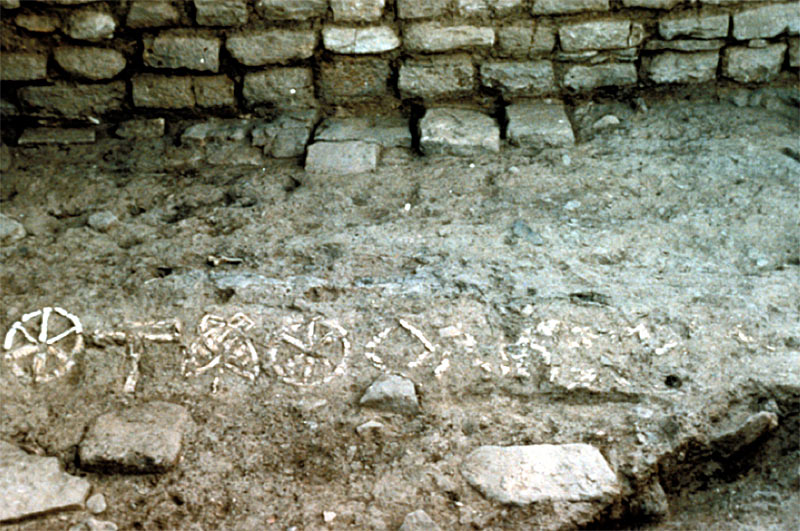
The site first gained global epigraphic fame in 1991 near the northern gateway of its citadel (varnam). There, archaeologists discovered ten large signs molded from white gypsum paste, each about 37 cm tall (The Hindu). The letters had once been set into a wooden board roughly three meters long (The Hindu). When the timber decayed, the gypsum symbols fell face down into the soil of the gatehouse chamber, preserving their original order (Exploring Indian Heritage). This famous "signboard" offered clear proof that Harappan writing was displayed publicly at a civic scale (varnam). Yet, because the text relied on molded plaster mounted to wood, it did not fully dismantle the belief that Harappan scribes avoided carving directly into hard stone (The Hindu).
The Inscribed Sandstone
That boundary was crossed during the 1999 excavation season, when Bisht’s team found a worked fragment of natural limy sandstone in the "bailey" section of the citadel (The Hindu). Documented in the official ASI excavation report (R.S. Bisht / Academia.edu), the surviving block measures 16.5 cm in length and 8 cm in width (Scribd / ASI Report).
Unlike a portable seal meant to be pressed into soft clay, this artifact was a piece of architectural masonry. Evidence shows it was originally part of a rectangular limestone slab that served as a doorway lintel (horizontal structural beam) (The Hindu). Deeply cut into its dressed face are three prominent Harappan script signs, each measuring 7 cm tall and 6 to 10 cm wide (The Hindu). A faint fourth symbol survives on the fractured left edge, showing that the complete inscription ran right-to-left across a wider stone block before it broke (The Hindu).
By Stage V of Dholavira’s urban timeline—representing the late mature period of the city—the broken inscription was reused as ordinary building material. Masons set the fragment face-out into the wall of an underground chamber (The Hindu). The discovery revealed that stone cutters did not work in isolation from administrative life. Scribes and masons collaborated directly, using metal chisels to turn structural rock into a permanent scribal medium (The Hindu).
Evidence and Scholarly Debate
The 16.5 cm sandstone fragment reshapes how historians interpret the material life of Harappan administration:
- Evidence shows that Indus scribes and masons possessed both the tools and the technical skill to engrave large, precise Harappan script signs directly into hard sandstone (The Hindu). This physical evidence broadens the known range of Harappan writing media far beyond soft talc, fired clay, and timber (The Hindu).
- Evidence shows that direct stone inscriptions have not been recovered from major alluvial sites like Mohenjo-daro or Harappa, where natural building stone was absent (The Hindu). Independent researcher Michel Danino observed that this absence reflects geological constraints rather than a cultural refusal to engrave stone (The Hindu). Where quarry stone was locally available, as in Kutch, Harappan administrative writing adapted to stone (The Hindu).
- Scholars debate the specific civic purpose of the carved lintel. Excavator R.S. Bisht suggested the text may have recorded a personal name, an official title, or a protective administrative statement over the doorway (The Hindu). Epigraphers continue to debate whether monumental stone carving was a widespread public practice across elite sectors of Dholavira or an uncommon craft restricted to specialized royal workshops.
The small lintel fragment demonstrates that Harappan writing was fundamentally flexible. In river valleys where clay and timber were abundant, scribes stamped terracotta and built wooden signboards (The Hindu). In the rocky landscapes of Kutch, where workers dressed sandstone daily for urban reservoirs and fortress gates, the mason's chisel transformed local bedrock into an enduring public document (The Hindu).