The Denarii of Karur: What Roman Aurei and Drachmae Reveal About Chera Port Networks
An analysis of Roman gold and silver coin hoards along the Amaravathi riverbed, contrasting archaeological find-spots with descriptions of Yavanas in Sangam literature.

Rohan Bhattacharya for SwavedaAugust 19, 2026
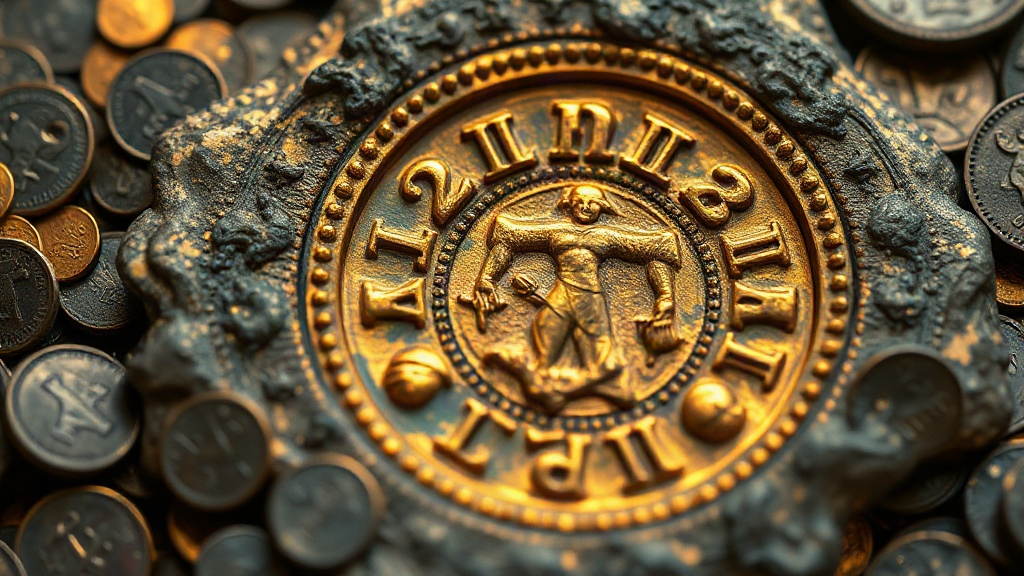
The bed of the Amaravathi River, a tributary of the Kaveri that flows past the town of Karur in Tamil Nadu, behaves like a natural sluice box. For decades, monsoon freshets have churned the river gravel, occasionally throwing up flat, oxidized discs of silver and gold. These are not local issues, but Roman denarii (standard Roman silver coins) and aurei (standard Roman gold coins), minted thousands of miles away in Rome, Lugdunum, and Antioch.
While sensationalist accounts often present these finds as proof of an ancient global supermarket, a closer stratigraphic and spatial look at the Karur hoards reveals a more complex economic picture. The distribution of these coins along the inland river valleys of the ancient Chera kingdom highlights a highly organized network of selective metal absorption, regional political control, and localized trade corridors.
The Stratigraphy of the Riverbed
In archaeological reports, Karur is frequently associated with the ancient city of Vanji, the inland capital of the Sangam-era Chera dynasty. In the journal Puratattva (No. 26, 1995-96), excavations conducted by the Tamil Nadu State Department of Archaeology confirmed a continuous occupational sequence at Karur. The lowest cultural layers yield Megalithic black-and-red ware, followed by layers containing Rouletted ware (a smooth, wheel-made pottery with concentric banded designs) and pieces of Roman amphorae (double-handled storage jars).
The coin distributions are highly localized. Unlike the coastal emporium of Arikamedu, where Roman pottery dominates but coin finds are relatively sparse, the inland sites of the Coimbatore plateau—particularly Karur, Pollachi, and Vellalur—have yielded some of the largest concentrations of Roman imperial coins in India.
The physical condition of these coins tells a story of deliberate handling. Many of the gold aurei found in the region bear deep, deliberate slash marks across the imperial portraits, particularly those of Augustus and Tiberius. Scholars debate the meaning of these cuts. Some epigraphists suggest the slashes were countermarks to cancel the legal tender status of the coin within Roman borders while validating its bullion value in South India. Others argue it was a test of purity performed by local money changers, or nayakkars (coin testers), suspicious of debased Roman silver.
Aurei, Denarii, and Drachmae: The Metal Hierarchy
The hoard compositions indicate that trade was not conducted through a single, unified currency. Instead, different metals served distinct functions in the regional economy.
Gold aurei acted primarily as bullion or high-value prestige goods. These coins did not circulate widely as currency for daily transactions. Instead, they were hoarded by local chieftains and kings to consolidate wealth or were melted down to create jewelry. The presence of Roman gold coins in inland hoards suggests they were traded along secure, state-controlled routes linking the western ports of Muziris (near modern Kodungallur) and Tyndis to the interior markets through the Palghat Gap.
In contrast, the silver denarii and imported Mediterranean copper coins, alongside punch-marked coins from Upper India, show signs of heavy wear. This wear indicates active circulation within urban centers like Karur. Additionally, silver drachmae (ancient Greek coins) from the Western Kshatrapa rulers of Western India have been found in the same contexts, indicating that Karur served as an inland trade node where multiple regional currencies met.
Yavanas in Literature and the Soil
Evidence shows a distinct gap between how foreign traders, collectively termed Yavanas (a term initially denoting Ionians or Greeks, later applied to any Westerner), are described in classical Tamil Sangam literature and what is actually found in the soil.
The poems of the Purananuru and the Patirruppattu describe Yavanas as fierce-looking guards, skilled artisans, and wealthy merchants who arrived in "well-rigged ships" carrying gold and departing with black pepper. The literary tradition holds that the Chera kings subdued these foreigners and extracted their wealth.
However, the archaeological record presents a more transactional reality. In the excavations at Kodumanal, located northwest of Karur along the Noyyal River, archaeologists discovered workshop sites dedicated to the manufacture of beryl and carnelian beads. Beryl, a semi-precious stone highly prized in the Roman Empire, was mined at nearby Padiyur.
The Roman coins found in these manufacturing centers were not mere plunder or tribute. They were part of a structured exchange system. The Romans traded precious metals directly for manufactured high-value luxury goods rather than raw materials alone. The spatial distribution of the coins suggests that local authorities controlled the access of Yavanas to the interior mining and manufacturing districts, keeping foreign merchants confined to designated coastal enclaves and riverine trading posts.
The Decline of the Trade Route
By the late second century CE, the nature of the coin hoards changed. The abundance of early imperial denarii from the reigns of Augustus, Tiberius, and Nero gives way to a sharp decline in the quality and quantity of Roman coins from the third century CE onward.
This drop correlates with the economic crises of the Roman Empire, during which the silver content of the denarius was repeatedly debased. The local merchants of the Chera kingdom, highly sensitive to metal purity, appear to have rejected the debased Roman currency. Later hoards consist almost exclusively of late Roman copper coins or local imitations, indicating a shift from high-value international bullion exchange to lower-value regional trade.
The material record of the Amaravathi riverbed reminds us that ancient trade was not a simple flow of goods from West to East. It was a highly regulated, stratified process in which local rulers controlled the movement of foreign metals, transforming imperial Roman currency into regional wealth.