The Decentered Indus: Why Mohenjo-daro Dominates the Screen and What It Leaves Out
While Mohenjo-daro remains the public face of the Indus Valley Civilization in popular media, smaller archaeological sites in Gujarat and Haryana challenge the model of a single imperial capital.

Vikram Joshi for SwavedaJuly 26, 2026
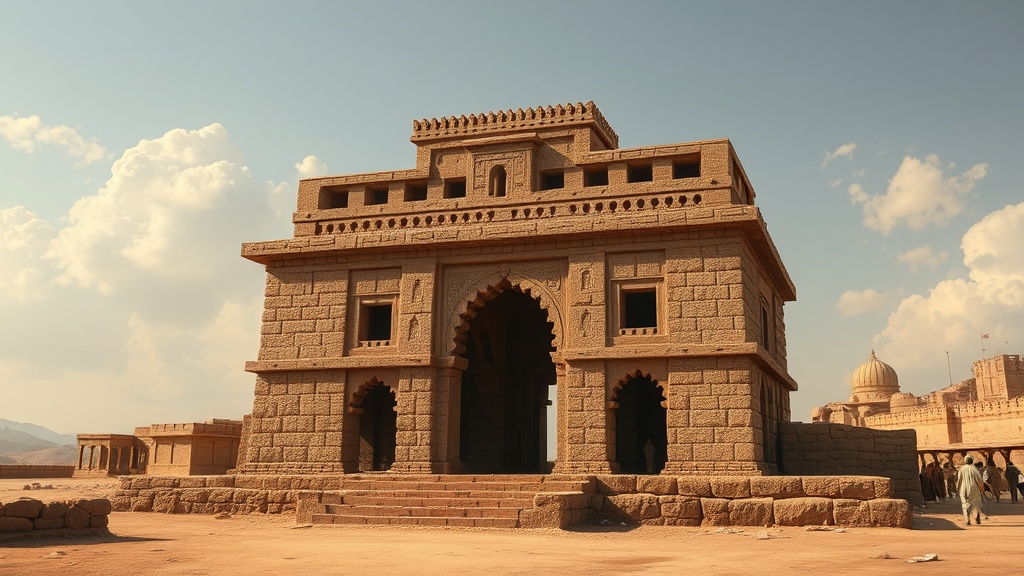
Ashutosh Gowariker’s 2016 film Mohenjo Daro represents a rare moment when Indian cinema attempted to reconstruct the Bronze Age. The film, which was selected to close the 69th Locarno International Film Festival and featured at the 45th Festival of Nations in Austria, according to a report by Harappa.com, brought the Indus Valley Civilization into the global cinematic spotlight. Yet, the choice of setting reflects a persistent bias in how we view early Indian urbanism.
For nearly a century, Mohenjo-daro and Harappa have served as the twin capitals of the Indus imagination. Located in modern-day Pakistan, these massive settlements, with their grid-patterned streets, monumental Great Baths, and complex drainage systems, suggested a highly centralized empire. But as archaeologists dig deeper into regional sites across India, particularly in Gujarat and Haryana, this "imperial capital" model is collapsing. In its place is a more complex reality: a decentralized network of diverse, specialized settlements that functioned without a single ruling center.
The Screen and the Soil
Popular media requires a grand stage. Mohenjo-daro, with its imposing citadel and estimated peak population of tens of thousands, fits the cinematic demand for a majestic capital. This focus, however, skews our understanding of the ancient past.
In the early decades of Indus archaeology, scholars assumed that the entire civilization was ruled from the twin hubs of Harappa and Mohenjo-daro. This top-down view modeled the Bronze Age society after later historical empires, such as the Mauryan or Roman states. Under this theory, smaller settlements were merely provincial outposts designed to funnel resources back to the center.
Excavations over the last few decades challenge this view. The Indus Valley Civilization was not a monolithic empire, but rather a vast, cooperative network of distinct regions. By focusing almost exclusively on Mohenjo-daro, popular documentaries and films overlook how the civilization actually functioned on its margins.
Regional Diversity in Gujarat and Haryana
The sites in India reveal that different regions developed unique architectural styles, economic strategies, and cultural practices.
In the semi-arid landscape of Kutch, Gujarat, the site of Dholavira presents a striking contrast to the brick-built cities of the Indus plains. Instead of fired clay bricks, the builders of Dholavira used dressed stone. The city features a massive water-harvesting system consisting of deep reservoirs cut into the rock, designed to survive a harsh, dry climate. Dholavira was not a passive satellite of Mohenjo-daro; it was a highly specialized maritime trade hub with its own distinct aesthetic and engineering traditions.
Further south, Lothal served as a specialized industrial port. Rather than replicating the grand residential quarters of Mohenjo-daro, Lothal was organized around a massive basin, which archaeologists identify as a tidal dockyard, alongside a large warehouse and bead-manufacturing workshops.
Meanwhile, in the fertile plains of Haryana, sites like Rakhigarhi and Bhirrana present a different trajectory. Rakhigarhi, which matches or even exceeds Mohenjo-daro in physical extent, shows a gradual evolution from early farming villages to a major urban center. Bhirrana has yielded some of the earliest dates for regional settlement, showing that the roots of this culture were deep and geographically widespread long before the mature urban phase began.
These regional centers did not rely on a distant imperial capital for their governance or survival. Instead, they participated in a peer-polity interaction network, where independent regional nodes traded resources, shared technologies, and maintained cultural ties without a central governing authority.
The Challenge of a Decentered Past
Accepting a decentralized Indus Valley Civilization requires a shift in how we talk about early societies. It is far easier to present a story of kings, palaces, and imperial decrees than it is to explain a decentralized network of cooperative, self-governing towns.
Tradition often holds that great civilizations must have great rulers. Yet, the archaeological record of the Indus Valley contains no depictions of standing armies, royal palaces, or triumphal monuments. While Mohenjo-daro remains the largest and most famous representative of this ancient world, the smaller, regional sites in India show that the true strength of the Indus civilization lay not in centralized control, but in regional adaptability and economic integration.
By looking beyond the cinematic ruins of Mohenjo-daro, we gain a truer picture of the ancient subcontinent: a landscape of diverse communities that built some of the world's earliest planned cities through cooperation rather than conquest.