The Cotton Thread That Crossed Oceans: What We Know—and Don't—About Harappan Exports
Archaeological evidence shows Harappan cotton reached Mesopotamia by 2600 BCE, but spindle whorls and fabric scraps are nearly all we have. No records survive of which settlements produced it, how it was packed, or what it cost.
Kavya Sharma for SwavedaMay 6, 2026
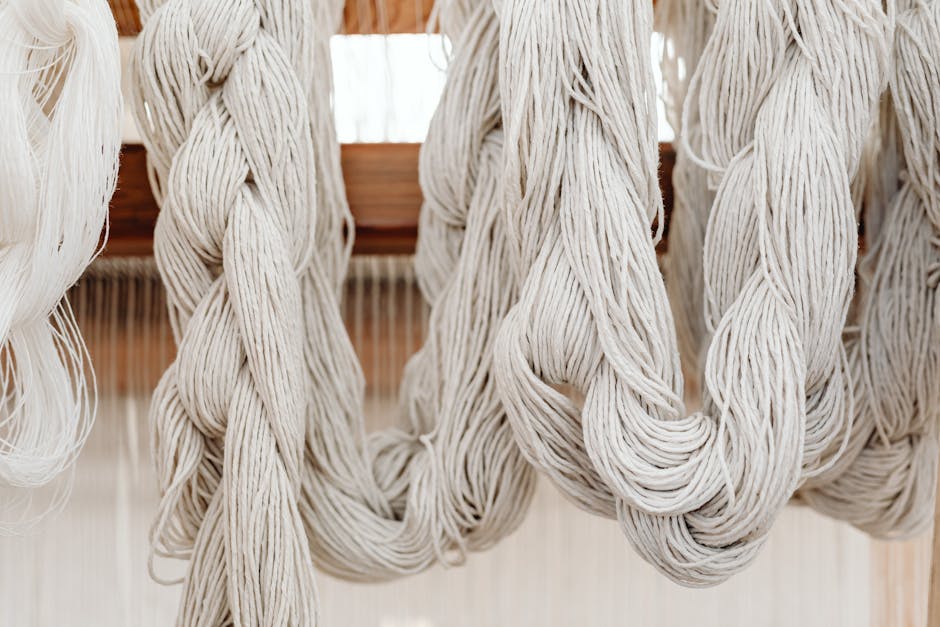
Somewhere between 2600 and 1900 BCE, a merchant in Mesopotamia's Ur or Lagash held a length of cloth in her hands. It was soft. It was unlike anything grown in the fields around the Tigris and Euphrates. The yarn had been spun in the Indus Valley, possibly near Harappa or Mohenjo-daro, then packed, transported by boat across the Arabian Sea, and unloaded at a coastal port two thousand kilometers away. We know this trade happened. But we do not know which settlements produced it, how it was bundled, what it was worth, or how the people who made it were compensated.
That silence—the things cotton left unsaid—is the real story.
The Evidence We Have
The earliest direct evidence of cotton in the Indus Valley comes from the mature Harappan phase, around 2600 BCE. Sites such as Mohenjo-daro, Harappa, Lothal, and Dholavira have all yielded spindle whorls (small weights used in spinning thread), textile impressions, and dye residues, indicating a sophisticated cotton textile industry. The most direct proof of export comes not from the Indus itself, but from Mesopotamia's written record. Mesopotamian texts from the Akkadian tradition name Meluhha—the ancient Akkadian word for the Indus region—and describe imports of textile products. Some records refer to a "soft cloth" or "plant cloth" from Meluhha, which scholars believe plausibly indicates cotton fabric.
But here is what we cannot read: the receipt. The invoice. The granary inventory. The weight of a single shipment. The route each bale took. The name of a single person who sent it.
The Spindle Whorl as Evidence
What we have instead are the tools of manufacture: objects so small and ordinary that they nearly disappeared into the soil. Spinning was crucial to textile production and was carried out using spindle whorls—small, usually circular weights made of terracotta, faience (glazed ceramic), shell, or stone. These whorls, inserted into the shaft of a spindle, added momentum to the spinning motion and enabled the production of even and durable threads.
Spindle whorls typically ranged from 2 to 5 centimeters in diameter. Heavier whorls may have been used for coarser threads, while lighter ones were suitable for delicate yarns. Excavations at Indus Valley sites including Harappa and Mohenjo-daro have revealed thousands of spindle whorls. Their consistent presence indicates the significance of spinning in daily life and trade.
This abundance is strange. Why so many? The sheer number of whorls implies large-scale production, possibly surplus for trade. This pattern appears across Gujarat, Rajasthan, and beyond, forming part of a broader textile manufacturing and distribution network. But abundance does not equal understanding. Each whorl raises questions we cannot yet answer. Which settlements specialized in production? Did fine whorls cluster in certain cities? Did coarser ones appear in hinterland villages? The archaeological record, so far, is mute.
Women, Homes, and Hidden Economics
Their presence in domestic quarters, often near hearths and storage jars, suggests spinning was a household activity, likely undertaken by women. This domestic context highlights the role of textile production as integral to Harappan life and economy. This inference rests on material evidence, not assumption. But it is also incomplete. We do not know if certain households spun thread for family use alone, or if some supplied markets. Spindle whorls found in domestic spaces point to the centrality of women's work in household economies, while the scale of production hints at cottage industries or small workshops. The potential standardization of spindle whorl sizes at certain sites suggests a degree of professionalization in textile manufacturing—but we lack the documentation to confirm it.
Professionalization suggests planning. Planning suggests organization. Organization suggests someone decided what to make and where to sell it. But we do not have the names, the contracts, the ledgers. We have only the whorls.
The Cotton That Water Preserved
Small fragments of cloth preserved in the corrosion products of metal objects show that the Harappans wove a range of grades of cotton cloth. These scraps are precious. Evidence from sites including Mohenjo-daro indicates that the Harappans practiced dyeing, with indigo and madder plants used as sources of blue and red dyes, respectively. The combination of cotton with such dyes suggests a visually rich textile tradition, possibly used for both everyday and ceremonial attire. One fragment, tangled in copper corrosion at Harappa, preserves not just fiber but color. It tells us the maker knew how to manipulate light and chemistry. It tells us the wearer—or the seller—wanted more than mere covering.
Yet even this speaks only to what was made at home, in cities now dust. The cotton that crossed water left almost no trace at its destination. No bales have been found at Mesopotamian archaeological sites bearing Indus Valley markers. No packaging, no seals labeled with Harappan weights and measures, no price lists in cuneiform (the wedge-shaped writing system of ancient Mesopotamia).
The Lost Provenance
This is what trade looks like when you cannot read the script. Two civilizations knew each other. Cotton textiles and agricultural products were primary trading objects. Scholars debate the extent to which Harappan traders established formal trading colonies in Mesopotamia; some evidence suggests such outposts may have served as distribution centers, but direct archaeological confirmation remains limited. Objects from one place show up in another—beads, seals, weights. The material proof of contact. But the story of each transaction—which settlement sent this? What was the return cargo? How many hands did it pass through?—remains written only in missing documents, in the voices that writing systems failed to carry downstream.
We are left with the spindle whorl, the fabric scrap, the silence of the ledger. And in that silence, we can hear the ordinary lives of makers: women spinning thread in households from the Indus delta to the Hakra riverbed, their fingers moving with the rhythm of the whorl, their work folded into ships and trade routes, their names and stories lost—but not the evidence they left behind.