The Clay of Harappa: What Mineralogical Fingerprinting of Red Slip Pottery Reveals About Early Kot Diji Trade Networks
Petrographic analysis of Kot Diji-phase ceramics reveals that early Harappan potters bypassed local silts to source specific alluvial clays, mapping a highly organized trade network that predates the urban era.

Rohan Bhattacharya for SwavedaAugust 22, 2026
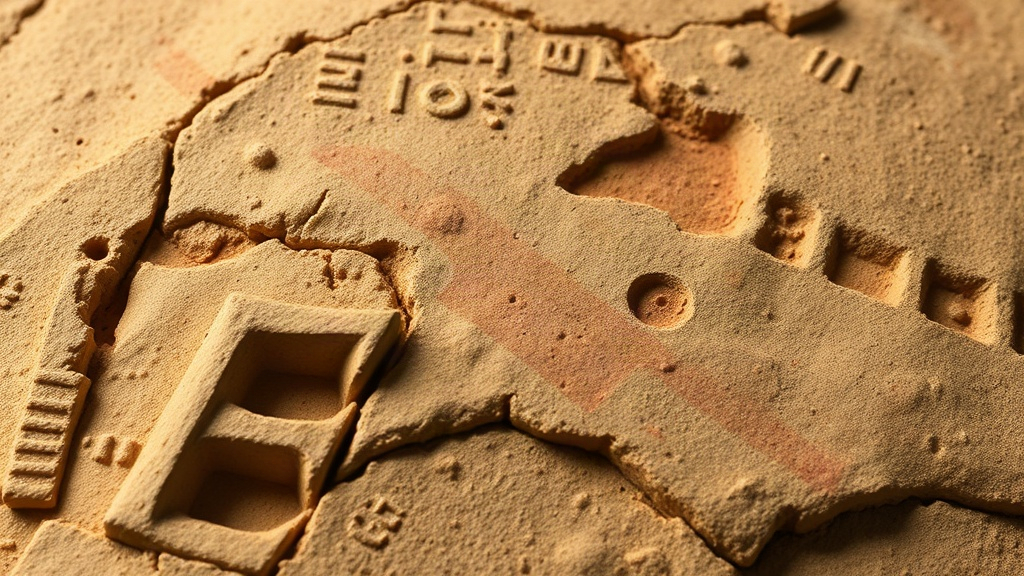
In the study of the Indus Civilization, the transition from the Early Harappan to the Mature Harappan phase is frequently discussed as a sudden leap in administrative complexity. Textbook accounts often focus on the rapid appearance of planned cities, standardized brick ratios, and uniform weights. Yet, the foundations of this integration were laid much earlier, recorded not in monumental architecture, but in the micro-stratigraphy of domestic hearths and the mineral composition of everyday cookware.
Recent petrographic (the microscopic study of rocks and minerals in thin section) analyses of Kot Diji-phase ceramics are shifting our understanding of these early systems. The evidence shows that potters of the early third millennium BCE were not merely using whatever mud lay outside their workshop doors. Instead, they participated in a highly organized, regional clay-procurement network, sourcing specific alluvial clays from the Ghaggar-Hakra floodplain rather than relying on local, readily available silts.
The Kot Diji Horizon and Chronological Debates
The Kot Diji phase represents a critical cultural horizon across the northwestern subcontinent. Characterized by its distinctive wheel-made pottery—often featuring a red slip (a thin mixture of clay and water applied before firing) and painted fish-scale or bara (horned-deity) motifs—this phase spans across sites in Sindh, Punjab, and Haryana.
For decades, standard archaeological models assumed that Early Harappan pottery was manufactured locally at each settlement. The assumption was practical: clay is heavy, bulky, and difficult to transport over long distances without modern draft animals or wheeled carts. In the volume [Man and Environment](https://www.is पुरातत्व.org/), early assessments of Kot Diji ceramic technology tentatively categorized most plain wares as products of local village kilns.
To trace the actual movement of these vessels, archaeologists use petrographic thin-section analysis. By slicing a fragment of pottery to a thickness of thirty microns, researchers can identify the specific mineral "temper" (non-plastic materials added to clay to prevent cracking during firing) and the geological signature of the clay matrix itself.
⚖ Scholarly debate: While many archaeologists widely accept a dating range of approximately 2800 BCE to 2600 BCE for the Kot Diji phase, the precise chronology of the Early-to-Mature Harappan transition remains highly contested. Some scholars argue for a much tighter, rapid transition of barely a several-decade span, pointing to abrupt stratigraphic breaks at key sites. Others argue for a protracted, overlapping period of co-existence lasting over a century, where Kot Diji and Mature Harappan ceramic styles were utilized simultaneously by different social groups.
Sourcing the Ghaggar-Hakra Alluvium
Recent mineralogical investigations have challenged the local-production model. Microscopic analysis of Kot Diji-type red slipped ware recovered from sites in the semi-arid plains reveals a mineral suite that is geologically foreign to the immediate vicinity of the findspots.
Under polarized light microscopes, these thin sections show high concentrations of specific metamorphic minerals, including muscovite mica, microcline feldspar, and fine-grained quartz. This specific mineralogical fingerprint does not match the local aeolian (wind-blown) sand and slack-water silts typical of the immediate hinterlands of the smaller settlements. Instead, the mineral proportions match the heavy mineral suites characteristic of the active alluvial channels of the Ghaggar-Hakra river system.
⚖ Scholarly debate: The identification of the Ghaggar-Hakra river system is itself a subject of intense academic dispute. While some geologists and historians equate this paleochannel with the lost Sarasvati River mentioned in ancient Vedic literature (the Rigveda), suggesting it was a perennial, glacier-fed river during the Harappan heyday, other earth scientists and archaeologists present evidence showing the river had already transitioned to a seasonal, monsoon-fed system long before the mature urban phase, or dispute the linguistic and geographic linkages entirely.
Regardless of its literary identity, the physical river system served as an economic artery. This suggests that early potters were either traveling considerable distances to extract clay from specific river terraces or, more likely, that raw clay and finished vessels were items of active regional trade. The presence of specialized clay-processing areas at larger regional centers points to a centralized system of production. Rather than an ad-hoc household craft, clay procurement during the Kot Diji phase was an organized, multi-step industry.
Stratigraphy and the Transition to Urban Standardization
This structured procurement network is highly significant when placed in stratigraphic context. In reports published by the Archaeological Survey of India (ASI) on excavations at sites like Kalibangan and Banawali, the transition from Period I (Early Harappan/Kot Diji) to Period II (Mature Harappan) is marked by a clear layer of ash and debris at several locations, once interpreted as evidence of conquest or widespread fires.
Yet, the ceramic stratigraphy tells a story of continuity rather than abrupt replacement. The petrographic signatures of the late Kot Diji pottery show a gradual refinement of the same clay sources that would later dominate the Mature Harappan period. The preference for Ghaggar-Hakra alluvial clay did not begin with the rise of cities; the trade routes and resource maps were already well-established.
In the pages of Puratattva, the bulletin of the Indian Archaeological Society, researchers have debated the degree of centralization in Harappan statecraft. The mineralogical fingerprinting of these early wares suggests that economic integration—specifically the standardized selection of raw materials—preceded political standardization. The "micro-mineralogical" evidence reveals that the logistics of the Mature Harappan state were built directly upon the trade pathways carved out by Kot Diji potters centuries earlier.
The Microscopic Evidence Against "Oldest" Claims
While sensationalist headlines occasionally claim to find the "oldest cradle of civilization" at various Indus sites based on isolated radiocarbon dates, the slow work of ceramic petrography offers a more grounded, and ultimately more interesting, picture. Civilization did not appear overnight because of a sudden change in climate or the arrival of a new ruling class.
Instead, the gradual shifts in the mineral composition of pottery tell a story of human adaptation. By tracking the microscopic grains of feldspar and mica across the stratigraphy of the Indus plains, archaeologists can reconstruct the economic decisions of individual potters who lived nearly five thousand years ago. These potters, choosing to bypass local mud to source high-quality alluvial clay from miles away, laid the literal and figurative foundation for the first urban society of South Asia.