The Buried Crucible: Stratigraphy and Radiocarbon Dates at Kodumanal
Industrial hearths and radiocarbon dates from Kodumanal trace South Indian crucible steel production into the mid-first millennium BCE, anchoring regional craft networks in soil and charcoal rather than literary tradition.

Rohan Bhattacharya for SwavedaOctober 27, 2026
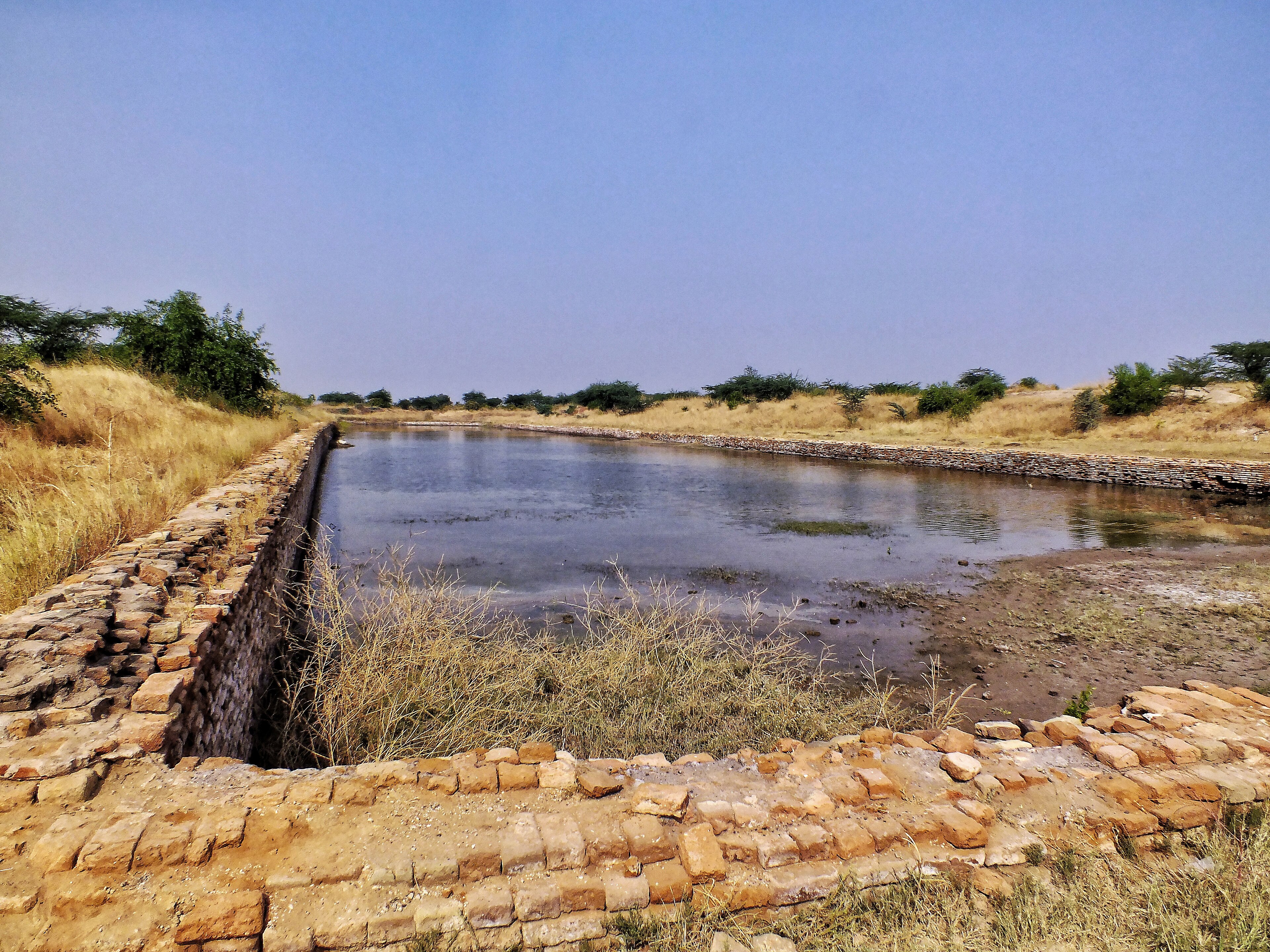
Along the northern bank of the Noyyal River in Tamil Nadu, the site of Kodumanal presents an unromantic profile. Broad, shallow trenches cut through red soil, exposing clay walls burned to a hard, pale grey. In field reports published in Man and Environment and Puratattva, the focus remains firmly on the industrial debris: vitrified hearth walls, broken terracotta tuyeres (refractory air pipes used in smelting), and dense clusters of iron slag.
For decades, popular narratives attributed the region’s metallurgic reputation to broad literary descriptions found in Sangam classical poetry or accounts by Greco-Roman geographers. However, stratigraphic evidence and accelerator mass spectrometry (AMS) radiocarbon dates from Kodumanal offer a concrete timeline grounded in physical material.
+-----------------------------------------------------------------------+
|                       KODUMANAL HEARTH PROFILE                        |
|                                                                       |
|  [Layer 1: Surface / Late Phase]  - Potted sherds, weathered slag     |
|  -------------------------------------------------------------------  |
|  [Layer 2: Industrial Phase]      - Vitrified clay furnaces           |
|                                   - Refractory tuyeres                |
|                                   - High-carbon crucible fragments    |
|  -------------------------------------------------------------------  |
|  [Layer 3: Bedrock / Early Phase] - Pure charcoal deposits            |
|                                   - Secure AMS radiocarbon dates      |
+-----------------------------------------------------------------------+
The Industrial Stratigraphy
The site, initially surveyed in 1961 by V. N. Srinivasa Desikan and later excavated extensively by K. Rajan for Tamil University and Pondicherry Central University, contains habitational deposits alongside megalithic burials. The primary industrial structures consist of circular furnace bases set directly into the natural subsoil.
These hearths measure approximately 115 centimeters in diameter. Surrounding the clay structures are vitrified ceramic pipes and thick accumulations of tap slag—a waste material that flows from the furnace during the reduction of iron ore. Metallurgical analysis demonstrates that the ironworkers utilized locally available magnetite iron ore. By charging clay furnaces with alternative layers of crushed ore and hardwood charcoal, artisans reduced the iron oxide without reaching full liquefaction, yielding a malleable bloom.
The crucial transition in the metallurgical record occurs with the introduction of high-carbon steel processing. Excavators unearthed fragments of small, high-alumina clay crucibles embedded in vitrified furnace debris.
In a paper published in the Indian Journal of History of Science, metallurgist Sharada Srinivasan documented the microscopic structure of these crucible walls. The clay walls contained iron-rich inclusions and relict carbon matrices, confirming that iron fragments were sealed inside closed crucibles alongside organic carbon sources like plant leaves or wood. When heated in sealed, oxygen-starved conditions, the iron absorbed carbon, transforming soft bloomery iron into high-carbon steel—a material known in Tamil historical literature as urukku (fused metal).
Radiocarbon Context and Methodological Debates
Dating these industrial processes requires careful navigation of archaeometallurgical context.
⚖ Scholarly debate: The chronology of early South Indian metallurgy involves ongoing discussions regarding sample context and contamination risks. In metallurgical sites across Eurasia, charcoal trapped directly within iron slag can yield anomalous radiometric ages if fossil carbon sources or contaminated matrix materials are introduced during high-temperature reduction. Consequently, scholars debate whether dates derived from internal slag charcoal reflect true operational timelines or secondary carbon exchange.
To reduce these errors, the dating program led by K. Rajan relied on short-lived organic materials and stratigraphically sealed charcoal collected from intact hearth floors and sealed habitational layers rather than slag inclusions alone.
AMS radiocarbon assays from sealed lower levels at Kodumanal yielded dates extending back to the 6th century BCE. These dates push the established timeline for structured iron smelting and crucible steel working in the Kongu region deeper into the first millennium BCE than early mid-20th-century surveys had estimated.
The early timeline is supported by parallel radiometric analyses from contemporary regional sites. In studies published in Man and Environment by K. Rajan, R. Ramesh, and Jang-Sik Park, ultra-high carbon steel swords recovered from megalithic burials at Thelunganur and secure occupation strata at Porunthal provided broad radiometric confirmation of advanced steelworking across Tamil Nadu in the mid-to-late first millennium BCE.
Trade Networks and Raw Material Processing
The spatial distribution of industrial activity at Kodumanal clarifies its role within regional trade routes. The settlement lies on the riverine transit corridor along the Noyyal, connecting the interior Kongu plateau with the Western Ghats passes leading toward the Malabar Coast.
Crucially, evidence shows that metal processing was not an isolated craft. Excavations conducted by the Tamil Nadu State Department of Archaeology and academic institutions revealed that iron and steel working operated alongside semi-precious stone processing, particularly quartz and beryl, sourced from nearby geological deposits such as Padiyur.
The presence of heavy industrial waste—including several metric tons of iron slag recovered during multi-season excavations—demonstrates production beyond immediate local agricultural needs. Rather than acting as a simple village smithy, Kodumanal served as a centralized processing hub where raw materials were extracted, refined into semi-finished metal ingots and finished blades, and introduced into broader exchange networks.
By grounding the history of South Indian metallurgy in furnace dimensions, tuyere vitrification, microstructural analysis, and sealed radiocarbon contexts, the excavation record at Kodumanal replaces vague literary tradition with precise physical evidence.