The Barley of Banawali: What Flotation Samples in Trench BNL-1 Reveal About Early Harappan Agricultural Risk Mitigation
Stratigraphic evidence from Banawali reveals how Early Harappan farmers prioritized drought-resistant barley over wheat to mitigate environmental risks during the transitional Siswal phase.

Rohan Bhattacharya for SwavedaAugust 10, 2026
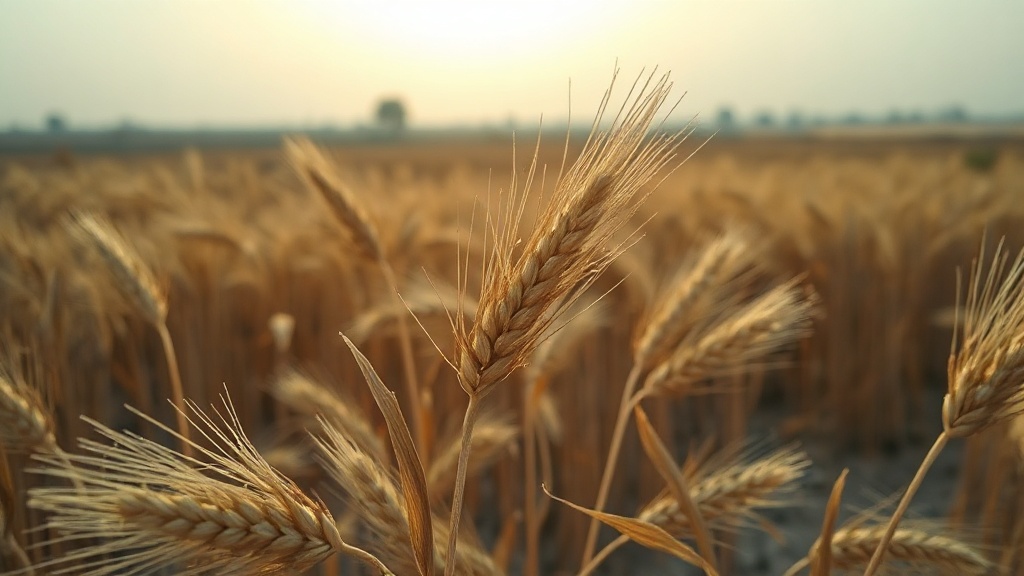
The search for grand narratives in South Asian archaeology often overlooks micro-botanical details. While large-scale urban layouts and dramatic fortifications capture public attention, the actual mechanics of survival during the Indus Civilization are preserved in the soil matrix of unremarkable excavation trenches. Subtle stratigraphic boundaries—where a buried domestic hearth or a minor change in soil color is recorded—reveal what human communities actually consumed during dry winters four thousand years ago.
In Haryana, the site of Banawali offers a clear stratigraphic sequence (the study of rock and soil layers to determine chronological order) that spans from the pre-urban era to the late Harappan period. A closer examination of the charred macro-botanical remains (carbonized plant parts visible to the naked eye) from the early phases at Banawali reveals a deliberate reliance on barley over wheat. This stratigraphic evidence challenges older assumptions of uniform Harappan crop choices. Instead, it points to localized, highly adaptive agricultural risk mitigation strategies during the transitional Siswal phase.
The Stratigraphic Context of Trench BNL-1
Banawali, situated in the Fatehabad district of Haryana, was excavated by the Archaeological Survey of India (ASI) under the direction of Ravindra Singh Bisht. The cultural sequence is divided into three main periods: Period I (Pre-Harappan or Early Harappan, often associated with the regional Kalibangan and Siswal ceramic cultures), Period II (Mature Harappan), and Period III (Post-Harappan or Late Harappan).
To understand the agricultural economy of the early settlers, archaeobotanists focus on Trench BNL-1. The stratigraphy of this trench contains deep, undisturbed layers of Period I. It is within these lower strata—characterized by classic bi-chrome pottery, mud-brick architecture, and domestic hearths—that flotation samples have yielded a high concentration of carbonized seeds.
Flotation is a recovery technique where excavated soil is mixed with water, causing organic remains like charred seeds to float to the surface for collection. In the early excavation reports published in the ASI journal Indian Archaeology: A Review, as well as in subsequent syntheses in Puratattva (the journal of the Indian Archaeological Society), these botanical assemblages received preliminary catalogs. However, the behavioral meaning behind the ratios of these crops is only now being fully understood.
The Sarasvati and the Ghaggar-Hakra: A Scholarly Debate
The environmental setting of Banawali is central to understanding its agricultural stratigraphy, yet it remains one of the most contested landscapes in South Asian archaeology.
⚖ Scholarly debate: Tradition holds, and some archaeologists argue, that the dry channel of the Ghaggar-Hakra river system on which Banawali sits is the physical remnant of the Sarasvati (a legendary river of the Vedic period), a major watercourse lauded in the Rigveda (an ancient collection of Sanskrit hymns). Proponents of this view suggest that a mighty, glacier-fed river once flowed through this region, sustaining a dense network of early settlements before drying up due to tectonic and climatic shifts.
Conversely, skeptics and hydrological researchers raise significant chronological and geological discrepancies. Evidence shows that by the time of the Harappan occupation, many of these channels were already seasonal, rain-fed streams rather than perennial glacial rivers. Geochemical and sediment analyses suggest that the paleochannels in Haryana had lost their connection to glacial sources much earlier. This debate directly impacts how we interpret the agricultural choices preserved in Trench BNL-1: were these farmers managing a dwindling river, or adapting to a perennially semi-arid monsoon-dependent system?
Barley vs. Wheat: The Quantitative Shift
The macro-botanical assemblage from the early levels of Banawali is dominated by two primary cereal types: six-row barley (Hordeum vulgare) and various forms of wheat (Triticum species, including Triticum aestivum and Triticum durum).
What makes the early phases of Banawali notable is the overwhelming numerical dominance of barley over wheat. In the lowest occupational layers of Period I, barley grains constitute the vast majority of the recovered cereal fraction. Wheat, by contrast, appears as a minor component of the agricultural kit.
In classic archaeological literature on the Indus Valley, such as early reports in the journal Antiquity, the Harappan economy is frequently generalized as a wheat-based system. The evidence from Banawali, alongside comparative data from nearby sites like Mitathal and Kunal, presents a different regional pattern. In these eastern Harappan borderlands, early farmers did not simply replicate the agricultural packages of the core Indus plains. Instead, they built their farming systems around the specific ecological realities of the semi-arid plains of Haryana.
Risk Mitigation in a Semi-Arid Landscape
The preference for barley over wheat in the early levels of Banawali is best understood as an intentional strategy to mitigate environmental risk. Barley is a highly resilient crop. It possesses a greater tolerance for soil salinity, thrives in poorer soils, and requires significantly less water than wheat to reach maturity.
The local environment of the Ghaggar-Hakra plain during the transitional Siswal phase was highly unpredictable. While seasonal floods provided moisture, the region was prone to dry spells and shifting river channels. By prioritizing barley, the early farmers of Banawali ensured a stable food supply even in years when monsoon or winter rains failed. Wheat, which requires stable water management and fertile, well-drained soils, was likely treated as a high-risk, high-return crop. Its cultivation was restricted to optimal plots or wetter years.
This agricultural strategy is discussed in regional surveys published in Man and Environment (the journal of the Indian Society for Prehistoric and Quaternary Studies). Researchers note that the Early Harappans of the Sarasvati basin practiced "dryland farming" techniques, relying heavily on winter rains and natural soil moisture rather than large-scale canal irrigation. The dominance of six-row barley suggests that these farmers chose stability over yield. Six-row barley produces more grains per head than two-row varieties, providing a reliable bulk harvest under less-than-ideal climatic conditions.
Challenging the Homogeneity Narrative
The botanical record of Trench BNL-1 directly refutes the idea of a single, monolithic "Harappan Agriculture." Instead of a uniform agricultural system across the entire Indus domain, the archaeological record shows regional diversity.
In the wet alluvial plains of Sindh and the Punjab, wheat was indeed highly favored. However, as the Harappan cultural complex expanded eastward into the Ghaggar-Hakra valley, and southward into Gujarat (where millets dominate the botanical record), local populations adapted their crops to the regional soil, water, and climate profiles.
This localized adaptation during the early phases of Banawali set the stage for the highly organized urban economy of the Mature Harappan period (Period II). The transition to the urban phase did not lead to the abandonment of barley. Instead, it saw the integration of these resilient crops into a more complex, multi-tiered redistribution system. By analyzing the charred remains from the lowest strata of Banawali, archaeologists can trace the roots of Harappan urbanism. It was not built on imported agricultural blueprints, but on centuries of local trial, error, and calculated risk management in the semi-arid plains of Haryana.