The Ancient Thread: Unraveling India's Cotton Heritage
Explore the deep roots of cotton in India through archaeological finds and linguistic clues, tracing its journey from ancient fields to the intricate weaves of the subcontinent.

Kavya Sharma for SwavedaMay 29, 2026
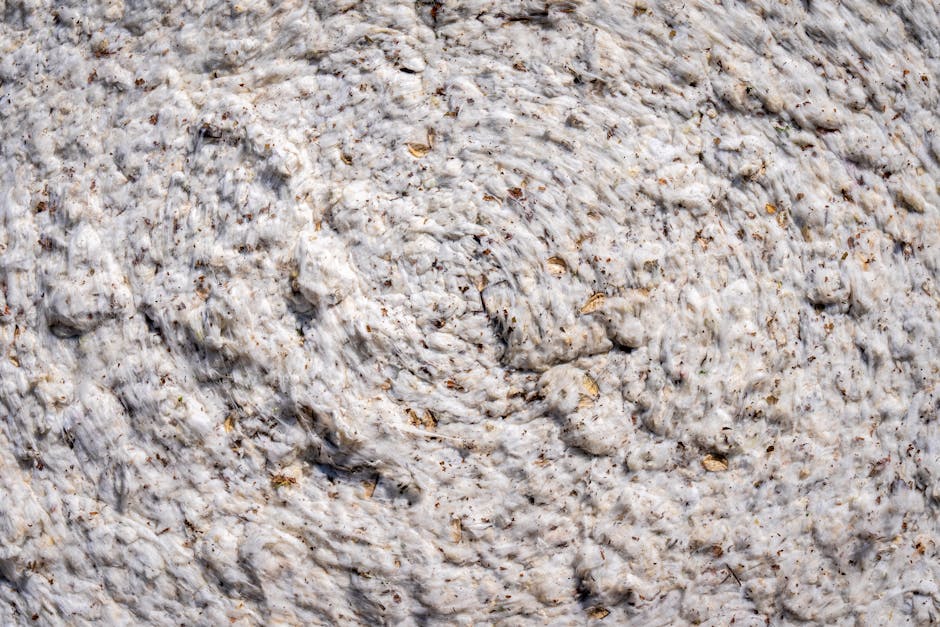
The story of cotton in India is not just about fabric; it is a narrative woven into the very fabric of human civilization. Long before the advent of modern industry, the humble cotton plant, Gossypium, was cultivated, transformed, and traded across the subcontinent, shaping economies, social structures, and daily life. Today, archaeological evidence and linguistic analysis are helping us trace this ancient journey, revealing a history far richer and deeper than often imagined.
The earliest whispers of cotton's presence in India emerge from archaeological sites. At Mehrgarh, in present-day Pakistan, early farming settlements dating back perhaps as far as 7000 BCE show evidence that suggests the cultivation of cotton. While definitive proof can be elusive, the presence of pottery fragments bearing cotton-like imprints, as well as artifacts suggestive of textile production, points towards an early engagement with this fibrous plant. These findings hint at a time when cotton was not yet a major commodity but a burgeoning resource, slowly becoming integrated into the lives of early agricultural communities.
Further evidence solidifies cotton's role as a key crop in the Indus Valley Civilization, flourishing between approximately 2600 and 1900 BCE. Excavations at sites like Mohenjo-Daro and Harappa have unearthed fragments of cotton cloth preserved in remarkable condition. These textiles, often found wrapped around copper tools or decorative items, demonstrate a sophisticated understanding of spinning and weaving. The quality and quantity of these findings suggest that cotton production was already a significant activity, supporting a substantial population and potentially contributing to trade networks beyond the immediate region. The discovery of cotton at an archaeological site in Egypt, dating to around 5000 BCE, and attributed to Indian cotton, is suggestive of early long-distance trade in textiles.
Linguistic clues also help chart cotton's ancient path. The word for cotton itself, karpās, has roots in ancient Sanskrit texts, suggesting its long-standing familiarity to the people of the subcontinent. The Sanskrit word karpāsa is also linked to words in other Indo-Aryan languages, pointing to a shared origin and widespread understanding of the plant and its uses. This linguistic connection suggests that cotton was not an exotic import but an indigenous and integral part of the cultural and economic landscape for millennia.
The cultivation of cotton required specific environmental conditions, primarily warm temperatures and ample sunshine, which are abundant across much of India. Archaeological studies suggest that different species of cotton were cultivated, including both diploid and tetraploid varieties. The domestication of these plants likely involved generations of careful selection and breeding, a testament to the agricultural ingenuity of ancient Indian farmers. They understood the nuances of soil, water, and climate, nurturing a crop that would become synonymous with Indian identity and artistry.
Transforming the raw cotton fiber into usable thread and then into fabric was a complex process. Evidence from ancient sites includes spindle whorls – small, weighted objects used to spin fibers into thread – made from pottery, stone, or bone. These artifacts, found in significant numbers, indicate widespread domestic textile production. The development of the handloom further revolutionized this process. While direct evidence of the earliest looms is scarce due to their organic nature, the complexity of the unearthed textiles implies the use of sophisticated weaving techniques. Patterns and weaves found in ancient fragments suggest skilled artisans capable of creating both coarse fabrics for everyday wear and finer cloths for more specialized purposes.
The journey of cotton did not remain confined within the subcontinent. By the time of the Roman Empire, Indian cotton textiles, known as cissiton or seric cloths in classical texts, were highly prized commodities. Travelers and traders spoke of the fine, soft fabrics that originated from the East. The Periplus of the Erythraean Sea, a 1st-century CE Greco-Roman text, mentions the export of cotton goods from Indian ports. This suggests that by this period, India was not only a producer of cotton but also a major exporter, demonstrating a mature and extensive trade network that reached as far as the Mediterranean world. This international demand fueled further innovation and expansion of cotton cultivation and textile production within India.
The social and economic impact of cotton was profound. It provided livelihoods for farmers, spinners, weavers, and traders. The production of textiles became a significant source of wealth, influencing regional economies and fostering the growth of urban centers. Cotton clothing also played a role in social differentiation, with finer weaves and more elaborate designs often reserved for the elite. Yet, its accessibility meant it was also the fabric of everyday life for the majority of the population, providing comfort and protection across diverse climates.
The legacy of this ancient journey continues to shape India's textile landscape today. From the handloom traditions of Bengal to the intricate embroidery of Gujarat, the threads of history are still visible. Archaeobotanical findings and linguistic analysis are not just academic pursuits; they are tools that help us appreciate the deep, enduring connection between the people of India and the plant that became their enduring signature on the world stage. The story of cotton in India is a continuous one, a testament to human innovation, resourcefulness, and the enduring power of a simple fiber to weave together cultures and economies across millennia.