Slag, Charcoal, and Radiocarbon: Triangulating Early Iron Smelting Stratigraphy at Raja Nala Ka Tila
Stratigraphic evidence and radiocarbon dating from Raja Nala Ka Tila challenge diffusionist models of South Asian iron metallurgy, revealing early second-millennium BCE local smelting in the Vindhyan region.

Rohan Bhattacharya for SwavedaNovember 23, 2026
Listen to this article · 6 min · Read by an AI voice
Field archaeology relies on stratigraphy, dating disputes, and the tedious micro-debris that turn out to redefine regional chronologies. A buried hearth, a layer of charcoal slag, or a sequence of soil horizons can alter long-standing historical models. For decades, the dominant academic consensus posited that iron technology diffused into the Indian subcontinent from Southwest Asia during the first millennium BCE. Evidence shows that excavations conducted along the Karamnasa River basin have directly challenged that paradigm.
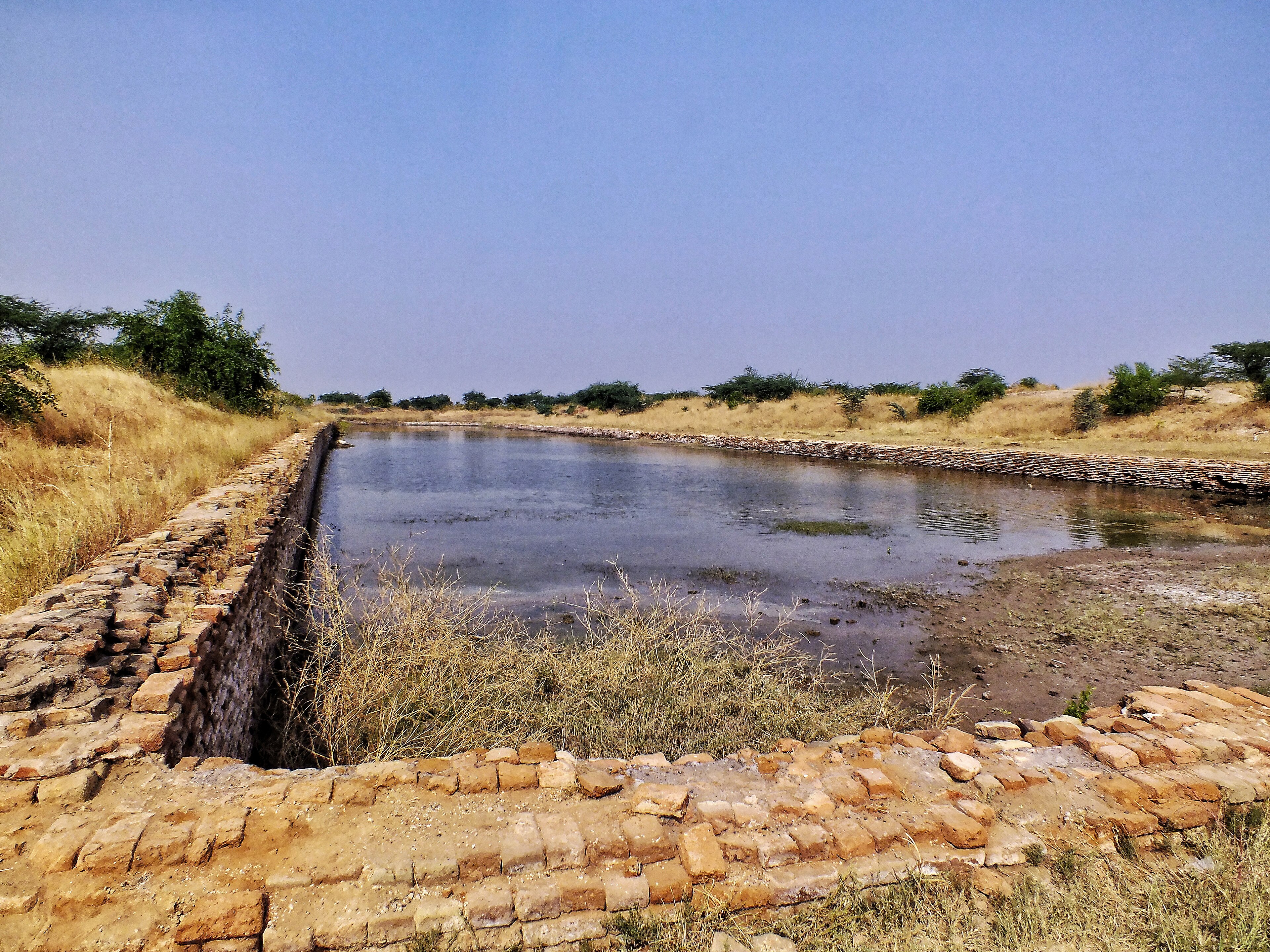
At Raja Nala Ka Tila, located in the Sonbhadra district of Uttar Pradesh within the upper Karamnasa Valley, excavations directed by archaeologist Rakesh Tewari for the Uttar Pradesh State Archaeology Department uncovered stratigraphy that pushes local iron working into the early second millennium BCE (Rakesh Tewari, Antiquity). The site reveals a multi-period occupational profile where iron-bearing layers rest directly above or within late Chalcolithic horizons.
The Stratigraphic Record at Raja Nala Ka Tila
The site layout of Raja Nala Ka Tila features an elevated habitation mound positioned inside a meander loop of the Karamnasa River. The excavation sequence is divided into four distinct cultural periods (Rakesh Tewari and R.K. Srivastava, Pragdhara). Period I represents a pre-iron occupation characterized by black-and-red ware (a distinct bi-colored pottery fired in inverted kilns), micro-beads, and bone tools, alongside botanical remains of cultivated rice, barley, and lentils.
The critical metallurgical shift occurs in Period II. In these deposits, excavators recorded iron slag, tuyères (refractory ceramic tubes used to channel air blasts into a furnace), and finished iron artifacts. The artifacts were recovered in direct stratigraphic association with slag nodules, confirming that metal working was not merely decorative or imported, but conducted on-site through primary ore reduction.
       [ Stratigraphic Trench Profile: Raja Nala Ka Tila ]

Depth (m)   Layer  Cultural Horizon        Key Material Finds
---------------------------------------------------------------------
 0.0 - 0.8  [L1]   Period IV: Early Hist.  NBPW, iron implements
 0.8 - 1.5  [L2]   Period III: Iron Age    Refined iron tools, PGW
 1.5 - 2.4  [L3]   Period II: Early Iron   Slag, tuyères, C14 charcoal
                                           (c. 1800–1200 BCE)
 2.4 - 3.2+ [L4]   Period I: Chalcolithic  BRW, bone tools, no metal slag
---------------------------------------------------------------------
  (BRW = Black-and-Red Ware; PGW = Painted Grey Ware; NBPW = Northern Black Polished Ware)
The slag recovered from Period II consists of heavy, porous silicate waste laden with unextracted iron oxide. The presence of furnace slag alongside vitrified tuyère fragments indicates local bloomery smelting. In a bloomery furnace, iron ore (typically hematite or magnetite collected from local Vindhyan rock formations) is reduced with charcoal fuel at temperatures below the melting point of pure iron, yielding a spongy mass of iron and slag called a bloom.
Charcoal Radiocarbon Dates and Metallurgical Context
To establish the absolute chronology of Period II, charcoal samples trapped inside furnace matrices and slag pits were submitted for radiocarbon dating. Results published in journals such as Puratattva (Rakesh Tewari et al., Puratattva) and Antiquity (Rakesh Tewari, Antiquity) yielded calibrated date ranges extending from circa 1800 BCE to 1200 BCE.
These radiocarbon determinations place early iron smelting at Raja Nala Ka Tila in the early second millennium BCE, centuries earlier than the traditional 1000 BCE marker associated with Northern Black Polished Ware and Painted Grey Ware horizons (Wikipedia, Iron Age in India). The dates match similar early iron-bearing contexts excavated across neighboring Vindhyan and Ganga Valley sites, including Malhar, Dadupur, and Lahuradewa (Rakesh Tewari, Antiquity).
The radiocarbon dates rely on botanical charcoal embedded directly within the smelting waste. Paleobotanical species analysis of the charcoal fuel fragments from the Vindhyan excavations reveals that early metallurgists selected specific local hardwoods—such as Madhuca longifolia (mahua) and Acacia species—capable of producing dense, long-burning fuel required to achieve the sustained temperatures necessary for bloomery reduction (A.K. Pokharia et al., Quaternary International).
⚖ Scholarly debate: Old Trees, Stratigraphy, and Diffusion Models
The dates from Raja Nala Ka Tila and related Vindhyan sites have prompted active debate among South Asian archaeologists and archaeometallurgists.
Scholars debate whether the early radiocarbon dates reflect the true age of smelting or are skewed by methodological anomalies. Critics raise the "old wood effect," proposing that ancient smelters burned long-dead heartwood from mature trees, which would yield radiocarbon dates centuries older than the actual event of smelting (ResearchGate, Updates on the Antiquity of Iron in South Asia). Others question whether micro-refuse in alluvial riverbanks like the Karamnasa could have undergone stratigraphic displacement, mixing older charcoal layers with later iron implements.
Supporters of the early chronology emphasize that multiple charcoal samples taken across different trenches and distinct slag deposits yield consistent second-millennium BCE dates (Rakesh Tewari, Antiquity). Furthermore, the recovery of unrefined bloomery slag alongside raw ore fragments argues against intrusive deposition.
Tradition holds that iron working spread into northern India via western land routes during the post-Harappan period. Evidence shows that independent regional centers in the Eastern Vindhyas developed indigenous iron smelting capabilities using local ores and specialized fuel selection strategies. The stratigraphic profile at Raja Nala Ka Tila remains a foundational reference point in evaluating how early metallurgy evolved across the subcontinent.