Rani Seethai Achi (1852–1917): Chettiar Philanthropist and Chennai's Cultural Patroness
Rani Seethai Achi (1852–1917) was a Chettiar philanthropist who funded temples, schools, and public infrastructure in colonial Chennai. This article traces her life, her family's banking network, and the institutions she endowed — many still standing today.

Devika Menon for SwavedaJune 24, 2026
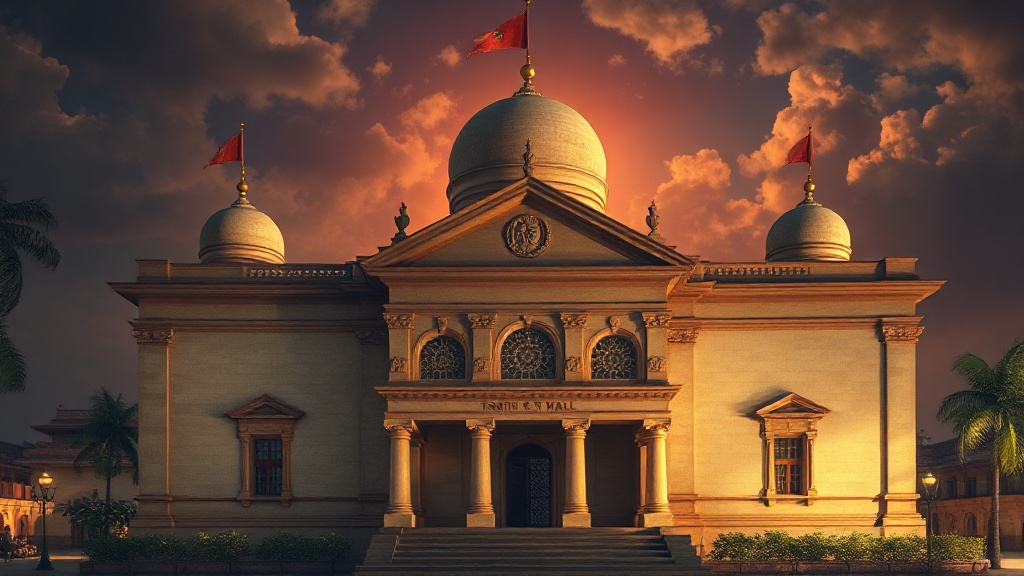
The coastal winds that sweep across Chennai have long carried whispers of patronage and preservation. Among the most enduring legacies is that of Rani Seethai Achi (1852–1917) of Chettinad. She was a figure whose generosity indelibly shaped the city’s cultural topography. Her story is interwoven with the broader narrative of Chettiar philanthropy in early 20th-century South India. This period saw burgeoning urban centres and a conscious effort to nurture indigenous arts and scholarship.
Quick Facts: Rani Seethai Achi
- Who was Rani Seethai Achi? Rani Seethai Achi (1852–1917) was a prominent philanthropist from the Nattukottai Chettiar community. She was known for her significant contributions to religious institutions, education, and cultural patronage in colonial Chennai. She earned the honorific 'Rani' (queen) for her charitable works.
- What did she build? Her most significant endowment was the Rani Seethai Hall in Chennai, a dedicated venue for Tamil Isai (music). She also contributed to the Kapaleeshwarar Temple and other civic works.
- Where are her temples located? While historical records primarily focus on her contributions to the Kapaleeshwarar Temple in Chennai, her family, the P.L.A. lineage, was known for broader temple-building activities across Tamil Nadu.
The honorific 'Rani' (queen) was bestowed upon Seethai Achi not through royal lineage, but in recognition of her significant charitable contributions. The term 'Lady' sometimes used in colonial-era references reflects a common, though not formal, designation. Seethai Achi belonged to the Nattukottai Chettiar community. This group comprised a prominent Tamil mercantile caste known for their acumen in trade and finance. They extended their influence across Southeast Asia. Their accumulated wealth was often channelled back into their homeland through substantial acts of charity. This tradition of dana (giving) was deeply rooted in a desire to uphold and advance Tamil culture and heritage. Rani Seethai Achi embodied this ethos with remarkable clarity and purpose.
Born into a family steeped in the traditions of Nattukottai Chettiar society, Seethai Achi married into the illustrious P.L.A. family of Chettinad. The P.L.A. lineage, particularly its patriarchs like P.A.R.M.R. Ramanathan Chettiar, were known for their significant contributions to education and temple building. Rani Seethai Achi, however, carved her own distinct path. She focused her considerable resources and influence on the realm of music and performance. Variant spellings such as 'Seethai' and 'Sithai' appear in historical records, reflecting regional transliteration practices.
The early 20th century witnessed a renaissance of Tamil arts. However, the historical development and patronage of musical traditions within South India are complex. Scholars acknowledge the significant presence and evolution of various musical forms, including those rooted in Sanskrit traditions and those distinctly aligned with Tamil linguistic and cultural expressions. Tamil Isai, the rich tradition of music rooted in the Tamil language, faced challenges in gaining widespread recognition and institutional backing in some spheres. It was within this context that Rani Seethai Achi’s vision for a dedicated venue for Tamil Isai took shape.
Her most significant contribution was the establishment of the Rani Seethai Hall in Chennai. This was not a casual undertaking but a carefully considered project. Its aim was to provide a prestigious and permanent home for Tamil musical performances and cultural gatherings. The hall, built in the heart of Chennai, became a beacon for artists and aficionados of Tamil music. Its very existence signaled a commitment to elevating Tamil Isai to a level of prominence commensurate with its historical and artistic significance.
The construction and patronage of such a grand edifice required not only financial investment but also a deep understanding of the cultural currents of the time. Rani Seethai Achi’s involvement went beyond mere funding; it represented a philosophical endorsement of Tamil arts. Her decision to name the hall after herself was a bold statement. It asserted the agency and leadership of women in philanthropy and cultural stewardship, a less common phenomenon in that era. Historical accounts, such as those found in biographies and community records pertaining to the P.L.A. family and Rani Seethai Achi, often highlight her personal initiative and vision in this endeavour.
The Chettiar community’s broader philanthropic landscape during this period offers a crucial backdrop. We see evidence of their investments in educational institutions across Tamil Nadu. Examples include the Sir M. Ct. Muthiah Chettiar Higher Secondary School in Chennai, and various temples and religious structures. Their engagement with cultural preservation also manifested in the renovation of historical sites and the support of traditional crafts. Rani Seethai Achi’s specific focus on Tamil Isai, however, highlights a nuanced understanding of cultural needs. She targeted a domain that required dedicated support to thrive and endure.
Inscriptions and numismatic finds from the Tamil country offer parallels in the way rulers and wealthy patrons historically supported the arts and religious institutions. While we lack specific coinage or inscriptions directly detailing Rani Seethai Achi’s transactions, the enduring nature of the Rani Seethai Hall and the continued appreciation for Tamil Isai its legacy supports serve as a form of testimonial. The hall itself stands as a tangible artifact of her vision and the philanthropic principles of the Chettiar community. Contemporary accounts and the continued use of the hall for Tamil cultural events provide enduring evidence of its impact, validating Rani Seethai Achi's patronage.
The economic prosperity that enabled such grand gestures was itself built on generations of mercantile expertise. The Chettiars’ trade networks, which stretched from Singapore to Burma, provided the financial foundation for their philanthropic endeavours. This wealth, accumulated through astute business practices, was viewed not just as personal fortune but as a resource to be reinvested in the cultural and social well-being of their community and region. The P.L.A. family's banking network, a hallmark of Chettiar enterprise, facilitated these transactions and the flow of capital that underpinned their widespread investments.
Rani Seethai Achi’s life and work underscore the vital role of private patronage in shaping cultural narratives. Her commitment to Tamil Isai ensured that this vital musical tradition had a physical and symbolic centre, capable of fostering new talent and preserving existing forms. The Rani Seethai Hall, therefore, is more than just a building; it is a monument to her foresight and a testament to the enduring power of Chettiar philanthropy in enriching the cultural fabric of Chennai and Tamil Nadu. The echoes of the music that has resounded within its walls continue to affirm her lasting impact.