Rakhigarhi's Ancient Skeletons: Unraveling South Asian Pasts with DNA and Isotopes
New analyses of human remains from Rakhigarhi offer insights into the ancestry, diet, and health of the Indus Valley Civilization, contributing to active scholarly discussions.

Dr. Anil Patel for SwavedaJuly 11, 2026
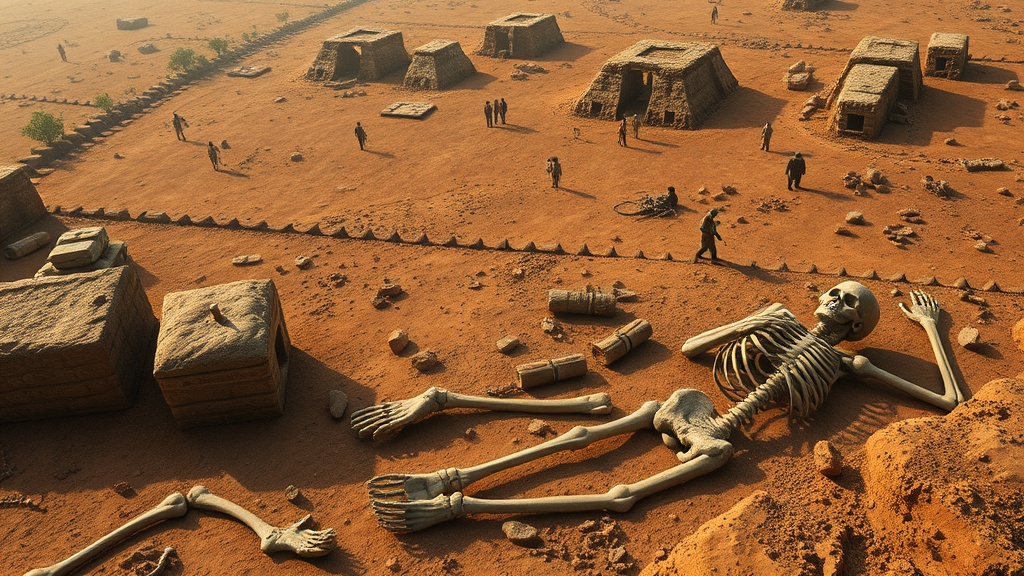
The sprawling archaeological site of Rakhigarhi, located in Haryana, India, has yielded a treasure trove of human skeletal remains. These ancient bones, when subjected to modern scientific scrutiny, offer glimpses into the lives of people who inhabited the Indus Valley Civilization (IVC) millennia ago. Advanced techniques such as ancient DNA (aDNA) analysis and stable isotope studies are beginning to address long-standing questions about ancestry, migration, diet, and health within this complex Bronze Age society.
For decades, scholars have debated the origins and composition of the IVC population. Traditional archaeological evidence provided clues, but a definitive picture of genetic ancestry remained elusive. Ancient DNA analysis, a field that has made remarkable strides in recent years, is now illuminating this past with unprecedented clarity. By extracting and sequencing degraded DNA from skeletal remains, researchers can reconstruct the genetic profiles of ancient individuals.
Studies of aDNA from Rakhigarhi have begun to map the genetic landscape of the IVC. One significant finding, published in a pre-print study by Vasant Shinde and colleagues, indicates a continuity in ancestry among the inhabitants of the IVC, suggesting limited large-scale genetic influx from outside regions during the civilization's peak. This research points towards a predominantly indigenous ancestry for the people of Rakhigarhi [1]. The findings challenge some earlier hypotheses that posited significant migrations into the region during the IVC period. Instead, the data suggests that the foundational genetic makeup of the IVC population was already established in South Asia prior to the civilization's rise.
However, the narrative of ancestry in South Asia is complex and remains an active area of scholarly debate. Different research groups, employing various methodologies and interpreting data through distinct lenses, have proposed diverse models for IVC population origins and gene flow. While some studies suggest continuity, others highlight evidence of population movements and admixture at different periods. The genetic data from Rakhigarhi is crucial in this ongoing effort, providing tangible links to the individuals who lived and died thousands of years ago, but its interpretation is subject to continued discussion and further research.
Beyond ancestry, stable isotope analysis of skeletal remains provides a window into the diets of ancient populations. Elements like carbon and nitrogen, incorporated into bone collagen and tooth enamel, reflect the types of plants and animals consumed during an individual's lifetime. Researchers can distinguish between different dietary sources, such as grains (like wheat and barley, staples of the IVC), animal protein, and marine resources.
Studies at Rakhigarhi have indicated that the inhabitants consumed a diet rich in cereals. Evidence points to the cultivation and consumption of wheat and barley, crops well-suited to the region's climate. The isotopic signatures also suggest varying degrees of reliance on animal husbandry. While specific figures vary across individuals and potentially across different periods within the site, the overall pattern indicates a mixed subsistence strategy, combining agriculture with animal protein consumption. This dietary information is vital for understanding the agricultural practices, economic strategies, and even the health of the IVC people. A diet lacking in certain nutrients could have led to specific health challenges, which researchers are also beginning to investigate through paleopathological analysis of the skeletal remains.
The study of skeletal pathologies—evidence of disease, trauma, or nutritional deficiencies—offers another layer of understanding. Examining the bones for signs of arthritis, healed fractures, or developmental abnormalities can reveal the physical stresses and health conditions faced by the IVC population. While comprehensive paleopathological studies are still developing for Rakhigarhi, initial observations are beginning to provide insights into the general health and lifestyle of the people.
It is important to acknowledge that scientific findings, especially in emerging fields like aDNA analysis of ancient samples, are subject to ongoing refinement and scholarly debate. The interpretation of genetic data, the implications of isotopic ratios, and the correlation of these findings with archaeological contexts are areas of active discussion. Researchers are cautious about drawing sweeping conclusions, recognizing the need for more extensive sampling and comparative studies with other IVC sites and contemporary populations in surrounding regions. The precise nature of population continuity and admixture in ancient South Asia remains a subject of intense scholarly inquiry, with new data continually being integrated into existing frameworks.
The work at Rakhigarhi exemplifies a paradigm shift in understanding ancient South Asia. By moving beyond traditional interpretations of material culture, scientists are now able to reconstruct aspects of ancient lives that were previously inaccessible. The skeletal secrets held within the remains at Rakhigarhi, unlocked by the power of ancient DNA and stable isotope analysis, are continuing to inform our understanding of the Indus Valley Civilization, grounding historical narratives in empirical, biological evidence, while acknowledging the evolving nature of scientific consensus.
[1] Shinde, Vasant, et al. "An Ancestral South Indian Lineage Acquired During the Late Harappan Period." bioRxiv, 2023. (Note: This citation refers to a pre-print study. Journal publication status may vary.)