Pyrotechnics and Philology: Dissecting the Textual and Historical Evidence for Fireworks in Medieval Diwali
A textual and historical examination of how saltpetre formulas, medieval Sanskrit manuals, and gunpowder technology transformed India's festival of lights.

Dr. Anil Patel for SwavedaNovember 11, 2026
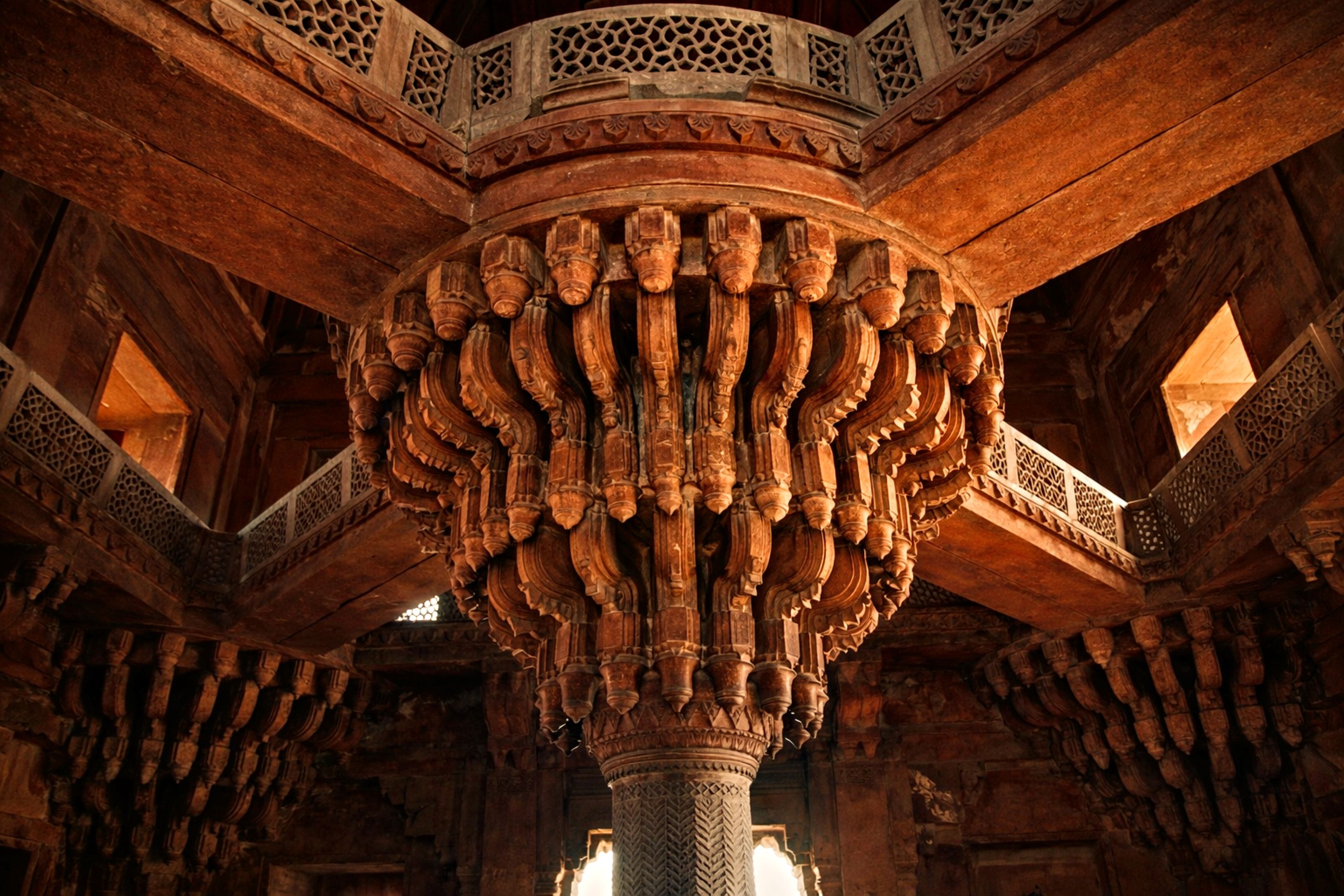
The annual debate regarding the historical depth of fireworks during Diwali (the autumn festival of lights) often pits modern civic policy against claims of deep antiquity. Popular tradition frequently treats the noisy, luminous displays of pyrotechnics as an timeless element of the festival. Yet philological stratigraphy and chemical history reveal a more measured timeline: a transition from simple, non-explosive illumination rituals to true pyrotechnic displays following the adoption of gunpowder technology in the medieval period.
The Chemistry of Saltpetre and the Philology of Agnicūrṇa
The chemical engine of pyrotechnics relies on three key ingredients: saltpetre (potassium nitrate), sulphur, and charcoal. Saltpetre acts as an oxidiser, releasing oxygen rapidly during combustion to sustain high-temperature burning. Without a high-concentration oxidiser, organic combustible materials merely smoulder.
Sanskrit texts contain early references to saltpetre under terms such as agnicūrṇa (fire powder) and yavakṣāra (potassium nitrate salt). The Arthaśāstra (a Sanskrit treatise on statecraft compiled between the late first millennium BCE and early first millennium CE) records recipes using saltpetre alongside plant resins and oils. These mixtures served primarily as incendiary weapons, smoke screens, and toxic combustibles for siege warfare rather than explosive propellant formulations.
The early textual layers of the Skanda Purāṇa (a major sacred text of the Puranic corpus) prescribe the ritual practice of ulkā-dāna (the offering of firebrands) during the month of Kārtika (October–November). In this ritual, practitioners held lit torches aloft at dusk. Tradition holds that these bright firebrands served to guide the spirits of ancestors (pitṛs) back to the underworld after their seasonal visit. These early rituals relied on basic pitch, oil-soaked reeds, or resinous wood, providing steady flame and light without explosive concussions.
Textual Stratigraphy and the Śukranīti Controversy
Proponents of an ancient origin for Indian pyrotechnics frequently cite the Śukranīti (a Sanskrit manual on governance attributed to the sage Śukrācārya). The text contains explicit recipes for compounding gunpowder, detailing exact ratios of saltpetre, sulphur, and charcoal, along with instructions for crafting nālikā (handguns) and bṛhat-nālikā (cannons).
However, textual critical analysis has largely overturned the claim of antiquity for these passages. In the late nineteenth century, Indologists who examined the manuscript tradition observed that the Śukranīti contains interpolation layers. The specific terminology for firearms, matchlocks, and explosive ratios matches post-fifteenth-century European and Ottoman artillery manuals. Most modern textual scholars agree that the passages describing explosive pyrotechnics in the Śukranīti represent early modern additions inserted into an older stylistic framework, making it an unreliable source for ancient chemical arts.
Medieval Transition: From Courtly Vinoda to Festival Integration
Evidence shows that true pyrotechnic displays entered Indian courtly life between the fourteenth and sixteenth centuries. Historical records document the transfer of refined gunpowder formulations into the Indian subcontinent through military exchanges with Mongol, Timurid, and Chinese forces, as well as trade with Arab and Portuguese merchants.
Once established in military arsenals, pyrotechnic knowledge expanded into courtly entertainment (vinoda). Late medieval Sanskrit texts reflect this shift. The Kautukacintāmaṇi (a Sanskrit compendium of amusements authored by King Pratāparudradeva of the Gajapati dynasty of Odisha) contains dedicated folios detailing recipes for pyrotechnic devices designed for royal celebrations.
Simultaneously, the Ākāśabhairava Kalpa (a Sanskrit ritual and courtly manual composed around the late fifteenth century) provides explicit instructions for constructing public fireworks displays. The text describes the preparation of pyrotechnic devices containing saltpetre and iron filings (loha-cūrṇa) to generate showers of bright sparks, explicitly tying these displays to royal festivities during Dipavali.
Foreign travelers visiting Indian courts during this era confirm the presence of pyrotechnics in public life. In 1443 CE, the Timurid ambassador Abdur Razzaq observed elaborate pyrotechnic displays during courtly celebrations in the Vijayanagara Empire. In 1518 CE, the Portuguese chronicler Duarte Barbosa described pyrotechnic displays featuring rockets and spark-emitting devices at a wealthy wedding procession in Gujarat.
⚖ Scholarly Debate: Endogenous Development vs. Technology Transfer
The precise mechanics of how pyrotechnic technology proliferated across the subcontinent remain a subject of active scholarly debate.
-
The Technology Transfer Model: Scholars debate whether the chemical refinement needed to move from incendiary smoke powders to fast-burning, explosive pyrotechnics was introduced primarily through external contact. Proponents of this view point out that early Sanskrit texts focus on incendiary pitch and incendiary arrows rather than closed-casing explosive propellants. They argue that the influx of foreign artillery specialists under the Delhi Sultanate and the Vijayanagara Empire accelerated the adoption of pyrotechnics into royal festivals.
-
The Endogenous Continuity Model: Alternative scholarly interpretations emphasize the continuous native tradition of saltpetre extraction and alchemy (Rasaśāstra) in India. Proponents of this view argue that because saltpetre effloresced naturally across Northern Indian soils, local artisans had long experimented with combustion enhancers. In this view, medieval imported techniques did not introduce pyrotechnics to a vacuum, but rather refined existing ritual practices such as ulkā-dāna, replacing oil-soaked torches with saltpetre-driven spark tubes over time.
The Modern Phase
The integration of pyrotechnics into mass consumer culture occurred much later, during the twentieth century, driven by the industrialization of firecracker manufacturing in regional centers like Sivakasi. Yet the textual and material record shows that the conceptual merging of light (dīpa) and pyrotechnic fire (ātishbāzī) was already firmly established in courtly and regional literature by the early modern era.