Nehru's Industrial Drive: Unintended Burdens on India's Working Class
Jawaharlal Nehru's ambitious industrialization policy aimed for a modern India but may have imposed significant hardships on its workers. This article examines the evidence.

Vikram Joshi for SwavedaJuly 11, 2026
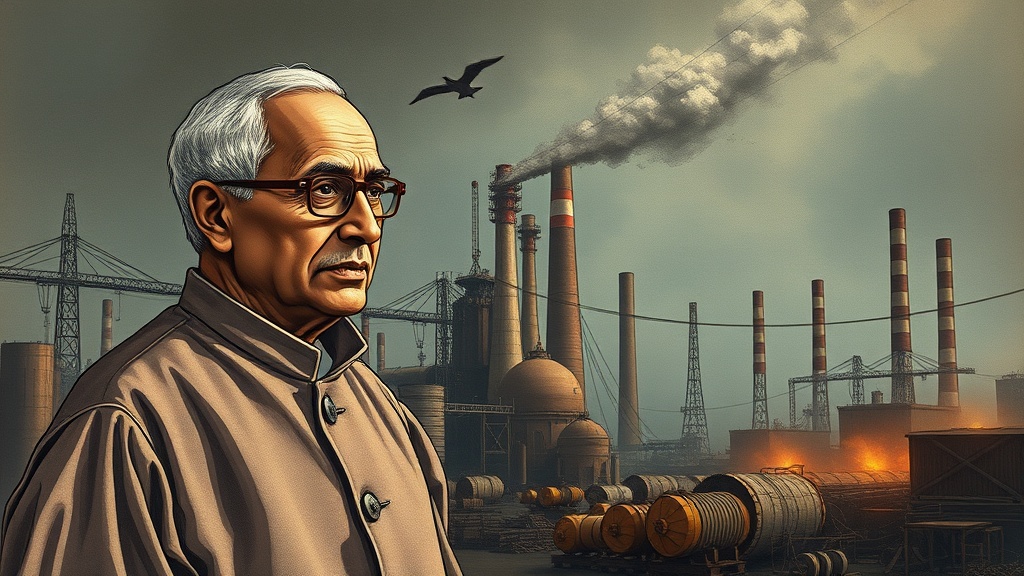
Jawaharlal Nehru, India's first Prime Prime Minister, envisioned a self-reliant nation built on the foundations of heavy industry. His policies, often termed Nehruvian socialism, prioritized state-led development, import substitution, and large-scale infrastructure projects. This drive for modernization, articulated in the Second Five-Year Plan (1956-1961) and subsequent plans, aimed to lift India out of poverty and establish it as a global industrial power. However, a critical examination of the era suggests that while industrialization progressed, its benefits were not evenly distributed, and the working class may have borne unintended consequences.
The focus on capital-intensive heavy industries—steel, heavy engineering, mining—was seen as essential for building a robust economic base. The thinking was that these sectors would provide the infrastructure and inputs for downstream industries, creating a multiplier effect. This approach was influenced by the Soviet model of development and advocated by economists like Mahalanobis Mahalanobis, P. C. (1955). The Approach of Operational Research to Planning in India. Sankhyā: The Indian Journal of Statistics, 16(1/2), 3–142. While these industries did expand significantly, creating jobs in their immediate vicinity, the overall impact on the broader labor market and the living conditions of the working class requires careful analysis, distinguishing between stated aims and documented outcomes.
One area of impact was on the informal sector, which historically absorbed a large proportion of India's labor. The emphasis on large, organized industrial units may have indirectly contributed to the stagnation or decline of traditional artisanal and small-scale industries. These smaller enterprises often provided more flexible employment and were accessible to a wider segment of the population. As larger, state-backed factories took precedence, workers in these traditional sectors may have faced reduced demand for their goods and services, leading to precarious employment or displacement. Evidence of this shift can be seen in analyses of industrial structure during the period, where the growth of large-scale manufacturing is often juxtaposed with the challenges faced by small and village industries.
Furthermore, the nature of employment in the new heavy industries often involved demanding physical labor in conditions that were not always safe or equitable. While labor laws existed, their enforcement in rapidly expanding industrial zones could be inconsistent. The goal of rapid industrialization sometimes led to a prioritization of output over worker welfare. Reports from the period and subsequent academic studies on industrial labor in India highlight the long working hours, the prevalence of hazardous conditions in mines and factories, and the struggles of workers to organize and secure better terms of employment. The focus on creating a skilled industrial workforce, while important, did not always translate into immediate improvements in the day-to-day lives of all workers.
The policies of the era also involved significant state intervention in economic affairs, including price controls and rationing of certain goods. While intended to ensure equitable distribution and prevent inflation, these measures could also lead to shortages and a thriving black market, affecting the real purchasing power of wages for the working class. Access to essential commodities was not always guaranteed, and the cost of living in rapidly urbanizing industrial centers could outpace wage growth for many.
The emphasis on capital rather than labor in industrial planning also meant that the creation of employment opportunities might not have kept pace with the growing labor force. While new jobs were created, the structural shift towards heavy industry was less labor-absorbent than a policy focused on labor-intensive manufacturing or services might have been. This can contribute to an underemployment problem, where individuals are employed but not to their full potential, or a surplus of available labor that depresses wages.
It is important to distinguish between the lofty ideals of national self-sufficiency and economic progress, and the tangible realities faced by the people. Nehru's vision was undoubtedly patriotic, driven by a desire to see India stand tall on the global stage. The establishment of institutions like the Indian Institutes of Technology (IITs) and major industrial complexes were testament to this ambition. Yet, the historical record suggests that the transition to an industrial economy, shaped by these specific policies, created a complex landscape for the Indian working class. While some benefited from new opportunities, others found their traditional livelihoods threatened or faced challenging working conditions and economic uncertainties.
Scholarly debate continues regarding the precise balance of Nehru's legacy, with analyses often pointing to a trade-off between rapid industrial growth and equitable distribution of its benefits. The economic data from the period, alongside socio-historical accounts of labor movements and working-class life, provides a nuanced picture. These sources do not suggest a deliberate intent to harm the working class, but rather point to the complex and sometimes contradictory outcomes of ambitious economic planning in a developing nation. The question remains how to pursue industrial progress while ensuring that the fruits of labor are shared more broadly and that the dignity and well-being of every worker are upheld.