Mutiny, Rebellion, Uprising: What Historians' Word Choices for 1857 Actually Reveal
The same events of 1857 get called a mutiny, a rebellion, a revolt, or a war of independence — and each label carries its own argument about causes, actors, and legitimacy.

Asha Naidu for SwavedaJuly 31, 2026
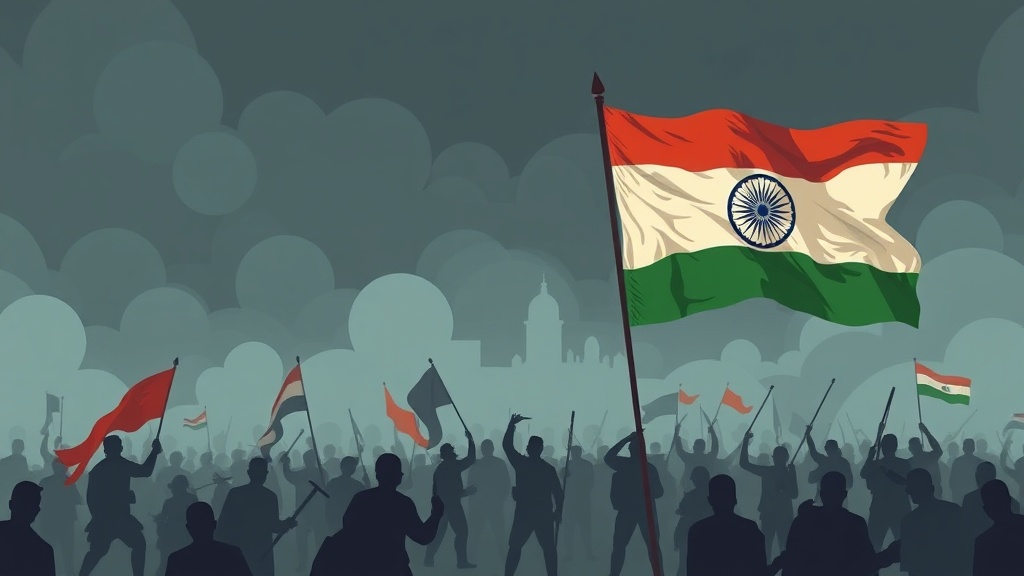
Ask an Indian schoolchild what happened in 1857 and they will likely say "the First War of Independence." Ask a British history undergraduate the same question, and depending on which textbook edition landed on their desk, they might say "the Indian Mutiny," "the Sepoy Rebellion," or, more recently, "the Indian Uprising." None of these labels is neutral. Each one is a small argument, compressed into a noun.
A recent Reddit discussion on r/IndianHistory laid out the mechanism plainly: word choice in imperial history is rarely decorative. It signals who the writer thinks had legitimate authority, who broke the rules, and whose violence counts as war rather than crime. The same mechanism is visible, in sharper and more citable form, among the historians who have actually written the standard accounts of 1857.
"Mutiny": discipline broken, politics erased
The earliest and longest-lived British term was "Mutiny." John Kaye's account, later completed by G.B. Malleson, was published as a "History of the Indian Mutiny," and that title shaped official British usage for a century. The word comes from military law, describing soldiers who violate their oath to superior officers. Applying it to 1857 frames the uprising's core actors as sepoys — Indian soldiers serving in the British colonial army — who broke a contract of service. It says nothing about land revenue grievances, deposed rulers, or religious anxieties over new cartridge grease; it only registers a breach of discipline. That narrowness is the point. Calling it a mutiny keeps the argument inside a barracks, not a country.
"Rebellion" and "Revolt": authority assumed, not argued
"Rebellion" is the term Wikipedia's own reference article settles on today, titled the Indian Rebellion of 1857, and it is the term most Anglophone academic histories now default to. It is broader than mutiny — it allows for civilians, deposed princes, and peasants alongside soldiers. But "rebellion," like "mutiny," still quietly assumes that British rule was the established, legitimate order being rebelled against. The word describes resistance to authority; it does not ask whether that authority was rightful.
Eric Stokes pushed the framing toward economics rather than politics or military discipline. His posthumously completed study, The Peasant Armed: The Indian Revolt of 1857, used "revolt" to center agrarian distress — indebted landholders, dispossessed taluqdars (a class of landed intermediaries who collected revenue for the state), and villagers reacting to disrupted land settlements. "Revolt" in Stokes's usage does less work around legitimacy and more around cause: it points at soil and taxation ledgers rather than oaths of loyalty.
"War of Independence": sovereignty projected backward
The most openly political relabeling came from Vinayak Damodar Savarkar, whose 1909 book was titled The Indian War of Independence of 1857. Savarkar's title does two things at once. It claims the events were a coordinated military campaign for national sovereignty, not a series of scattered local grievances, and it retroactively applies a 20th-century nationalist category — independence — to a coalition of princes, sepoys, and peasants who did not all share a single unified political goal in 1857. This is the term now used in Indian government commemorations and school curricula, where it appears as "the First War of Independence." Historians who use it are making an argument about coherence and intent; historians who avoid it are usually flagging that the evidence for a single unified aim is thin.
"Uprising": contingency over grand design
William Dalrymple's 2006 account, The Last Mughal, leans toward "uprising," a term that keeps the scale and violence of the event but drops both the military-discipline framing of "mutiny" and the coordinated-campaign framing of "war of independence." Dalrymple's book centers on Delhi's collapse under the last Mughal emperor, Bahadur Shah Zafar, and the term "uprising" fits a narrative built around contingency, rumor, and improvisation rather than premeditated strategy. Kim Wagner's scholarship, including his work reconstructing the panic and rumor that spread through Company (East India Company) garrisons in 1857, similarly treats the events as driven by fear and miscommunication as much as by organized intent — a picture the word "uprising" accommodates more comfortably than "war."
Why the label still matters
None of these historians is lying by choosing one word over another. Each term foregrounds a different kind of evidence — military records for "mutiny," land-revenue data for "revolt," proclamations and letters between princes for "war of independence," garrison correspondence and rumor networks for "uprising." The Reddit thread's broader observation applies here without qualification: vocabulary in imperial history is an argument wearing the costume of a description. Reading 1857 scholarship well means noticing which noun a historian reaches for — and asking what evidence that noun is quietly standing on.