Mapping the World’s Tea Words: An Isogloss of Empire and Trade
How the words "tea" and "cha" split the global map, tracing ancient trade routes, Dutch maritime voyages, and British colonial interventions in India.

Asha Naidu for SwavedaJuly 30, 2026
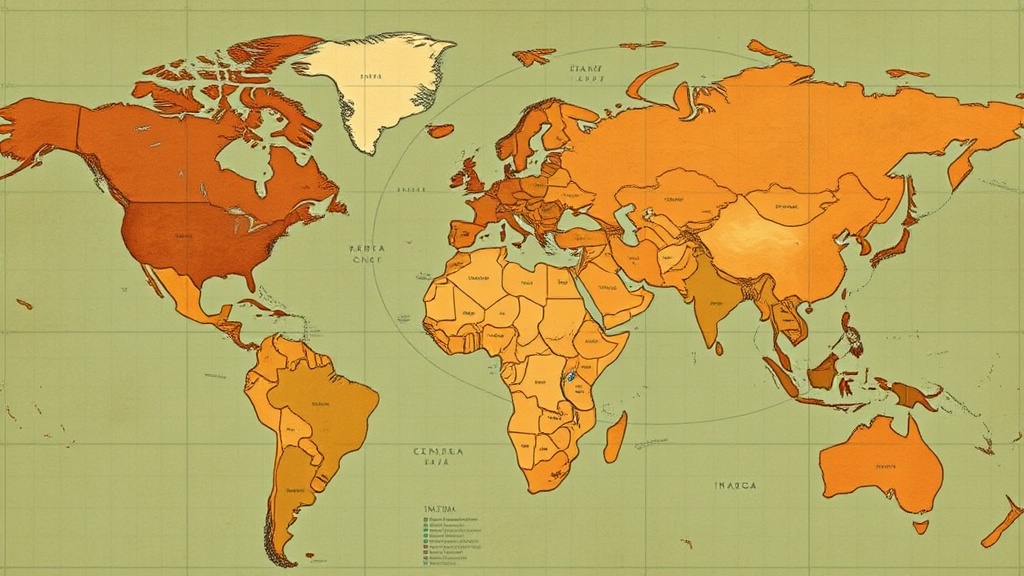
Language preserves history in ways that stone and parchment often fail to do. By examining the geographic distribution of words, linguists can map out ancient trade networks that shaped the modern world. One of the clearest examples of this phenomenon is an isogloss (a line on a map marking the boundary of a linguistic feature) that divides the globe into two primary linguistic families for a single commodity: tea.
Almost every language on Earth uses a variation of either "tea" or "cha" to describe the beverage brewed from the leaves of Camellia sinensis (the tea plant). The global division between these two words is not random. Instead, it traces the specific paths of historical trade, distinguishing between overland caravan routes and maritime shipping lanes.
The story begins in China, the botanical home of the tea plant. The Sinitic languages, which belong to the Sino-Tibetan language family, contain various regional pronunciations for the character 茶. In Mandarin (the dominant language of northern and southwestern China), the character is pronounced chá. In Min Nan (a Southern Min language spoken in the coastal province of Fujian), the same character is pronounced tê.
These two distinct regional pronunciations traveled along different trade networks, dividing the global vocabulary.
The word cha spread primarily by land. Caravans carried the beverage westward from northern China along the Silk Road, an ancient network of Eurasian trade routes. As the product traveled across Central Asia, the Persian Empire adopted the word chāy (tea). From Persian, the term entered Arabic, Turkish, and Russian. Today, Russian speakers use chay (tea), while Turkish speakers use çay (tea). The overland route also brought the word south into India, where Hindi-Urdu speakers adopted chay (tea), which eventually became chai (tea).
Evidence shows that maritime trade, by contrast, carried the Min Nan pronunciation tê across the oceans. In the early seventeenth century, Dutch merchants from the Dutch East India Company established a major trading post in Fujian. The Dutch purchased their tea from Min Nan speakers, adopting the word thee (tea) to describe the commodity. As Dutch merchant ships dominated Western European maritime trade, they introduced the word to neighboring nations. This maritime route explains why English speakers use tea, French speakers use thé (tea), German speakers use Tee (tea), and Spanish speakers use té (tea).
There are, however, notable exceptions to this sea-versus-land division. Portugal, a European nation with a massive maritime empire, uses the word chá (tea) instead of a variation of te. This linguistic anomaly exists because Portuguese merchants bypassed the Dutch-controlled trade in Fujian. Instead, Portuguese traders sailed directly to Cantonese-speaking regions, establishing a trade base in Macau during the mid-sixteenth century. Since Cantonese speakers used the pronunciation chā, the Portuguese adopted this variant, carrying it back to Europe and across the Atlantic to Brazil.
In India, the linguistic landscape of tea reflects a complex history of indigenous consumption, colonial intervention, and economic propaganda. While chai is now a cultural staple across the Indian subcontinent, its widespread usage as a sweetened, milky beverage is a relatively modern phenomenon.
Historically, various ethnic groups in northeastern India consumed indigenous wild tea leaves long before British colonial rule. For example, the Singpho people of Assam brewed a traditional tea beverage known as phalap (tea). However, the massive commercialization of tea did not begin until the nineteenth century, when the British East India Company sought to break the Chinese monopoly on the global tea market.
The British established large-scale plantations in Assam, utilizing colonial labor structures. Initially, the vast majority of this tea was exported to Western markets. Domestic consumption in India remained low until the twentieth century. To create a domestic market for their surplus product, the colonial Indian Tea Association launched aggressive marketing campaigns. According to historical analyses compiled by Swaveda contributors, these campaigns promoted tea drinking to Indian workers by setting up liquid tea stalls at railway stations, factories, and mines.
These colonial stalls introduced the British practice of brewing tea with milk and sugar, but Indian vendors adapted the recipe by adding local spices like cardamom and ginger, creating the modern masala chai (spiced tea). The linguistic adoption of chai across India aligns with the Persianate influence on northern Indian languages, cementing the overland phonetic variant in the regional vocabulary despite the British maritime trade network that financed the industry.
The global map of tea words serves as a linguistic fossil. It demonstrates that the words we use in our kitchens today are not arbitrary. They are the direct results of decisions made centuries ago by Fujianese merchants, Persian caravan drivers, Dutch sailors, and colonial planners. By tracing these words, we reconstruct the physical paths of human exchange that built the modern world.