Kapilendra Deva's Gambit: Navigating Eastern Indian Power Plays
An examination of Kapilendra Deva's military campaigns and political reach, focusing on his interactions with Bastar, Ratanpur, and the Raksel kingdom amidst conflicts with Jaunpur.

Meera Iyer for SwavedaJuly 10, 2026
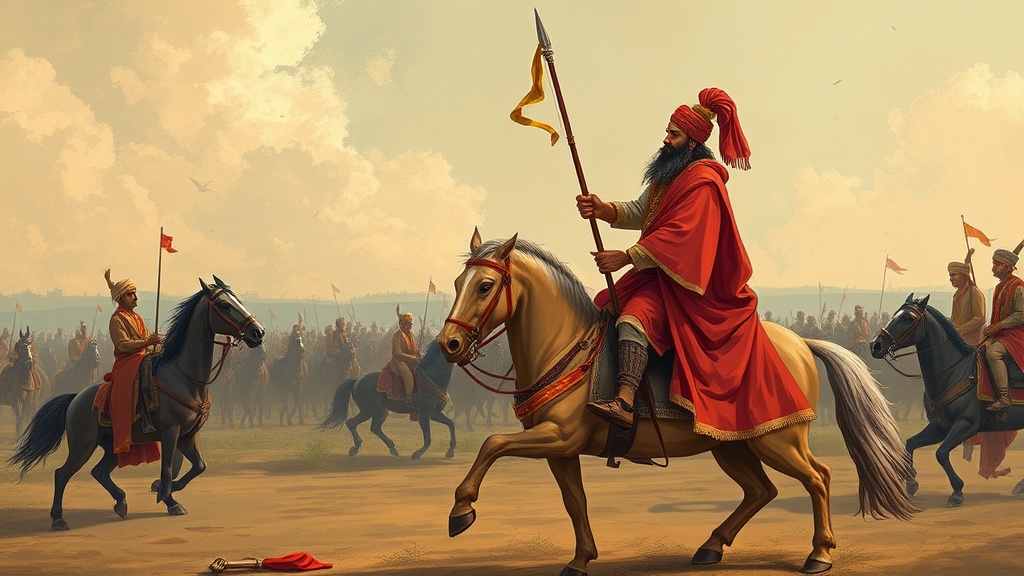
The reign of Kapilendra Deva, founder of the Eastern Ganga dynasty's Gajapati line in Odisha, marked a period of significant expansion and regional realignment in 15th-century eastern India. While much attention is given to his campaigns against the Bahmani Sultanate and his northward push, his influence and strategic positioning relative to neighboring kingdoms during conflicts with the Jaunpur Sultanate warrant closer examination. This inquiry focuses on the complex interplay between Kapilendra Deva's military ambitions and the political dynamics involving the Bastar Kingdom, the Ratanpur Kalachuri, and the Raksel kingdom.
Kapilendra Deva ascended to the throne around 1435 CE, inheriting a realm that had experienced periods of both strength and vulnerability. His military acumen and political foresight transformed the Gajapati kingdom into a dominant power. His strategy often involved exploiting the fluid political landscape of the time, characterized by the decline of some powers and the rise of others. The Jaunpur Sultanate, under rulers like Ibrahim Sharqi, posed a considerable threat to northern and eastern Indian polities. Kapilendra Deva's engagement with these external pressures shaped his regional alliances and military deployments.
The Bastar Kingdom, situated in the present-day Chhattisgarh region, was a significant entity in the Deccan plateau's northeastern periphery. Its strategic location and access to resources made it a focal point for regional powers. Historical records and scholarly interpretations suggest periods of both conflict and tributary relationship between the Gajapati rulers and the rulers of Bastar. During Kapilendra Deva's era, evidence points towards a strategic necessity for the Gajapati ruler to secure his western and northwestern flanks. The Bastar Kingdom, under rulers like Purushottam Deva (not to be confused with the Gajapati ruler of the same name), likely engaged in defensive maneuvers or alliances to maintain its autonomy. The nature of this engagement—whether direct confrontation, diplomatic negotiation, or a degree of vassalage—remains a subject of historical reconstruction. What is clear is that the shifting alliances and military movements of the Jaunpur Sultanate likely influenced the decisions of both Kapilendra Deva and the ruling powers in Bastar.
Similarly, the Ratanpur Kalachuri kingdom, also in present-day Chhattisgarh, represented another important regional power. The Kalachuris of Ratanpur had a long and complex history, and their relationship with neighboring states was often one of strategic balancing. During the 15th century, the Kalachuri rulers found themselves navigating the ambitions of larger empires and kingdoms. Interactions with Kapilendra Deva's expanding Gajapati domain would have necessitated careful diplomatic and military responses. While direct accounts of Kapilendra Deva's campaigns specifically against Ratanpur are not as prominently detailed as his conflicts with the Bahmani Sultanate, indirect evidence suggests that the Gajapati's expanding influence would have impinged upon Ratanpur's sphere of influence. The need for Kapilendra Deva to secure his borders and potentially expand his dominion meant that these regional kingdoms were not merely passive entities but active participants in the geopolitical chessboard.
The Raksel kingdom, located in the present-day Jharkhand region, also played a role in this intricate regional dynamic. The Raksel chiefs were known for their martial prowess and control over strategically important territories. Their proximity to the expanding Gajapati influence and their position relative to the Jaunpur Sultanate's reach would have dictated their political alignment. Historical scholarship suggests that during periods of intense conflict between major powers, smaller kingdoms like the Raksel were often drawn into alliances or subjected to the pressures of larger neighbors. Kapilendra Deva's military successes would have made his kingdom a natural point of reference, either as an ally to be courted or an adversary to be confronted. The Raksel kingdom's independent trajectory or its alignment with or against Kapilendra Deva during the Jaunpur conflicts would have contributed to the broader regional power balance.
The periods of conflict with the Jaunpur Sultanate were particularly consequential. When Jaunpur posed a significant threat, regional powers often had to choose sides or fortify their positions against a potential two-front engagement. Kapilendra Deva's ability to simultaneously campaign against the Bahmani Sultanate and manage threats from or engage with powers influenced by Jaunpur speaks to his strategic depth. This likely involved a complex web of alliances, diplomatic overtures, and swift military interventions. The interaction with Bastar, Ratanpur, and Raksel was not in isolation but occurred within the larger framework of these major conflicts. The Gajapati ruler's efforts to consolidate his power and secure his dominion required him to project influence or secure the acquiescence of these surrounding kingdoms, preventing them from becoming opportunistic adversaries or safe havens for his enemies.
In essence, Kapilendra Deva's reign was characterized by a sophisticated engagement with the regional powers of eastern India. The relationships with the Bastar Kingdom, Ratanpur Kalachuri, and the Raksel kingdom were not static but evolved in response to the shifting geopolitical landscape, particularly the pressure exerted by the Jaunpur Sultanate. By meticulously navigating these complex regional dynamics, Kapilendra Deva solidified the Gajapati kingdom's ascendancy, demonstrating a strategic understanding that extended far beyond his immediate borders. The available primary sources and ongoing scholarly analysis continue to illuminate the intricate political maneuvers of this consequential period in Indian history.