Indus Valley's Echoes: New Digs and Ancient DNA Map Population Shifts
Recent excavations and ancient DNA studies are illuminating the continuity and changes in populations within the Indus Valley Civilization, clarifying its transition into later South Asian history.

Dr. Anil Patel for SwavedaMay 29, 2026
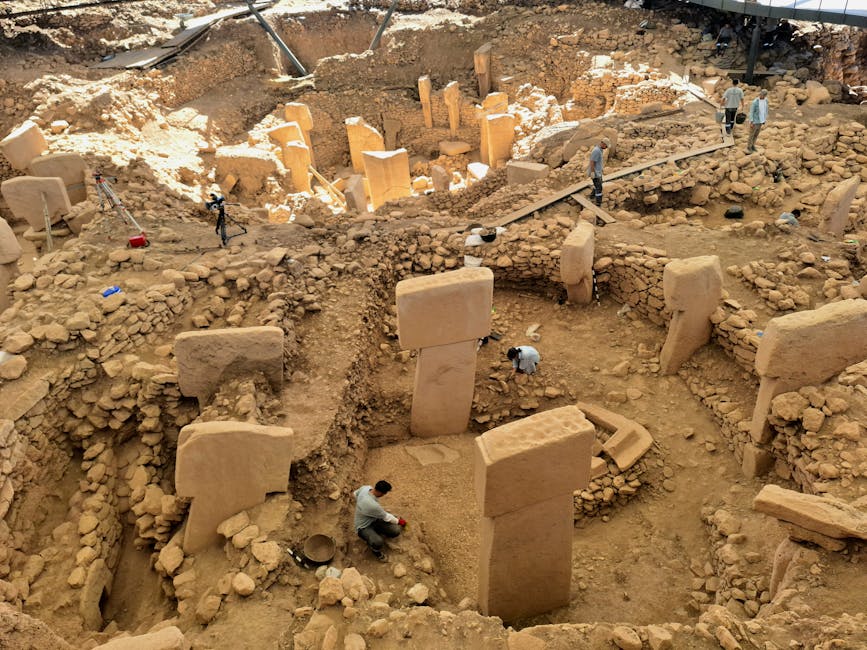
Recent archaeological investigations, combined with the analysis of ancient DNA, are beginning to map the demographic currents that flowed through the Indus Valley Civilization during its flourishing and its eventual transformation. These efforts aim to clarify the degree of population continuity or replacement that characterized the transition from the Harappan period to subsequent South Asian history. This research moves beyond broad narratives, seeking to understand the human story behind one of the world's earliest urban cultures.
The Indus Valley Civilization, also known as the Harappan Civilization, spanned a vast area of South Asia from roughly 2600 to 1900 BCE. Its major urban centers, like Mohenjo-daro and Harappa, were sophisticated metropolises with advanced sanitation systems, standardized weights and measures, and a complex administrative structure, all developed independently. For decades, understanding the civilization's decline and the subsequent population dynamics has been a subject of debate.
One of the key questions has been the extent to which the people of the Indus Valley Civilization were replaced by incoming groups, or if the population largely remained continuous and adapted. Ancient DNA (aDNA) studies offer a powerful lens for addressing these questions. By extracting genetic material from ancient skeletal remains, scientists can compare the DNA of people from different periods and regions.
Early aDNA studies, notably those involving researchers like Vagheesh Narasimhan, Nick Patterson, and David Reich, began to reveal a complex picture. These studies indicated that the ancestry of present-day South Asians is a mixture of several ancestral components. A significant component identified is often referred to as "Ancestral South Indian" (ASI), thought to represent a population indigenous to the subcontinent that predates the Indus Valley Civilization. Another key component is "Indus Valley Neolithic" (IVC), linked to the early farmers who settled in the region before the rise of the great cities. A third component, often associated with groups like the "Iranian Neolithic" farmers, is also present, suggesting early interactions and admixture.
Crucially, research published in journals like Cell has shown that the genetic profile of people living in the northern Indus Valley during the Harappan period closely resembles that of the earlier Indus Valley Neolithic farmers. This suggests a strong degree of genetic continuity within the core regions of the civilization itself. The implication is that the decline of the urban centers did not necessarily mean a wholesale replacement of the population. Instead, the people who lived in these cities likely persisted in the surrounding regions, perhaps adapting to changing environmental and societal conditions.
However, the narrative is not one of complete stasis. The same studies that highlight continuity also point to the arrival of new ancestral components in South Asia after the decline of the Indus Valley Civilization. Specifically, evidence shows the introduction of ancestries associated with pastoralist groups from Central Asia, particularly during the second millennium BCE. These migrations appear to have contributed to the genetic makeup of later populations in Northwest South Asia.
Recent archaeological fieldwork is adding granular detail to this genetic landscape. Excavations at various Indus Valley sites, while not always yielding ancient DNA samples directly due to preservation challenges or ongoing analysis, provide crucial context. For instance, findings at sites like Rakhigarhi in Haryana, India, have been instrumental. Studies by researchers associated with the Archaeological Survey of India (ASI) and international collaborators have uncovered extensive urban planning, sophisticated craftsmanship, and burial practices that shed light on the daily lives and societal structure of the Harappan people.
The analysis of artifacts, such as pottery, seals, and tools, helps archaeologists reconstruct the timeline of settlement, trade networks, and cultural practices. Changes in ceramic styles, architectural techniques, or the distribution of specific materials can indicate shifts in population movement, interaction, or cultural assimilation. For example, evidence of continuity in pottery traditions from the Mature Harappan period into later phases at certain sites can support the idea of an enduring local population. Conversely, the appearance of new artifact types may signal the arrival of new groups or significant cultural influence.
The precise timeline and geographic extent of these population shifts are areas of active research. scholars debate the primary drivers of the Indus Valley Civilization's decline, with theories ranging from climate change and river system shifts to social upheaval and environmental degradation. The genetic and archaeological evidence helps to refine these hypotheses by showing who was present and how they interacted during these transformative periods.
It is important to distinguish between the archaeological evidence and the genetic findings. Archaeology provides the material record of human activity, while genetics offers insights into biological ancestry. When these two lines of evidence converge, they provide a more robust understanding. For instance, if archaeological findings suggest a shift in settlement patterns or the introduction of new technologies in a particular region, and genetic studies from that same region show the incorporation of new ancestral components around the same time, it strengthens the interpretation of population movement or admixture.
The ongoing work by researchers like the teams associated with the work on sites such as Rakhigarhi, and the broader field of ancient genomics applied to South Asia, is slowly piecing together a more nuanced picture. It suggests a model where the people of the Indus Valley Civilization did not vanish, but rather their descendants formed a significant ancestral component for the populations that followed. The subsequent millennia saw further migrations and interactions, shaping the diverse genetic landscape of South Asia today. This research avoids simple narratives of conquest or complete replacement, instead detailing a more intricate history of continuity, adaptation, and gradual transformation. The findings underscore that population history is a dynamic process, shaped by a complex interplay of environmental, social, and migratory forces.