High-Altitude Horizons: Reassessing Human Settlement on the Western Tibetan Plateau
New archaeological evidence from the Kali site challenges previous models of how and when humans occupied the challenging environment of the high-altitude Western Tibetan plateau.

Dr. Anil Patel for SwavedaJuly 18, 2026
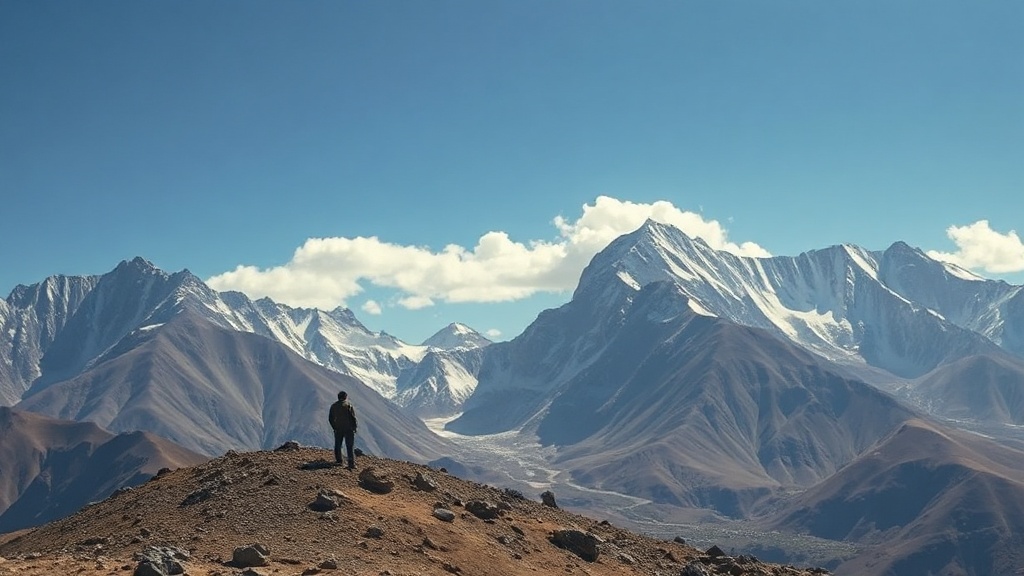
The Western Tibetan plateau has long been considered a peripheral zone in the study of early human migration. Conventional archaeological models have often characterized the region as a late-settlement area, largely due to the severe environmental pressures—such as hypoxia (low oxygen levels) and extreme thermal fluctuations—that define life at high altitudes. However, the discovery and subsequent analysis of the Kali site, situated at an elevation of 4,300 meters, necessitate a revision of these timelines.
Challenging the Highland Barrier
Archaeologists have historically treated high-altitude habitation as an endurance test that early populations could only pass after developing specific subsistence strategies. The assumption held that significant human occupation of the Tibetan plateau remained impossible until the proliferation of agriculture or specialized pastoralism provided a stable caloric base.
The findings reported in the Journal of Archaeological Science: Reports challenge this narrative. By examining the stratigraphy and the material culture recovered from the Kali site, researchers suggest a more nuanced history of human presence. The evidence indicates that human groups navigated these landscapes much earlier than previously accounted for in standard regional models.
Material Evidence and Chronology
The Kali site provides a distinct look at how groups adapted to the extreme environment. The artifact assemblage includes lithic (stone) tools that suggest a reliance on mobile hunting and gathering strategies rather than the sedentary agricultural practices often associated with later settlements in the region.
The analysis of the site’s occupational sequence shows that humans engaged with the Western Tibetan plateau in phases. These shifts in habitation patterns correlate with climatic fluctuations, suggesting that these populations possessed a high degree of environmental plasticity. Instead of a linear progression of settlement, the evidence points to a series of intermittent occupations. These findings indicate that the plateau was not a void to be bypassed, but an active landscape through which mobile groups transitioned and utilized seasonal resources.
The Genetic and Linguistic Context
While the Kali site provides the archaeological scaffolding, the broader story of Himalayan settlement remains tied to genetic research on the adaptation of indigenous populations. Evidence shows that high-altitude life necessitated significant biological changes, such as the selection for specific variants in genes involved in oxygen transport, most notably the EPAS1 gene, which is common in populations currently inhabiting the Tibetan plateau.
Scholars debate whether the initial movement into the high altitudes was the work of a single, rapid expansion or a gradual process of cultural and biological acclimation. The Kali site adds a critical data point to this discussion. By identifying occupation layers that predate the arrival of widespread cereal agriculture, the site forces a separation between the timeline of "human presence" and the timeline of "permanent agricultural settlement."
Moving Beyond Linear Models
The current record, as detailed in the recent study of the Kali site, suggests that our previous reliance on low-altitude archaeological benchmarks has obscured the complexity of high-altitude history. We are observing a pattern where early humans were perhaps more mobile and adaptive than the limitations of their lithic technology might suggest.
Future investigations must shift toward high-resolution environmental reconstruction to understand why these groups chose to enter the Western Tibetan plateau at specific intervals. The traditional view—that early humans avoided these elevations—is no longer supported by the material evidence found at Kali. Instead, we are looking at a population that understood the constraints of the Himalayan environment and navigated them with a sophisticated, if mobile, toolkit. As research continues, the focus will likely remain on integrating these site-specific findings into a larger synthesis of Asian migration, one that acknowledges the high mountains not as barriers, but as part of the human story.