Gold in the Deccan: Re-evaluating the Akkihebbalu Roman Hoard
A numismatic analysis of the Akkihebbalu Roman gold coins reveals the extent of ancient trade between the Deccan interior and the Roman Empire.

Devika Menon for SwavedaJuly 21, 2026
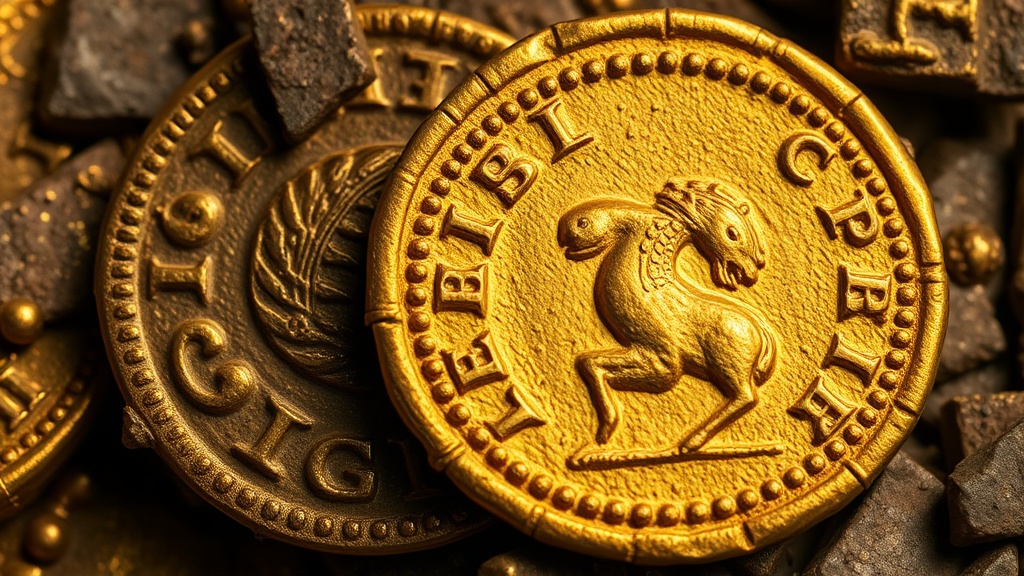
The village of Akkihebbalu in the Mandya district of Karnataka yielded one of the most significant numismatic findings for researchers of ancient trade. In 1891, a pot containing Roman gold coins, known as aurei (singular: aureus), was recovered from the region. While coastal sites like Arikamedu in present-day Puducherry are often highlighted for their maritime connections, the Akkihebbalu find provides a look at the inland penetration of Roman currency.
These coins date primarily to the reigns of the emperors Augustus (27 BCE – 14 CE) and Tiberius (14 CE – 37 CE). According to the Archaeological Survey of India, the specific coins identified from this hoard reflect the heavy circulation of early imperial Roman currency in South India. For a numismatist, these pieces are not merely curiosities; they represent the hard currency used in exchange for pepper, textiles, and semi-precious stones.
Numismatic Evidence of Trade
Evidence shows that the Roman aureus acted as a standard unit of high-value exchange. The weight of these coins was strictly regulated by the Roman mint, which allowed merchants to trust their value despite the long distance from Rome. The Akkihebbalu specimens are significant because they appear in the interior Deccan, far from the primary ports on the Malabar and Coromandel coasts.
Scholars debate the exact nature of this inland trade. One hypothesis suggests that these coins reached the Deccan through secondary markets after arriving at major ports such as Muziris (modern-day Pattanam in Kerala). The Periplus of the Erythraean Sea, a first-century Greek travelogue, describes the thriving maritime commerce between Egypt and India. It lists the ports of the Chera, Chola, and Pandya kingdoms, noting that Roman ships carried large quantities of coin to facilitate the purchase of Indian exports.
The presence of these coins in Akkihebbalu indicates that the economic reach of the maritime trade extended significantly into the hinterland. While tradition holds that such hoards were buried for safekeeping during times of instability, current archaeological interpretations focus on the role of these coins as bullion, valued for their gold content by local merchants and elites.
Comparing Interior and Coastal Findings
A distinction must be made between coastal port sites and interior finds. Excavations at coastal trading hubs often yield a broader range of Mediterranean pottery, such as terra sigillata (red-gloss Roman tableware). In contrast, interior hoards like Akkihebbalu are often comprised almost exclusively of gold coinage.
The British Museum maintains records of such Roman gold issues found across South India. The consistency in the reign dates of the Akkihebbalu coins—nearly all falling within the Julio-Claudian period—suggests a concentrated window of economic activity. This aligns with the account in the Periplus, which records that Roman demand for Indian goods peaked during the first century CE.
Materiality and Distribution
The Akkihebbalu hoard forces us to refine our understanding of how wealth moved through the Indian subcontinent. It is insufficient to view trade as a strictly coastal phenomenon. The interior of the Deccan was well-integrated into the broader Indian Ocean trade network.
Archaeologists rely on catalogues like the Roman Coins in India database to track the distribution of these finds. The uniformity of the coins recovered in Mandya suggests that these were not stray items lost by individual travelers. Instead, they represent consolidated wealth, perhaps utilized by merchant guilds (shreni) that controlled the movement of goods between the coastal docks and the interior production centers.
While some researchers argue that these coins were used as ornaments in the post-Roman period, the high percentage of wear observed on coins from this hoard points to their use as currency during the era of the Roman Principate. The transition from active circulation to a static hoard remains a subject of investigation.
Future analysis of such hoards will likely benefit from trace element analysis of the gold. By examining the impurities within the metal, scientists can trace the mint of origin, further narrowing the link between specific Roman economic policies and the procurement of goods in the Deccan. As we continue to document these finds, the evidence shows that the economic history of the Deccan is inseparable from the Mediterranean world. The coins of Akkihebbalu remain a cornerstone of this narrative, bridging the distance between the Roman mints and the markets of South India.