Dyes of the Deccan: Scientific Residue Analysis Maps Ancient South Indian Textile Networks
Archaeological science at Sanganakallu links botanical dye residue and spindle whorls in the Deccan to early South Indian textile craft documented in Sangam texts, bridging material evidence and literary tradition.

Vikram Joshi for SwavedaNovember 2, 2026
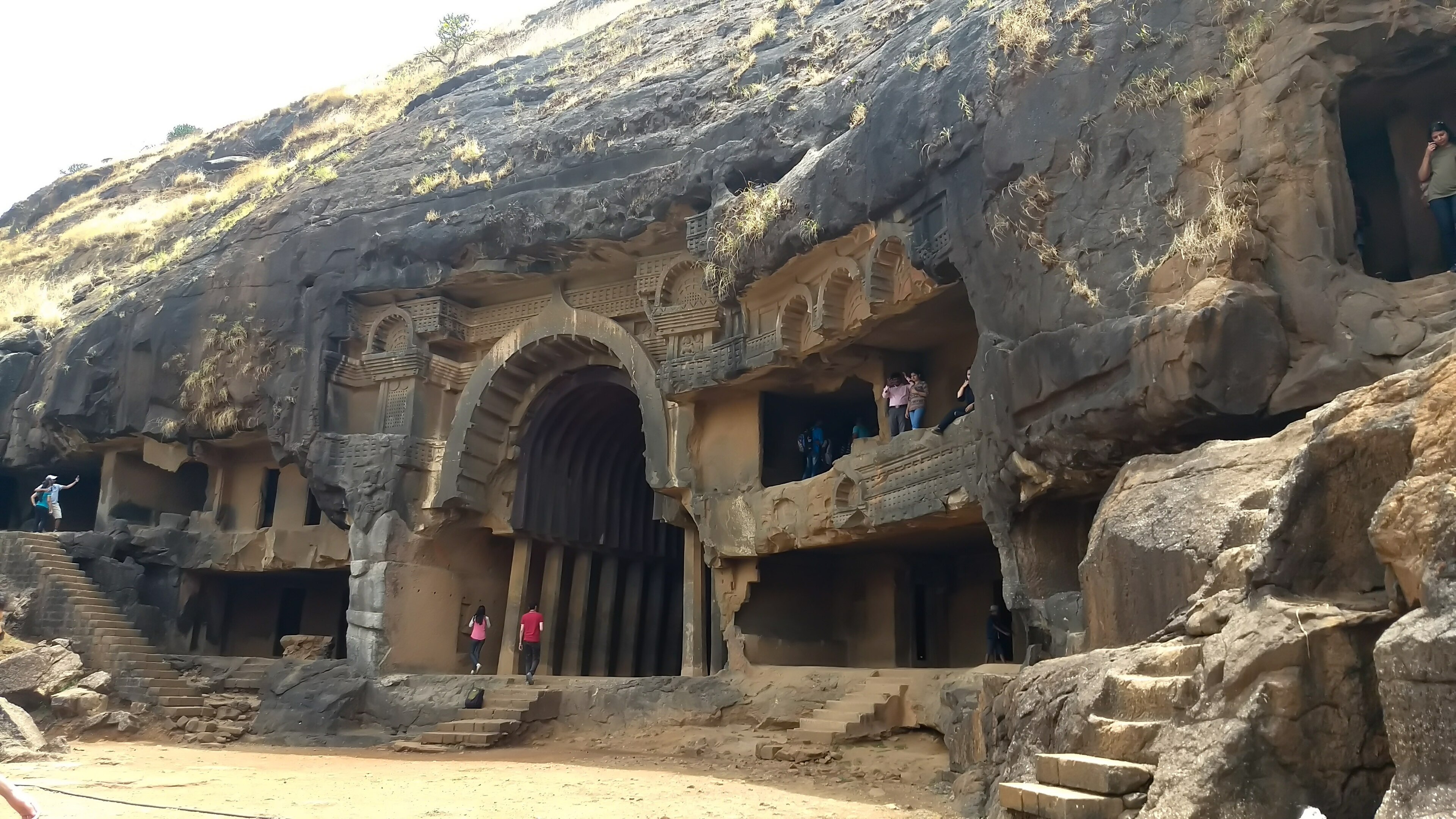
The granite tors and vitrified dung mounds of Sanganakallu, located in eastern Karnataka's Bellary district (Wikipedia), have long provided archaeologists with a key window into the South Indian Neolithic period (Antiquity / ResearchGate). Research by Dorian Fuller and Nicole Boivin has charted how these pastoral communities shifted over millennia from seasonal cattle penning toward specialized craft production (Antiquity / ResearchGate).
Now, scientific techniques applied to organic residues and stone artifacts are clarifying another dimension of prehistoric life: early textile craft and plant-based processing. By analyzing chemical traces on ceramic sherds and bedrock grinding surfaces alongside physical implements like terracotta spindle whorls (kadir, the spinning shaft component), researchers are mapping out the practical mechanics of prehistoric cloth making in the Deccan (Antiquity / ResearchGate). The material evidence shows how pastoralists integrated botanical resources into local craft networks, offering a physical anchor for early South Indian textile traditions.
Tracing Madder and Mineral Chemistry in the Deccan
Textiles rarely survive the acidic soils and monsoon cycles of Southern India. Archaeologists must instead rely on indirect physical traces and chemical residue analysis (PMC). In late Neolithic and Megalithic layers at Sanganakallu-Kupgal, excavations have recovered terracotta spindle whorls alongside botanical remains (Antiquity / ResearchGate).
Archaeobotanical work by Dorian Fuller and E. Asouti identified seeds of Rubia cordifolia—commonly known as Bengal madder or manjistha (a climbing plant whose roots yield a red anthraquinone dye)—in late Neolithic deposits at Sanganakallu (IJATES / ResearchGate). Because madder is not indigenous to the dry granite hills of Bellary, its presence indicates that local inhabitants obtained plant materials from surrounding environments, such as the nearby Sandur Hills, specifically for processing (ResearchGate).
To fix organic plant dyes to plant fibers like cotton (Gossypium), ancient dyers required mordants—metal salts, such as alum or iron compounds, that bind color molecules to textile fibers (Smarthistory). Evidence shows that chemical residue screening using gas chromatography-mass spectrometry (GC-MS) and liquid chromatography (Preprints.org) allows researchers to detect absorbed organic biomarkers within unglazed ceramic vessels and grinding equipment (PMC / Isobar Science).
While isotopic analysis of lead and strontium is frequently used to provenance geological sources of mineral pigments and clay (Isobar Science / Popular Archaeology), mass spectrometry isolates specific organic molecules (Preprints.org). At Sanganakallu, the spatial association between grinding slicks, ceramic vats, and Rubia cordifolia seeds outlines an operational chain of processing plant materials prior to the historic period (Antiquity / ResearchGate).
Grounding Literary Description in Material Evidence
The physical evidence from Sanganakallu offers an instructive counterpoint to classical literature. Early Sangam poems, composed in Old Tamil and traditionally assigned by scholars to a period spanning roughly the 3rd century BCE to the 3rd century CE (IJRAR), frequently describe textile production (Scribd / Slideshare).
The Purananuru and Pattinappaalai mention fine cotton fabrics, specialized spinning women (paruthi pendir, women who spin cotton thread), and vibrant dyeing vats (Scribd / Slideshare). Texts reference dyes derived from plant sources like avuri (indigo, Indigofera tinctoria) and red madder extracts (IJATES / Slideshare).
+-----------------------------------------------------------------------------------+
|               CHRONOLOGICAL CORRELATION: MATERIAL VS. LITERARY EVIDENCE           |
+------------------------------------+----------------------------------------------+
| Material Science & Archaeology     | Early Sangam Literature References           |
+------------------------------------+----------------------------------------------+
| • Terracotta spindle whorls found  | • Mentions of 'paruthi pendir' (spinning     |
|   in late Neolithic Sanganakallu   |   women cleaning and spinning thread)        |
| • 'Rubia cordifolia' (madder)      | • References to red dyes ('manjistha')       |
|   seeds recovered from site        |   and plant-based textile coloring           |
| • GC-MS chemical residue screening | • Descriptions of dyeing vats and urban      |
|   identifies organic biomarkers    |   textile market centers                     |
+------------------------------------+----------------------------------------------+
Scholars debate the exact geographic reach and social organization implied by these poems (Int. Journal of Indology). Traditional accounts often treat poetic descriptions of urban markets as uniform across ancient South India (IJRAR). However, archaeology reveals a more nuanced, regional evolution.
At Sanganakallu, spindle whorls and dye plants appear in late Neolithic and early Iron Age horizons dated between 1400 BCE and 900 BCE (Antiquity / ResearchGate). This demonstrates that the technological foundation of South Indian textile production—spinning thread with weighted whorls and processing forest dye plants—was established centuries before the urban market centers described in Sangam poetry took shape (Antiquity / ResearchGate / Scribd).
Recent archaeochemical research at downstream Early Historic sites, such as Keeladi in Tamil Nadu where researchers led by G. Kumaresan identified indigo-related molecules and anthraquinone compounds on ceramic sherds (The Times of India), confirms that the organic dye chemistry observed in early Deccan sites continued into the historic urban era (The Times of India).
Deccan Ashmounds and Craft Networks
The physical context of these finds at Sanganakallu links craft evolution directly to changing land use. Ashmounds—large mounds formed by the periodic burning of accumulated cattle dung (Wikipedia)—dominated the early Neolithic landscape of the Deccan (YMER / Antiquity). As social practices shifted during the second millennium BCE, these hilltop sites transformed from pastoral seasonal camps into permanent settlements with specialized activity areas (Antiquity / ResearchGate).
Excavation data from the Sanganakallu-Kupgal Project shows that local populations expanded their production beyond stone axes to include utilitarian crafts like fiber processing (Antiquity / ResearchGate). Evidence shows that small-scale textile production was integrated into broader exchange networks that brought raw materials like madder into village settlements (Antiquity / ResearchGate).
By grounding craft history in biomolecular residue screening and micro-contextual field archaeology (Preprints.org), research on the Deccan Neolithic provides a physical record of early South Indian industry (Antiquity / ResearchGate). It demonstrates how early communities transformed local plant chemistry into an enduring textile tradition long celebrated in regional literature (IJATES / Scribd).