Reading Chola Tamil Inscriptions: What Temple Stones Actually Say About Trade and Kingship
Chola inscriptions from the 10th–12th centuries preserve everyday details about royal grants, merchant guilds, and land disputes. Learn to decode the scripts and what historians find in temple records.

Devika Menon for SwavedaJuly 29, 2026
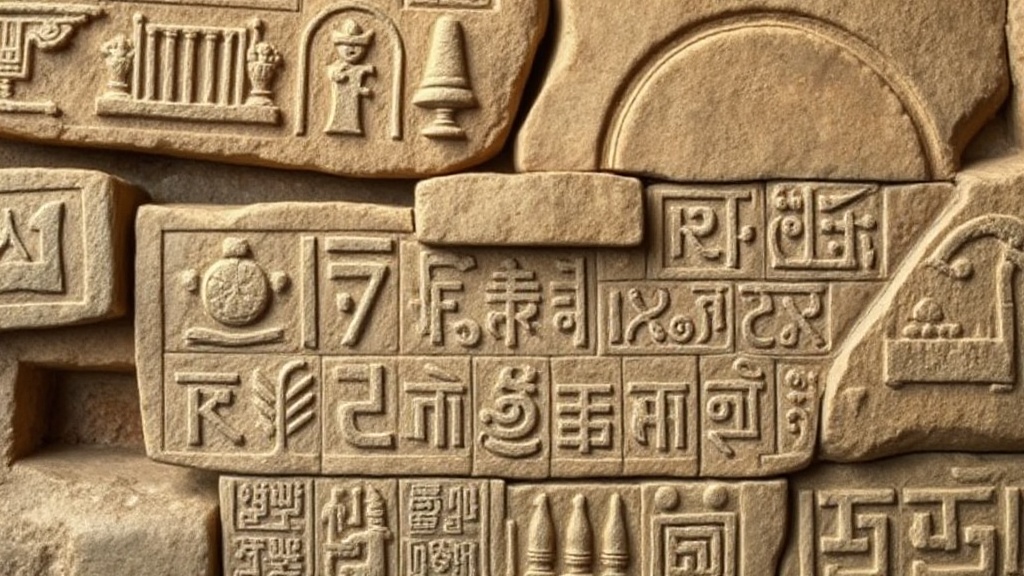
The solid weight of stone anchors history. For the Chola period in Tamil Nadu, stretching from the 9th to the 13th centuries CE, these stone anchors are invaluable. Inscriptions on temple walls, copper plates, and rock faces offer direct, unvarnished evidence of a powerful maritime empire. They speak not in the polished, embellished prose of later courtly chronicles, but in the stark, formulaic language of royal decrees, land grants, and mercantile contracts. For a historian or numismatist, these records function like Roman coin hoards discovered along the Coromandel Coast—as tangible, undeniable proof of economic exchange and administrative reach.
What these inscriptions show is a highly structured society that left nothing to chance. While tradition holds that medieval kings ruled by absolute, unchecked whim, the epigraphical evidence shows a complex system of local assemblies, land taxation, and international trade networks.
The Evolution of the Script: From Tamil-Brahmi to Grantha
To understand these records, epigraphists must trace how the physical writing evolved. Chola-era Tamil inscriptions did not appear in a vacuum; they developed from the ancient Tamil-Brahmi (an early script used to write the Tamil language) characters found on Sangam-era pottery and cave walls.
By the 10th century, Chola scribes utilized two distinct scripts on the same surface:
- Tamil script: Used to write the vernacular Tamil language sections, recording local transactions, land boundaries, and taxes.
- Grantha script (a script developed in South India to write Sanskrit): Used specifically for the Sanskrit portions of the inscriptions, such as royal genealogies (prasasti, royal panegyric) and religious invocations.
This dual-script system is highly visible on the Larger Leiden Grant and the Tiruvalangadu Plates, where copper sheets are bound by a royal bronze ring. When examining the physical stone of a temple wall, such as the Brihadisvara Temple in Thanjavur, one can see the deep, rounded incisions of the Tamil characters, contrasted with the more angular Grantha letters used for Sanskrit loanwords. The wear on the stone often tells its own story; lower inscriptions are frequently smoothed down by centuries of devotees touching the granite, while the higher registers remain sharp.
Decoding the Stone: An Inscription Breakdown
To see how linguists and historians parse these stones, consider this typical 11th-century endowment formula. Here is a side-by-side comparison of a standard Tamil temple inscription recording a gift of sheep to maintain a perpetual lamp (nandavilakku):
| Transliteration (Epigraphical Tamil) | English Translation (with Glosses) | | :--- | :--- | | Chandradityaval | As long as the moon and the sun endure | | Nandavilakkukku | For the perpetual lamp (devotional light) | | Chavava mava adu | Sheep that neither die nor age (a permanent flock) | | Kuduttom | We, the donors, have given |
The phrase "chavava mava adu" (literally "un-dying, un-aging sheep") is a legal fiction. It did not mean the physical sheep were immortal. Instead, it meant the shepherd who received the ninety-six sheep was legally bound to replace any that died, ensuring the temple always had a constant supply of ghee (clarified butter) derived from sheep's milk to keep the sacred lamp burning forever. This level of precise contractual detail is what makes epigraphy so valuable; it bypasses poetic metaphor to show real-world agrarian economics.
What the Inscriptions Reveal: Trade Guilds and Land Disputes
The findings gleaned from these stone records have fundamentally rewritten our understanding of medieval Indian trade. Rather than showing an isolated agrarian economy, the inscriptions reveal massive, self-governing merchant guilds that operated across Southeast Asia.
For example, inscriptions mention the Nanadesi (merchants from various countries) and the Ayyavole five hundred (Anjuvannam, a guild of maritime traders). These guilds maintained their own private security forces, established international trading outposts, and made substantial donations to local temples. The inscriptions detail how these guilds paid duties on imported goods like camphor, silk, and perfumes.
Furthermore, these records show how land disputes were settled at the village level. An inscription from Uttaramerur (cataloged in the South Indian Inscriptions series as SII Volume VI) details the exact democratic qualifications required for members of the local village assembly (sabha, assembly). The qualifications included:
- Ownership of a certain acreage of land.
- Living in a house built on one's own site.
- Knowledge of the Vedas (ancient sacred texts).
- Absence from office for the previous three years (to prevent systemic corruption).
Scholars debate the extent to which these democratic ideals were practiced nationwide, but the physical stones prove that highly structured, local self-governance existed long before central imperial bureaucracies took hold.
Accessing the Primary Sources
For researchers seeking direct engagement with Chola epigraphy, several primary collections are available. The monumental South Indian Inscriptions (SII) series, published by the Archaeological Survey of India (ASI), remains the foundational resource. These volumes provide verbatim transcriptions and translations of thousands of temple walls.
For digital access, the Siva Temples' Inscriptions (SITI) database offers digitized indexes of temple epigraphs. The groundbreaking work of historians like Noboru Karashima, who used statistical analyses of names in inscriptions to map out Chola administrative changes, shows how these ancient stones continue to yield fresh data when subjected to modern analytical tools. Like cataloging a rare Chola gold kahavanu (coin), the systematic indexing of these stone inscriptions remains our most reliable link to the realities of the medieval Tamil world.