Beyond the Horsemen: Administrative Consolidation under the Pratiharas
The Gurjara-Pratihara rulers stabilized the Indo-Gangetic plain through complex land-grant systems and bureaucratic hierarchies, moving well beyond military conquest.

Dr. Anil Patel for SwavedaJuly 22, 2026
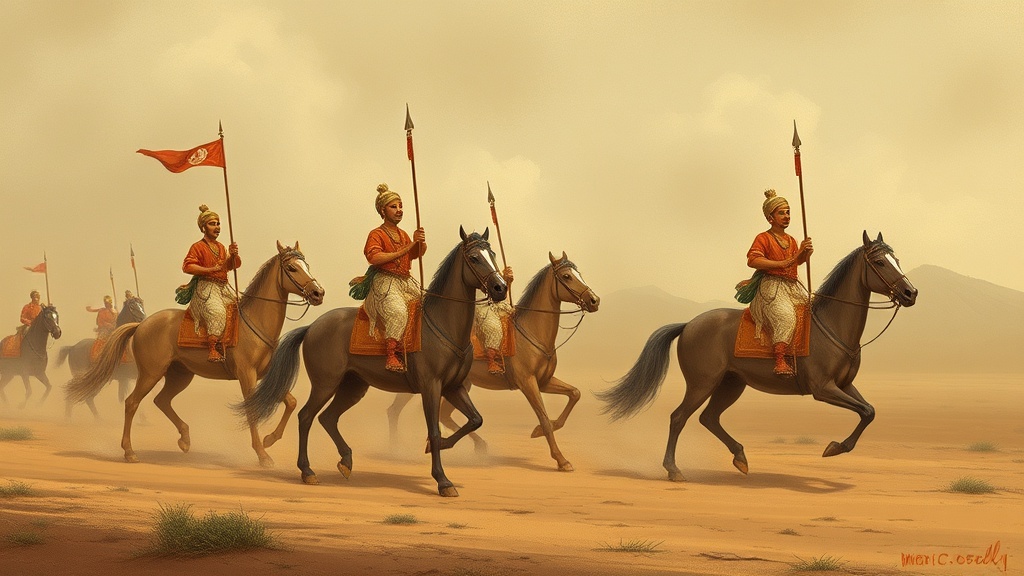
Historical accounts of the Gurjara-Pratihara dynasty often frame the rulers as the "bulwark of India" against westward incursions. While military engagements form a significant part of the historical narrative, this focus on martial prowess often obscures the sophisticated administrative mechanics that allowed the dynasty to govern the Indo-Gangetic plain for centuries. Evidence shows that their power rested less on the mobility of their cavalry and more on the stability of their revenue collection and land-management systems.
The Economy of Land Grants
Central to Pratihara statecraft was the agrahara—a grant of land, usually made to Brahmins (priestly class), which served as both an endowment and a tool for regional integration. According to historian B.N. Puri in The History of the Gurjara-Pratiharas, these grants were not merely acts of piety. By settling learned individuals in newly developing agricultural zones, the state effectively extended its administrative reach into the periphery.
Evidence shows that the Pratihara kings maintained a hierarchical bureaucracy to manage these grants. The process required the involvement of various officials, from the duta (messenger or intermediary) who facilitated the grant, to the local vishayapati (district administrator) who oversaw the land assessment. This structure ensured that tax revenue could be extracted from rural pockets that might otherwise remain isolated from the capital at Kannauj.
Administrative Hierarchy and Revenue
The Pratihara administrative apparatus was divided into provinces, often referred to as bhuktis. Each bhukti was subdivided into vishayas (districts). Scholars debate the degree of centralization within this system. While tradition holds that the kings exerted absolute control over every local governor, primary-source epigraphy suggests a more nuanced reality where local hereditary chiefs maintained significant autonomy provided they continued to remit tribute and maintain tax records.
As noted by R.S. Sharma in Indian Feudalism, the state’s ability to extract resources was often mediated through a series of intermediaries. This fiscal stability supported the construction of major architectural projects, such as those found at Osian and Khajuraho. The ability of the state to mobilize labor and materials on this scale indicates a predictable, rather than sporadic, taxation system that functioned across disparate ecological zones.
The Role of the Samanta
A defining feature of the Pratihara polity was the role of the samanta (feudatory or tributary ruler). The relationship between the Pratihara monarch and these subordinate rulers was a core component of their stability. Evidence shows that the samantas were often former local kings who had been defeated but were permitted to retain their titles and administrative powers in exchange for military service and a portion of their regional income.
This system effectively turned potential rivals into stakeholders in the Pratihara state. By integrating these local power centers into a formal, hierarchy-driven network, the Pratiharas avoided the constant cycle of rebellion that often plagued early medieval kingdoms. The samantas acted as the eyes and ears of the central government, ensuring that the king’s influence reached deep into the agrarian heartlands.
Stability Through Inscriptions
Our understanding of this period relies heavily on copper-plate charters and stone inscriptions. These primary sources provide a glimpse into the legalistic rigor of the Pratihara administration. Each grant recorded the specific village, its boundaries, and the conditions under which it was donated.
These documents verify that the state maintained a functioning system of records. By codifying land ownership, the Pratiharas created a sense of permanence and legitimacy that encouraged long-term investment in land improvement, such as irrigation and clearing forests for cultivation. When reading these inscriptions, one finds the names of obscure officials and the signatures of ministers, revealing an administrative depth that transcends the battlefield records often cited in older, more romanticized historical accounts.
Beyond Martial Legend
The focus on the Pratiharas as merely a military power against Arab incursions overlooks the sedentary achievements of their administration. Regarding the transition from a group potentially associated with the "Gurjara" ethnonym to an agrarian-based, tax-collecting empire, scholars debate the extent to which these origins suggest nomadic or semi-nomadic beginnings. While some researchers, such as B.D. Chattopadhyaya in The Making of Early Medieval India, highlight the gradual integration of tribal groups into the caste hierarchy, the exact ancestral roots of the Pratihara lineage remain a point of significant academic contention.
By grounding their authority in a system of controlled land distribution and delegated power, the Pratiharas created a period of relative peace that allowed for the flourishing of distinct architectural and religious traditions. Their legacy is not merely the defense of the borders, but the integration of diverse regional economies into a coherent, if loose, administrative whole. Understanding the Pratihara period requires looking past the horsemen and examining the records left by the administrators who managed the land beneath their feet.