The Eyyal Hoard: Roman Gold in a South Indian Field—What It Reveals About Indian Ocean Trade
In 1946, farmers unearthed a massive cache of Roman gold and silver in Kerala. This hoard reveals how Roman coins acted as raw bullion rather than local currency in ancient Indian maritime trade.

Devika Menon for SwavedaSeptember 4, 2026
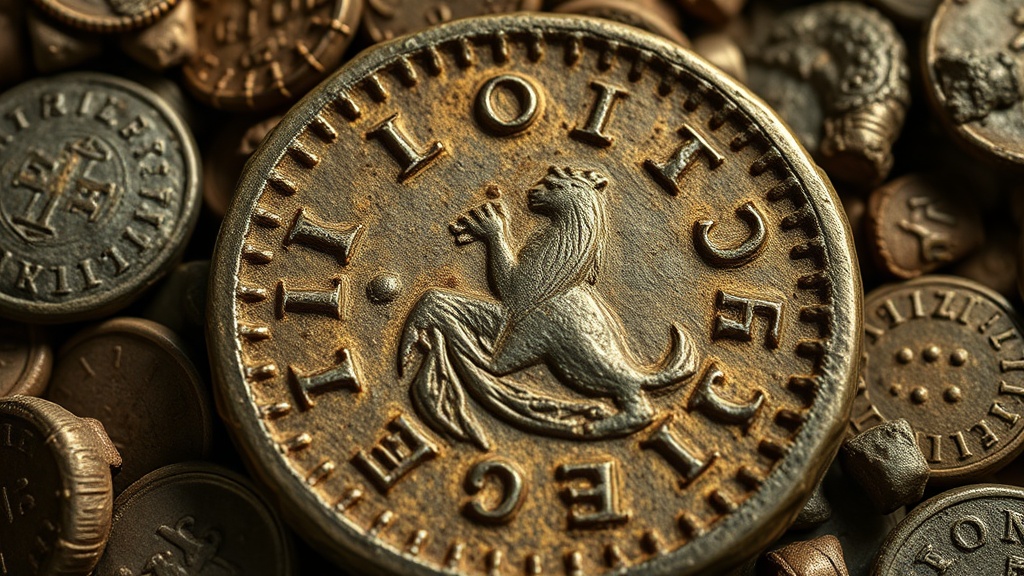
In October 1946, a laborer clearing soil in the village of Eyyal, located in the Thrissur district of Kerala, struck a glazed earthenware jar. Inside lay a massive numismatic treasure: 12 gold aurei (standard Roman gold coins) and 84 silver denarii (standard Roman silver coins), alongside 347 ancient Indian punch-marked silver coins. The Roman issues spanned the reigns of emperors from Augustus to Trajan, with the heaviest concentration belonging to the Julio-Claudian dynasty.
Curated today by the Directorate of Archaeology, Government of Kerala, the Eyyal hoard is not an isolated curiosity. It is primary physical evidence of the high-volume maritime trade that linked the Roman Empire to the ancient Tamil polities of the Far South—specifically the Chera kingdom, which dominated the Malabar Coast.
Yet, the presence of these coins raises a fundamental economic question: how did they function once they arrived in Indian ports? The physical evidence suggests they did not circulate as pocket change. Instead, they served as high-value bullion, balanced by weight and purity to settle international trade deficits.
The Geography of the Find
The Roman coins of the Eyyal hoard did not arrive by chance. They are concentrated along the natural trade corridors of South India. The Palghat Gap—a low mountain pass in the Western Ghats—and the Kaveri River valley provided a direct overland passage connecting west coast ports like Muziris to the inland markets of Tamil Nadu.
According to reports from the Archaeological Survey of India, these coins are almost always found in deliberate hoards—buried caches hidden during times of unrest or stored as concentrated wealth—rather than as stray, accidental losses. This pattern of deposition differs sharply from Roman Britain or Gaul, where individual coins are routinely recovered from ancient drains, streets, and market stalls.
The timeline of the Eyyal hoard aligns closely with primary literary sources. The Periplus Maris Erythraei (the Periplus of the Erythraean Sea), an anonymous 1st-century CE Greek merchant’s travelogue, describes seasonal monsoon voyages from the Roman Egyptian port of Myos Hormos across the Arabian Sea. The text specifically names Muziris—near modern Kodungallur—as a bustling emporion (market-town) loaded with ships importing gold, silver, and glass, and exporting vast quantities of black pepper and fine textiles.
Further east, excavations at Arikamedu near Puducherry, led by Mortimer Wheeler and later Vimala Begley, uncovered Roman amphorae (two-handled storage jars), Arretine ware (fine Italian pottery), and Roman glassware. While Arikamedu represents a coastal trading settlement where Roman goods were consumed, the Eyyal hoard represents the monetary mechanism that made such trade possible. One site shows what Rome sold; the other shows how Rome paid.
Bullion Versus Currency
Scholars debate exactly how these Roman imports functioned in local markets. Three primary interpretations exist:
- Trade Cargo: The coins were treated purely as an import commodity, akin to raw copper or tin, shipped east solely to settle Rome's massive trade deficit. This matches the complaints of the Roman writer Pliny the Elder, who lamented in his Naturalis Historia (Natural History) that India drained Rome of upwards of 50 million sesterces annually to pay for luxury goods.
- Active Currency: A minority of scholars suggest the coins may have briefly circulated as regional currency within coastal port enclaves before being withdrawn and hoarded.
- Bullion Reserve: The most widely accepted view among numismatists is that the coins functioned as a highly trusted bullion reserve. Local merchants and Chera elites valued the coins for the guaranteed purity of their metal and their standardized weights. They were held as stable stores of wealth rather than exchanged for daily goods in local bazaars.
The physical condition of the coins supports the bullion reserve theory. The denarii and aurei found at Eyyal exhibit very little wear. If they had changed hands repeatedly in day-to-day transactions, their surfaces would be rubbed smooth. Instead, their sharp details indicate they were stored in secure chests or jars almost immediately after arriving from Roman mints.
Furthermore, Roman coins in South India are frequently found slashed with small chisel cuts. This practice, known as "counter-marking" or testing, allowed local money changers to verify that a coin was solid gold or silver all the way through, rather than a silver-plated copper counterfeit. This diagnostic mutilation proves that local merchants treated the coins as raw metal assets, evaluating each piece by its physical weight and purity rather than its face value under Roman law.
The Numismatic Context
The inclusion of 347 Indian punch-marked coins alongside the Roman issues in the Eyyal hoard is highly significant. In her seminal studies on Indo-Roman trade, archaeologist Roberta Tomber notes that the co-occurrence of imperial Roman issues with local silver punch-marked coins indicates a sophisticated, dual-monetary system.
While local transactions were handled via barter, credit, or low-value local punch-marked silver, large-scale wholesale purchases of export goods—such as high-grade Malabar pepper—required Roman gold. The British Museum’s numismatic database records numerous hoards from Coimbatore and Madurai that mirror this exact composition: high-purity Roman denarii preserved alongside local punch-marked silver issues.
In his analyses of early South Indian coin hoards, numismatist P.L. Gupta observed that Roman gold coins maintained an incredibly consistent weight standard of roughly 7.8 grams under Augustus. This consistency made them the ideal international reserve currency of the ancient Indian Ocean.
Inland Wealth and Merchant Networks
Eyyal sits roughly 30 kilometers inland from the ancient port of Muziris. Its geographical position proves that Roman wealth did not pool exclusively at the water's edge. Instead, it flowed inland along domestic merchant networks.
Elite families and trade guilds—such as those operating under Chera royal patronage—acquired these foreign coins as prestige items. These aurei were occasionally converted into jewelry, pierced with holes, or melted down, but more often they were kept intact as portable, highly concentrated wealth.
Tradition holds that Roman merchants established permanent colonies and temples in South India. Evidence shows a more practical commercial reality: a highly structured trading relationship managed by local intermediaries who accepted Roman precious metals as guaranteed bullion to balance the books. The Eyyal hoard remains one of the most complete physical ledgers of this ancient global economy.