Beyond Coins: The Infrastructure of the Pepper Trade at Pattanam
Archaeological findings at Pattanam reveal the logistical systems used to store and export black pepper to the Roman world, shifting our focus from currency to the physical trade process.

Kavya Sharma for SwavedaJuly 18, 2026
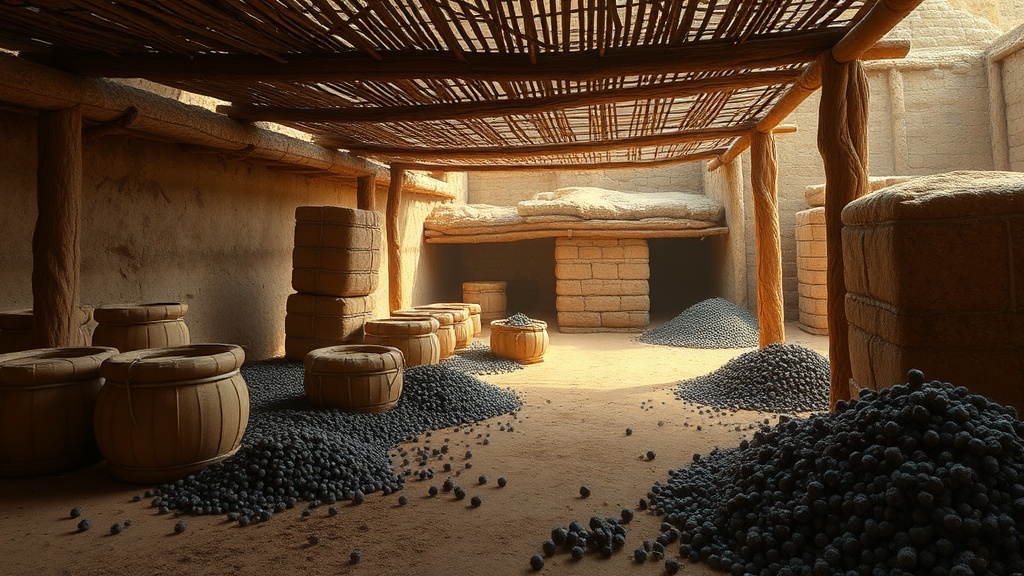
The narrative of Indo-Roman trade is often told through the glint of gold. We see images of Roman coins, specifically those featuring the faces of Augustus or Tiberius, found in hoards across the Indian peninsula. However, these metal discs do not explain how tons of black pepper (Piper nigrum)—a volatile, organic commodity—made the journey from the inland forests of the Western Ghats to the holds of ships bound for the Mediterranean. At the site of Pattanam, near North Paravur in Kerala, archaeologists are uncovering the physical infrastructure that managed this flow.
Evidence shows that Pattanam serves as a primary candidate for the ancient port of Muziris, mentioned in the first-century CE travelogue Periplus Maris Erythraei (The Voyage Around the Erythrean Sea). While coins suggest an economic relationship, the archaeobotanical data provides a clearer window into the logistical reality of the trade. Excavations have unearthed significant quantities of black peppercorns preserved in the soil, often associated with distinct layers of occupation that align with periods of peak maritime activity (Kerala Council for Historical Research) .
The Architecture of Preparation
Exporting pepper required more than just gathering the crop. It required drying, sorting, and storage facilities capable of protecting the spice from humidity and pests. Archaeological excavations at the site have revealed structural remains, including brick walls and wharf-like features that indicate a deliberate organization of space along the Periyar riverbank. According to P.J. Cherian, who led the excavations at Pattanam, the discovery of a wooden wharf structure provides evidence of a sophisticated maritime interface capable of facilitating the loading and unloading of large cargo vessels (The Hindu).
The transition from a raw forest product to a global trade commodity happened in these specialized workspaces. Pepper, if stored incorrectly in a tropical climate, degrades rapidly. Archaeobotanical analysis indicates that the pepper found at the site was likely cleaned and perhaps sun-dried before being packed into large ceramic vessels. The presence of specialized storage jars, commonly referred to as amphorae (two-handled jars used in the Roman world for transport), suggests a standardization of trade. When traders arrived from the Red Sea, they were not looking for loose spice; they were looking for cargo that had been processed, measured, and containerized.
Managing the Supply Chain
Archaeological findings suggest that the site functioned as a transshipment hub. The geography of the site, located on the banks of the Periyar river, allowed for small boats to bring inland produce downstream to the port, where it was transferred to larger, sea-faring vessels. This movement of goods required a chain of intermediaries. While scholars debate the exact social hierarchy involved, the physical scale of the site implies a permanent, specialized community of laborers, merchants, and port officials.
The material culture found alongside the peppercorns, such as fragments of Mediterranean pottery—specifically Terra Sigillata (fine red-gloss pottery made in the Roman world)—corroborates the scale of this international connection. This was not a casual barter system. The investment in port infrastructure, such as the wharf and the presence of imported storage technologies, indicates a long-term, high-volume operation.
A Different Kind of Provenance
When we look at a peppercorn from Pattanam, we are looking at the end result of a complex supply chain. The spice was likely grown in the hills of the Western Ghats, transported through river systems, and processed by workers at the port site. The infrastructure at Pattanam was designed to maintain the quality of the spice during this transition.
Tradition holds that the trade was purely about luxury. However, the sheer volume of pepper remnants suggests a more routine, industrialized trade. The storage systems were not mere warehouses; they were components of a global network. By shifting our gaze from the coins in a king’s treasury to the physical space where black pepper was stored and moved, we gain a more grounded understanding of how ordinary lives in ancient Kerala were connected to the Mediterranean.
This infrastructure—the wharves, the drying spaces, and the ceramic containers—transformed a forest harvest into a commodity that fueled the culinary and medicinal habits of the Roman Empire. The archaeology of Pattanam proves that the spice trade was not just about the exchange of currency; it was about the mastery of logistics. We are seeing the remains of an ancient, highly organized system that successfully bridged two worlds thousands of miles apart.