Before Bangladesh: The Paisha Coin and Bengal's Pre-Partition Past
An examination of a pre-1953 One Paisha coin bearing Bengali script reveals crucial insights into Bengal's monetary history and linguistic evolution before the creation of Bangladesh.

Devika Menon for SwavedaJune 16, 2026
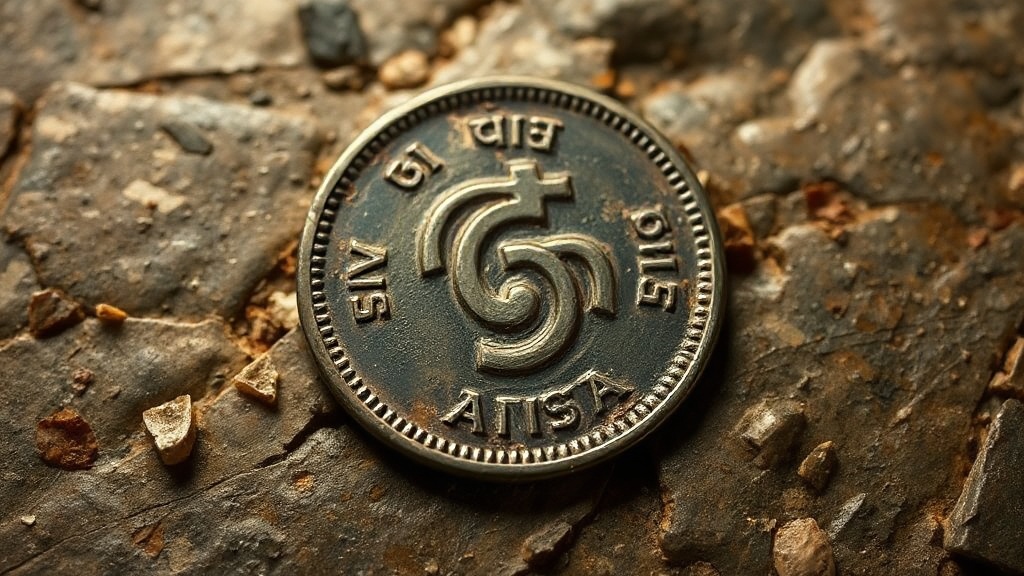
The glint of hammered metal, bearing the weight of history, can offer a more tangible connection to the past than many narratives. A specific example, a One Paisha coin minted before 1953 and inscribed with Bengali script, serves as a focal point for understanding the complex monetary and linguistic landscape of Bengal in the period preceding the formation of Bangladesh. This humble coin is not merely a unit of currency; it is an artifact that speaks to the administrative, economic, and cultural currents of its time.
Monetary Systems in Pre-Independence Bengal
The economic history of Bengal under British rule was characterized by a gradual integration into a wider imperial monetary system. While local currencies and trade practices persisted, the introduction and standardization of coinage by the British East India Company, and later the Crown, steadily reshaped the monetary landscape. By the early 20th century, the Indian rupee was the dominant currency, with its subdivisions, including the anna and the paisa, forming the bedrock of daily transactions.
The 'One Paisha' coin, as observed in examples from the pre-1953 era, was a very low denomination. Its existence highlights the necessity for such small units in facilitating everyday commerce, particularly for agricultural societies and urban populations with limited disposable income. The issuance of these coins was managed by various mints across British India, including those in Calcutta and Lahore, which served the broader Bengal Presidency. The specific mint and year of issue would be crucial details for numismatists seeking to precisely date and contextualize these artifacts.
The Significance of Bengali Script
The presence of Bengali script on the coin is of particular historical import. Before the partition of India in 1947 and the subsequent formation of Bangladesh in 1971, Bengal was a unified province. The script used on official coinage and other administrative materials reflected the linguistic realities of the region. The use of Bengali, alongside or sometimes in lieu of Urdu or Persian, indicates the growing prominence of the Bengali language in public life and administration during the later years of British rule.
The evolution of script usage on coinage is a sensitive indicator of political and cultural shifts. Early British Indian currency often featured Persian or Urdu. As nationalist sentiments grew and regional languages gained traction, there was an increasing demand for official recognition. The appearance of Bengali script on coins signifies a move towards acknowledging and accommodating the linguistic identity of the Bengali population within the broader administrative framework. This was not a sudden development but a gradual process influenced by political advocacy and administrative policy changes.
Contextualizing the Coin: The Road to Partition
The period leading up to 1947 was marked by intense political negotiations and the growing demand for separate states based on religious identity. For Bengal, this meant a deeply divisive debate about its future. The coin, dated prior to 1953, predates the full establishment of Pakistan and the subsequent liberation war that led to Bangladesh's independence in 1971. Its existence thus offers a snapshot of a Bengal that was still administratively unified, albeit under colonial rule, and with a shared monetary and scriptural heritage in its lower denominations.
Numismatic evidence can sometimes provide indirect commentary on administrative structures. The authority that sanctioned the minting of these coins—whether the British Crown or an interim Indian authority—and the denominations chosen can reflect economic policies and administrative priorities. The One Paisha coin, with its Bengali inscription, stands as a material testament to the administrative reach and linguistic policies of the time, operating within the larger Indian monetary system but with a distinct regional linguistic mark.
Linguistic Heritage and Monetary Evolution
The study of historical coinage offers a unique lens through which to view the evolution of languages and scripts. For scholars of linguistics and history, coins are primary sources that document the standardization of orthography, the adoption of specific characters, and the administrative endorsement of particular linguistic forms. In the case of the One Paisha coin bearing Bengali script, it serves as evidence of Bengali's established place in official discourse prior to the political upheavals that would redefine the region's borders and national identities.
Understanding these pre-partition coins requires a multidisciplinary approach, drawing on numismatics, history, and linguistics. They are more than just circulated metal; they are artifacts that carry the imprint of administrative decisions, economic necessities, and cultural identities. The One Paisha coin, bearing its Bengali inscription, thus invites us to explore a chapter of South Asian history that was rich in linguistic diversity and administrative complexity, a chapter that ultimately set the stage for the dramatic geopolitical shifts of the mid-20th century. The continued study of such artifacts contributes to a nuanced understanding of regional histories, moving beyond broad national narratives to appreciate the granular details that shaped lives and societies.