Baramahal's Forts: Echoes of Power and Strategy
Exploring Baramahal's fortifications reveals a dynamic history of shifting power, military innovation, and administrative control from ancient times to British conquest.

Devika Menon for SwavedaJune 11, 2026
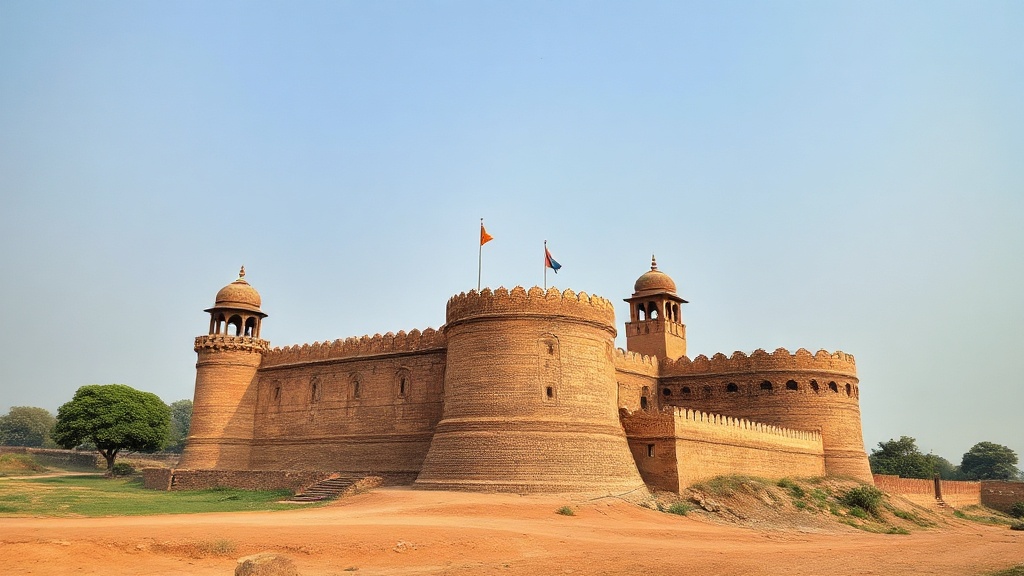
The strategic landscape of Baramahal, nestled in the southern Deccan, has long been shaped by its fortifications. These stone and earth ramparts were not mere defenses but tangible markers of political authority, reflecting evolving military technologies and the constant ebb and flow of regional power from the Sangam period through to the advent of British colonial rule. Examining these structures offers a lens through which to understand the intricate tapestry of warfare, administration, and territorial control in this historically significant region.
The earliest evidence of fortifications in areas analogous to Baramahal can be inferred from descriptions in Sangam literature. While specific textual references to Baramahal's forts during this early period are scarce, the general emphasis on fortified settlements (kōṭṭai) in Tamil poetic traditions suggests their importance. These were often earthen mounds, sometimes with wooden palisades, designed to protect communities and store resources. The Periplus of the Erythraean Sea, a Roman-era document dating to the first century CE, describes numerous flourishing ports and inland settlements in South India, implying a system of defended locations necessary for trade and governance. While the Periplus does not name Baramahal, its existence as a hub of activity presupposes underlying defensive structures. Archaeological findings of pottery and early coinage, such as punch-marked coins found in Tamil Nadu, indicate settlement and economic activity that would have necessitated protection. The nature of these early defenses would have been relatively simple, designed against raiders rather than large, organized armies.
The medieval period saw a significant transformation in fortification techniques, directly influenced by broader shifts in military technology and political organization. As kingdoms like the Cholas and later Vijayanagara wielded influence, the need for more robust and complex defenses grew. Forts in the Baramahal region, and indeed across South India, began to incorporate more sophisticated stone masonry, higher ramparts, and strategic placement on hilltops or difficult terrain to maximize defensive advantage. The strategic positioning of Baramahal, bridging the plains and the highlands, made it a crucial territory for any aspiring regional power. Control over these forts was a direct indicator of a ruler's capacity to project power and maintain order. Literary sources from this period, while not always detailing specific Baramahal forts, describe the construction of formidable fortresses capable of withstanding sieges. Inscriptions, when they mention military constructions, often do so in the context of royal patronage and the establishment of administrative centers. For instance, inscriptions from the Vijayanagara period detail the building and maintenance of forts that served as administrative and military garrisons.
The influx of new military technologies, particularly the introduction of gunpowder and artillery, brought further changes to fortification design. While traditional earth and stone ramparts remained common, there was an increasing emphasis on thicker walls, bastions for artillery placement, and more elaborate gate complexes designed to withstand cannon fire. The Baramahal region, due to its strategic location and resources, became a contested territory during periods of intense political upheaval. During the 17th and 18th centuries, it was a focal point in the power struggles between the Nayaka rulers of Madurai, the Mysore sultans, and the Marathas. The forts of Baramahal, such as those found in and around Krishnagiri and Salem, were repeatedly captured, lost, and rebuilt.
Hyder Ali and Tipu Sultan of Mysore, in particular, recognized the strategic importance of Baramahal. They invested in upgrading existing forts and constructing new ones, adapting their designs to incorporate artillery. Tipu Sultan's famous fortifications, though more prominently associated with other regions, reflected a broader military modernization program that extended to territories like Baramahal. These efforts were aimed at creating a formidable defensive network against both internal rivals and external threats, notably the burgeoning power of the British East India Company.
The advent of British rule in the late 18th and early 19th centuries marked the final significant phase in the military history of Baramahal's fortifications. Following the Anglo-Mysore Wars, the British systematically gained control of the region. While they often occupied and garrisoned existing forts, their approach to military engineering differed. They frequently modernized structures to suit their own needs, focusing on logistical support, barracks, and administrative buildings alongside defensive emplacements. Some forts, like those at Krishnagiri, were significantly modified. Evidence from colonial-era documents and surveys indicates the construction of new administrative buildings within fort complexes and the adaptation of ramparts for different military purposes. The very presence of these forts, however, began to diminish in strategic importance as the British consolidated their control over the subcontinent and established a new paradigm of military dominance. By the late 19th century, many of these historical fortifications transitioned from active military installations to archaeological sites or were repurposed for civilian use, their strategic role superseded by the railway and telegraph. The enduring stone structures of Baramahal, from their rudimentary Sangam-era origins to their 18th-century adaptations for artillery, stand as silent witnesses to centuries of shifting military technologies, territorial ambitions, and the enduring quest for strategic advantage.