What Tamil Graffiti in Pharaonic Tombs Reveals About Sangam Traders' Reach
Scholars report Tamil-Brahmi inscriptions in Egypt's Valley of the Kings, but the discovery awaits peer-review confirmation. If verified, it would expand what we know about ancient Tamil merchants' inland reach.
Devika Menon for SwavedaMay 22, 2026
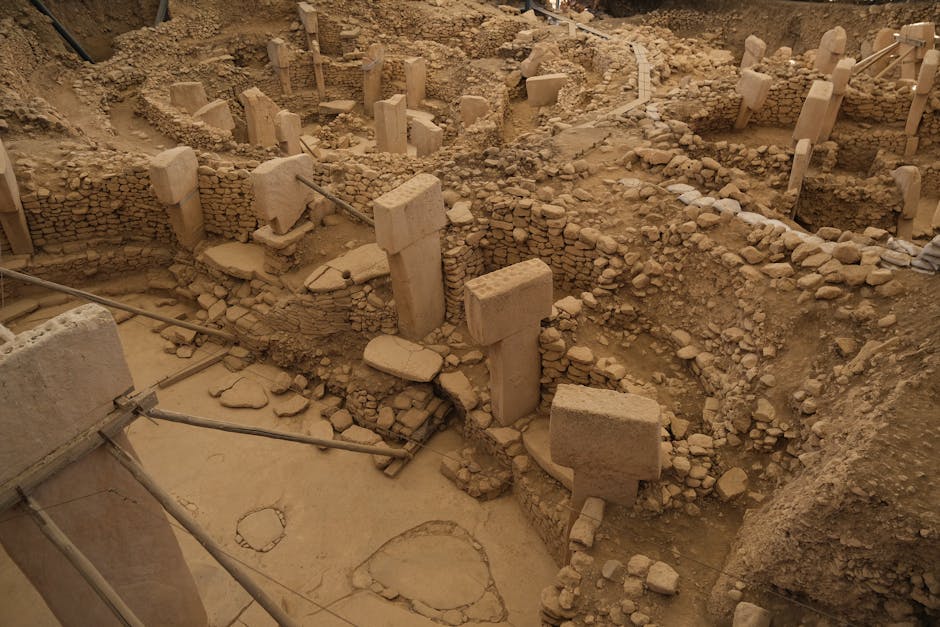
In early 2024 and 2025, Swiss and French scholars working in Egypt's Valley of the Kings reported identifying Tamil-Brahmi and other Indic-script graffiti inscriptions in several pharaonic tombs. If confirmed through peer review and formal publication, the discovery would substantially reshape our understanding of how far Sangam-era traders penetrated inland Egyptian territory—and what they thought of themselves.
The claim rests on a straightforward principle: graffiti is hard evidence. A name carved into stone 2,000 years ago is a record left by a real person. It can be dated, translated, and cross-checked against other sources. This is different from inference. This is testimony.
What scholars have reported
According to early reports, Charlotte Schmid of the French School of Asian Studies in Paris and Ingo Strauch of the University of Lausanne identified approximately 20 Tamil-Brahmi inscriptions across multiple tombs, with one name—Cikai Koṟṟaṉ—appearing multiple times in the same locations. The inscriptions date to the 1st to 3rd centuries CE, overlapping with the height of Sangam-era trade networks documented in the Periplus of the Erythraean Sea (a 1st-century merchant's guide written in Greek).
The authors also identified Sanskrit and Prakrit inscriptions at the same sites, suggesting traders from multiple regions of the Indian subcontinent visited Egyptian sacred ground.
However, as of this article's publication, peer-reviewed papers formally presenting these findings have not yet appeared in major archaeological journals or been formally announced by the Egyptian Supreme Council of Antiquities or comparable authorities. The research may be under embargo, in review, or awaiting official institutional release. Readers should treat the following analysis as contingent on formal publication and peer verification.
The name as evidence
The repeated name Cikai Koṟṟaṉ offers a window into identity and status. The first element, cikai, may derive from Sanskrit śikhā, meaning tuft or crown—a marker of rank or distinction. The second element, koṟṟaṉ, is distinctly Tamil. It connects to the root koṟṟam (victory, slaying) and appears in the names of Chera warriors and war goddesses like Koṟṟavai. In Sangam poetry and inscriptions, koṟṟavaṉ means king or victorious leader.
This matters because the same name appears in other archaeological records. Tamil pottery sherds excavated at Berenike, the Red Sea port that served as the primary gateway between Roman Egypt and the Indian Ocean trade world, bear the name Koṟṟapumāṉ—a longer form of the same root. The correspondence is not proof of the same individual, but it demonstrates that men bearing this name and lineage were moving through both the Tamil epigraphic record and the Red Sea trade networks simultaneously.
Coastal ports to inland tombs
Until now, evidence for Sangam-era presence in Egypt has come from maritime sites. Berenike and Myos Hormos have yielded Roman coins from Tamil Nadu (particularly from the Chola kingdom), Tamil pottery, and Tamil-language graffiti on shipping containers. The Periplus lists Tamil merchants and ports. These sources confirmed that traders worked the Red Sea route and made port.
But a merchant who arrives at a coastal fort is not the same as a merchant who travels inland, reaches the Valley of the Kings, and carves his name 16 to 20 feet (5 to 6 meters) above a royal tomb entrance. The latter suggests confidence. It suggests networks. It suggests a man who believed his name mattered enough to place it where later visitors—Egyptian, Greek, or otherwise—would see it.
The reported inscription height and placement are notable not because they prove ambition, but because they document deliberate choice. Graffiti near the ground blends with later marks. Graffiti high on a wall remains visible, untouched, a claim that persists.
Linguistic code-switching
Early reports also note that some tombs contain inscriptions in multiple scripts and languages in proximity to each other—Tamil-Brahmi alongside Sanskrit and Greek. This pattern suggests something practical: merchants in the Indian Ocean world spoke and read more than one language. Sanskrit may have served as a lingua franca (common language used across different ethnic groups) for long-distance trade. Greek was the administrative language of Ptolemaic Egypt. Tamil was home. The ability to move between scripts was not exotic; it was normal business.
A reminder about expertise
Early Egyptologists recorded these inscriptions in their tomb surveys during the 19th and 20th centuries. They saw them. They noted them. But they could not read them. The scripts were unfamiliar. The language was unidentified. So the graffiti sat in excavation records and museum archives, visible but silent.
This is a pattern in archaeology: evidence exists before the tools to interpret it arrive. The inscriptions have been in the Valley of the Kings for two millennia. They were recorded by scholars for over a century. Only now, with expertise in Tamil-Brahmi, linguistic analysis, and direct study, do they speak.
What comes next
The discovery remains provisional. Peer review and formal publication are the gatekeepers. Once those appear, scholars will be able to examine the original photographs, drawings, and stone, debate dating and interpretation, and integrate the findings into larger models of Indian Ocean trade.
If confirmed, the inscriptions would not "prove" a Tamil trade empire or hidden civilization. They would simply expand the already-substantial evidence for how far and how confidently Tamil merchants moved in the early centuries CE. They would show that some of these traders thought themselves remarkable enough to leave a name for posterity in the tombs of foreign kings.
That is enough.