Ancient DNA Reveals the Genetic Landscape of Indian Social Stratification
New ancient DNA research is illuminating the genetic markers of social stratification in India, offering insights into the formation and persistence of caste hierarchies through history.

Dr. Anil Patel for SwavedaMay 30, 2026
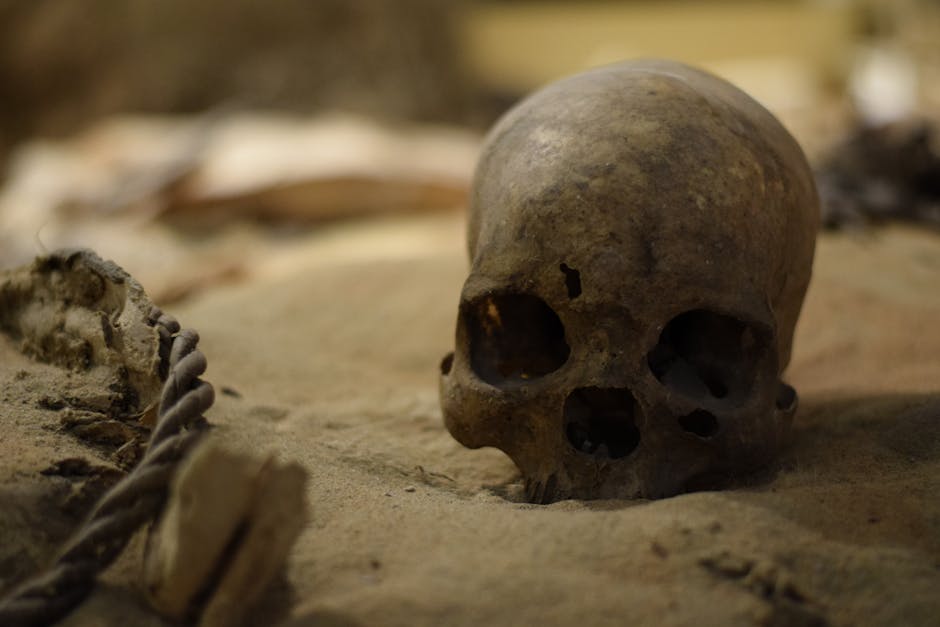
The study of India's past has long relied on texts, archaeology, and oral traditions. Now, ancient DNA (aDNA) analysis is adding a new layer of evidence, providing a direct window into the biological relationships and population movements that shaped the subcontinent. Recent research, building on foundational work, is beginning to untangle the genetic dimensions of social stratification in ancient India, particularly concerning the formation and maintenance of hierarchies akin to what we now understand as caste.
For decades, scholars debated the origins of these social structures. Was it a sudden imposition, or a more gradual evolution from existing social distinctions? aDNA offers a way to test these hypotheses by examining the genetic makeup of ancient populations. This is not about finding a "gene for caste"—such a concept is biologically unfounded and misunderstands both genetics and social systems. Instead, aDNA can reveal patterns of mating, migration, and isolation that may have contributed to, or been reinforced by, social stratification over millennia.
A key area of investigation involves understanding the relationship between different ancestral components within the Indian population. Broadly, Indian ancestries can be understood as a mix of two major ancestral populations: Ancestral North Indians (ANI) and Ancestral South Indians (ASI). ANI populations are genetically closer to ancient populations from West Eurasia, while ASI populations are more distinct and endemic to South Asia. The relative proportions of these ancestries vary across India, with higher ANI proportions generally found in the north and west, and higher ASI proportions in the south and east.
What the genetics suggests is that the formation of distinct social groups, or "lineages," may have occurred as early as 4,200 years ago. This period aligns with the decline of the Indus Valley Civilization and the subsequent cultural and demographic shifts across the subcontinent. Evidence from ancient individuals suggests that the genetic separation between populations that would eventually form the basis of the caste system was established around this time.
Crucially, aDNA studies have indicated that these ancient separations were not random. Instead, they appear to correlate with social distinctions that became entrenched. For instance, studies have analyzed skeletal remains from various archaeological sites, dating from the Bronze Age to later historical periods. By extracting and sequencing DNA from these remains, researchers can determine the genetic ancestry of the individuals and infer their population group.
The findings from several studies point to a pattern where distinct social groups, characterized by different proportions of ANI and ASI ancestry, became increasingly endogamous—meaning they married within their own group. This genetic partitioning suggests that social boundaries, once established, were maintained through reproductive isolation. Over generations, this would have led to the genetic differentiation observed among different communities today.
It is vital to distinguish between genetic predispositions and social constructs. Genetic data does not dictate social roles or inherent worth. Instead, it reflects patterns of ancestry and gene flow shaped by historical social practices. The genetic distinctions observed are the legacy of a social system that enforced endogamy, leading to distinct genetic profiles among groups. This is not a biological justification for caste but a genetic record of how social stratification was practiced and perpetuated.
For example, research on ancient individuals from across India has shown that populations historically associated with higher social strata often exhibit a higher proportion of ANI ancestry, while those historically associated with lower strata tend to show a higher proportion of ASI ancestry. This pattern is not absolute and varies regionally, but it provides a quantifiable correlate to the historical narratives of social division.
Furthermore, the timing of these genetic separations is significant. The establishment of these distinct ancestral components and their subsequent segregation into endogamous groups appears to have preceded the formalization of the varna and jati systems described in later textual traditions. This suggests that genetic stratification may have contributed to the foundations upon which the later, more elaborate caste system was built.
The picture emerging from aDNA is one of complex, long-term processes. It is not a story of a single, exogenous imposition of social hierarchy. Instead, it points to a gradual formation and reinforcement of social boundaries, expressed genetically through patterns of endogamy. The data allows us to trace the deep roots of population divisions that have characterized Indian society for millennia.
This research is ongoing, and as more ancient individuals are analyzed from diverse regions and time periods, our understanding will continue to refine. The goal is not to assign individuals to genetic groups or to essentialize identities. Rather, it is to use the indisputable evidence of our ancestors' DNA to gain a more nuanced comprehension of the historical forces that have shaped human societies, including the persistent legacy of social stratification in India. The genetic data is a powerful tool, but it must be interpreted within its historical and social context. It tells us about ancestry and ancient population dynamics, not about inherent differences between people today. The social reality of caste is a complex construct, and while genetics can illuminate its historical roots, it does not explain its present-day existence or its profound social impact.