When Rivers Ran Low: How Harappans Adapted to Centuries of Drought
A 2025 climate study shows the Indus Valley civilization adapted to recurring droughts over centuries—not sudden collapse. New evidence reframes how we read ancient decline narratives.
Vikram Joshi for SwavedaMay 7, 2026
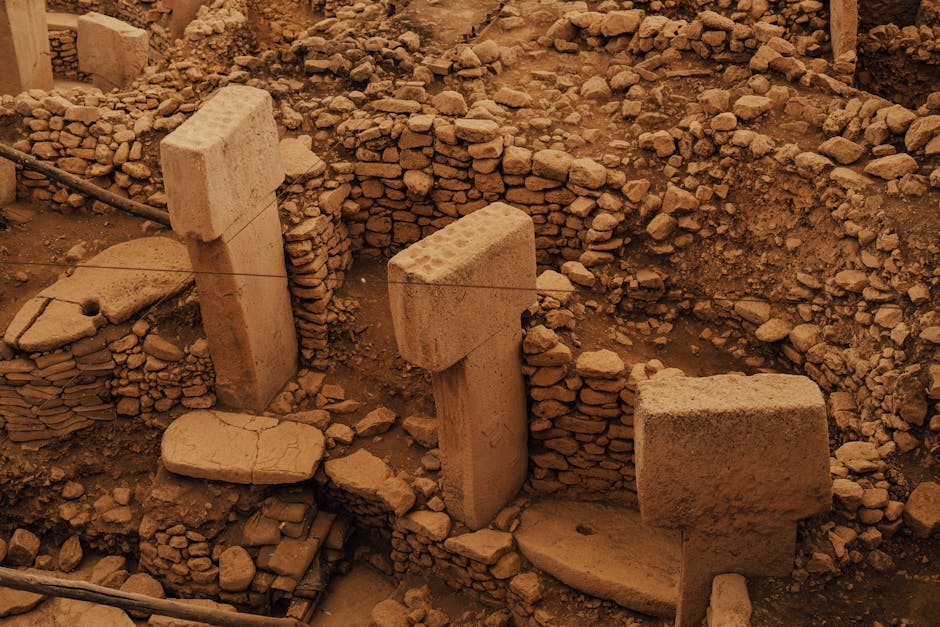
For ninety years, archaeologists called it a collapse. The Indus Valley civilization—sophisticated, vast, urban—seemed to vanish around 3,900 years ago. Colonial-era scholars blamed invasions. Twentieth-century ones blamed floods. The puzzle endured.
Now a major study reframes the question entirely. Recent paleoclimate research suggests the Harappan transformation occurred not as sudden catastrophe, but as protracted adaptation to episodic drought spanning centuries. The finding challenges the word "collapse" itself.
The Study and Its Method
In 2025, researchers including teams from IIT Gandhinagar published work integrating climate modelling, hydrological simulation, and paleoclimate evidence to reconstruct ancient river flows. The approach is rigorous: using hydrological models and paleoclimate data, they simulated conditions across the region over roughly 1,000 years of the Late Harappan period (the final phase of the civilization, from around 3,900 to 1,300 BCE).
The key finding: not one catastrophe, but a sequence of recurring droughts. Within approximately 1,000 years, paleoclimate records show evidence of multiple severe dry periods. The Ghaggar-Hakra river system—a critical network of tributaries in the region—was hit hardest. The most severe of these intervals lasted over 150 years. In total, researchers estimate that roughly 45 percent of this 1,000-year span experienced drought-stressed conditions.
This is significant drought intensity—but not unprecedented climate variation. The pattern matters: episodic stress, not one-time collapse.
Archaeological evidence aligns with this timeline. Settlements in the central Ghaggar-Hakra region show abandonment during intervals that correspond to paleoclimate reconstructions of severe discharge reductions (meaning less water flowing in rivers). This overlap—between climate data and archaeological settlement patterns—is the study's real strength.
Note: Swaveda is currently seeking full publication details and author names for this 2025 study to provide complete citation to readers. If you have access to the peer-reviewed article, please contact the editorial desk.
What Evidence Shows vs. What We Infer
Here is where readers should hold two ideas in one head at once.
Evidence shows: The Harappans did not vanish. They adapted, migrated, and reorganized. Archaeobotanical records (plant remains recovered from archaeological sites) document transitions from wheat-barley agriculture to millet and other drought-tolerant crops. This shift took centuries, not years. Material culture changed. Settlement patterns shifted. Cities shrank; villages persisted and, in some regions, expanded.
Scholars debate whether this constitutes civilizational "decline" or "transformation." The distinction matters. Decline implies passive contraction. Transformation suggests agency—people making choices under pressure.
Maritime trade, documented through seals and artifacts recovered in Mesopotamia and the Persian Gulf, provided economic buffering. Coastal settlements engaged in trans-Arabian commerce, supplementing locally stressed agricultural production with imported staples. External trade offered stability unavailable to purely terrestrial societies. This is a civilization with options—exercising them.
Geography Was Not Destiny
The study also reveals something archaeologists had long suspected: drought was not uniform across the civilization's domain.
Regional heterogeneity in climate stress is visible in the data. Saurashtra (a region in present-day Gujarat) experienced relatively modest rainfall reductions and maintained more favourable conditions through Late Harappan times. Archaeological evidence shows sustained Late Harappan occupations in this region—settlements that transformed their character but persisted, maintaining cultural continuities even as urban centres in the Indus mainstream declined.
In other words: some regions weathered the dry pulse. Others did not. People moved. Settlement patterns shifted. This is reorganization, not collapse.
What This Tells Us About Reading Old Texts
The question of how climate stress relates to ancient textual accounts requires care.
Tradition holds that the Rig Veda (the oldest Sanskrit hymn collection, composed in the language of ancient India) refers to conflict with enemies and the triumph of an invading people. The text is difficult to date precisely—scholars place its composition anywhere from 1,500 to 1,200 BCE, centuries after the Harappan urban phase ended.
Scholars debate how literally to read these accounts. Earlier twentieth-century theories proposed "Aryan invasion" based partly on Rig Vedic references to conflict. Archaeology has not supported this model. Excavations have found no mass graves indicating warfare, no burnt cities concentrated in a particular period, no weapons caches. Harappan society overall shows little militarization. Most scholars now agree that invasion did not cause the civilization's transformation.
Here is where speculation becomes productive: If texts describe conquest and conflict, but archaeology finds environmental stress instead, we face a choice. We can dismiss either texts or data. Or we can ask: might texts preserve cultural memory of environmental catastrophe, filtered through metaphor and the language of conflict? A drying river system is a form of conquest. Mass migration is displacement by external force. The symbolism of invasion—loss, upheaval, forced movement—might echo the experience of drought and resource stress.
This is inference, not proof. But it is more useful than treating texts and data as simply contradictory.
The Larger Pattern
What makes this research significant is not that it solves the Harappan puzzle completely. Multiple interacting factors drove the civilization's transformation: climate stress, social organization, trade networks, migration capacity. No single cause explains everything.
Rather, the study demonstrates a method: integrate paleoclimate records, hydrological models, and archaeological evidence. Do not ask, "What killed the Indus?" Ask instead, "How did the Indus system change, and how did people respond?"
The answer is sobering but not tragic. Evidence shows trends unfolding over centuries: gradual river discharge decline, successive episodes of settlement stress, adaptive shifts in agriculture and settlement location. The Harappans did not collapse in a decade. They transformed over a thousand years.
For a global civilization in 2026, facing its own climate transitions, the Harappan story offers something rarer than comfort: it offers precedent. Adaptation is possible. Resilience is not passive. But it requires time, knowledge, and trade networks that hold. Strip those away, and even sophisticated societies feel the stress.
That distinction—between sudden collapse and slow transformation—is the whole story.