The Wall Problem: What We Know—and Don't—About Mohenjo-daro's Early Layers
New radiocarbon work on Mohenjo-daro's perimeter wall raises questions about the transition from Early to Mature Harappan urbanism—but verification of recent excavations remains incomplete.
Rohan Bhattacharya for SwavedaMay 20, 2026
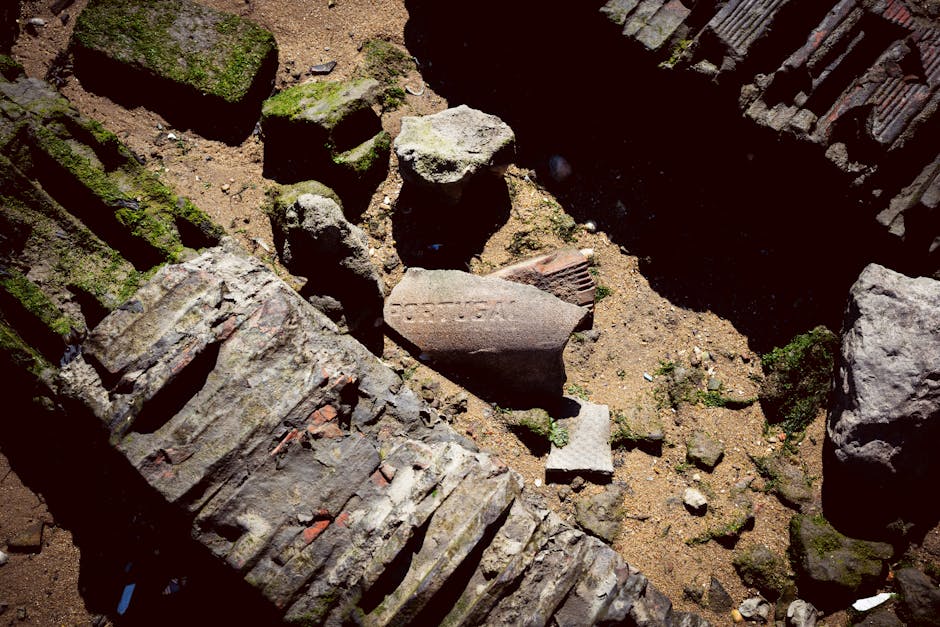
The problem sits in the ground. Not in the famous urban grid of Mohenjo-daro—the Great Bath, the granaries, the neat brick buildings that crowd the textbooks. The problem is underneath, in the layer just before everything we call Mature Harappan appears, fully formed, at 2600 BCE. For decades, archaeologists have stared at that buried boundary and asked: did urbanism leap into being overnight, or did it grow from earlier roots?
A century ago, Sir Mortimer Wheeler excavated parts of what he believed was a defensive wall on the western edge of the Stupa Mound. He interpreted it as a revetment (a facing of brick built to hold back earth and water). But the wall's true date and purpose remained unclear. In the early 2020s, researchers including Dr. Jonathan Mark Kenoyer of the University of Wisconsin signaled plans to return to that area and apply modern radiocarbon dating to clarify the timeline. Those excavations were reported to have taken place in summer 2025 and winter 2025–26, under joint direction by the Sindh Directorate General of Archaeology and Antiquities.
What we need to clarify first: status of recent fieldwork
Swaveda has not yet obtained independent confirmation of the radiocarbon dates or the Preliminary Report referenced in earlier accounts of this work. The excavations and dating are attributed to the Sindh DGAA and University of Wisconsin teams in multiple sources circulating within the South Asian archaeology community, but the peer-reviewed publication or official government report has not yet appeared in accessible databases as of this writing. Any reader encountering claims about 2700–2600 BCE dates for the wall, or Kot Diji pottery embedded in wall mortar, should understand: these findings are under review and not yet formally published. Kenoyer and his collaborators have indicated that a Preliminary Report was submitted to the Government of Sindh in March 2026, but that document has not been deposited in a public archive that Swaveda can cite. We are flagging this gap in transparency.
That said, the questions the excavations were designed to answer—and the archaeological problem they address—are real and important.
The Kot Diji problem: what it is, and why it matters
The Early Harappan phase (also called the Kot Diji phase, after the type site in Sindh) dates roughly 3300–2600 BCE, though scholars debate the upper and lower bounds. By traditional accounts in textbooks and ASI reports, Early Harappan sites are small, scattered, and modest. The pottery is regional in style. The settlement pattern is thin across the Indus Valley. Fortifications exist—citadels on high ground, defensive walls with bastions—but nothing resembles the sprawling, grid-planned cities that define the Mature Harappan phase after 2600 BCE.
Then, between roughly 2600 and 2500 BCE, something changes. Suddenly (or so the narrative goes), large planned cities appear. Seals with standardized script. Weights and measures in uniform systems. Public buildings. Drainage systems. Population surges.
How do you get from one state to the other? Does urbanism leap into being overnight? Does it seep in from elsewhere? Does it grow gradually from local roots, and if so, why do the archaeological layers look so different?
This is the Kot Diji problem. And it matters because the answer shapes how we understand the emergence of one of the world's earliest urban civilizations.
What the wall excavations were meant to test
If the new radiocarbon work on Mohenjo-daro's perimeter wall is confirmed, it would suggest that substantial settlement existed at the site during the Early Harappan phase—not, as Wheeler assumed, a blank space awaiting the Mature Harappan city. The presence of Kot Diji-style pottery below and within the earliest wall layers would indicate continuity: people were already living there, building defensive structures, using recognizable pottery traditions. The wall itself would date to the threshold between Early and Mature Harappan—around 2700–2600 BCE—making it a physical marker of that transition.
Such evidence would challenge the "sudden urbanism" narrative. It would suggest that the leap from scattered villages to planned cities may have been less abrupt than the textbooks imply, or that Mohenjo-daro itself was a center of urban development even before the city reached its full Mature Harappan form.
What is established, and what remains open
Scholars debate the Early Harappan occupation at major Indus sites. Excavations at Harappa (in Punjab) have long suggested that Early Harappan settlement preceded the Mature Harappan phase, and that some form of continuity existed. The journal Antiquity and monographs cited in Puratattva (the annual Indian archaeological journal) have documented this pattern. But the details—the precise dates, the degree of settlement density, the nature of the transition—are contested.
The new radiocarbon work from Mohenjo-daro, once formally published, could help resolve these questions. But until those dates are peer-reviewed and the stratigraphy is presented in full in a citable publication, archaeologists and readers should treat the claims as promising preliminary findings, not settled fact.
What happens next
The Sindh DGAA and University of Wisconsin teams have indicated that future work will trace more of the wall's circuit and search for gateways—standard urban features that could clarify how movement and trade were organized. Radiocarbon dates are being processed. Ceramic sequences are being analyzed.
In field archaeology, the boring details—the pottery in the mortar, the stratigraphic layers, the carbon samples—are what separate science from storytelling. Small shifts in the ground often rewrite the story the monuments above were thought to tell. But those shifts only matter when they are published, scrutinized, and replicated by independent researchers.
The wall at Mohenjo-daro is seven centuries older than we once thought—if the new dates hold. Beneath it lie older layers still: traces of people who lived in the Indus Valley when urbanism was a local ambition, not yet a civilization-wide fact. Whether those layers tell us the "sudden rise" was actually gradual, or merely invisible until now, we will know once the evidence is public.