One Skeleton, One Snapshot: Why the Rakhigarhi Woman's DNA Doesn't Settle the Migration Debate
A 4,500-year-old Harappan woman had no steppe ancestry, but scholars debate what that means. One skeleton offers evidence, not proof, in the continental debate over Bronze Age migrations.
SwavedaMay 1, 2026
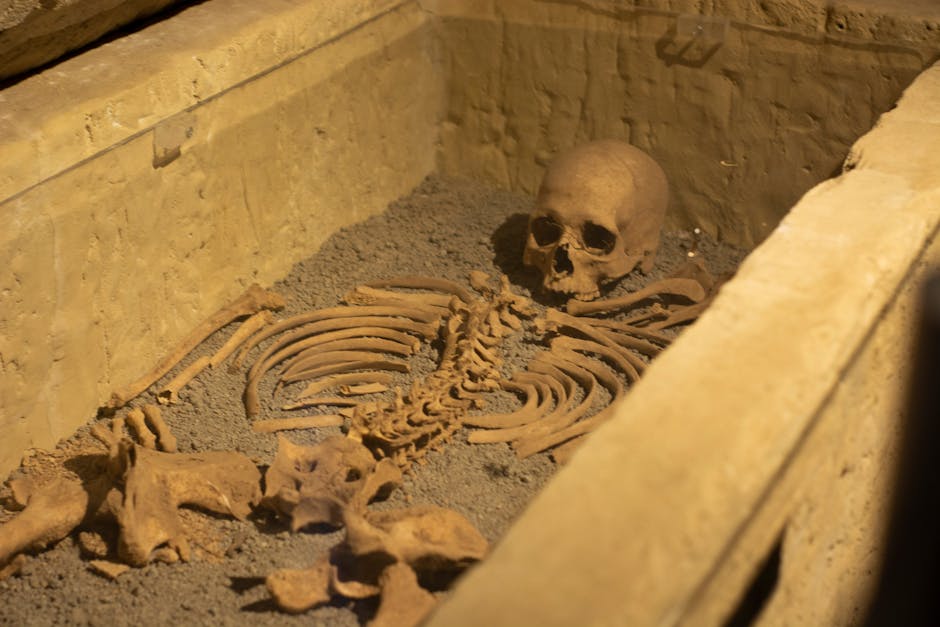
In 2019, a team led by archaeologist Vasant Shinde published a finding that stopped the internet in its tracks: the genome of a woman buried in Rakhigarhi, the largest town in the Indus Valley Civilisation, who lived four to five millennia ago, lacked a genetic marker that had become central to understanding South Asian prehistory. The profile showed signs of Iranian-related ancestry but no evidence of pastoralists who lived in the grasslands of Asia and Europe.
Within days, headlines worldwide proclaimed the opposite of what the research actually showed. Some declared: "The Aryan migration never happened." Others hailed it as proof that Indians were "indigenous" to the subcontinent. Both sides had misread the same data.
Here is what the genome actually tells us—and what it cannot.
The Technical Achievement
First, the context. The region's hot climate rapidly destroys the genetic material that has been instrumental in tracing the history of other early civilizations, but scientists have learned that the petrous bone of the inner ear contains an unusually high quantity of DNA. Getting DNA from Indian skeletal remains is extraordinarily difficult. The team excavated 60 burials at Rakhigarhi; in 59, they found nothing, because the climate in India is not conducive to DNA preservation. Then they analysed the last sample and surprisingly found a good amount of authentic DNA. This was a genuine technical breakthrough, and it deserved the attention it received.
The individual, most likely a woman based on her DNA, was buried among dozens of ceramic bowls and vases at Rakhigarhi, about 150 kilometers northwest of modern-day Delhi, and archaeological evidence suggests she lived sometime between 2800 and 2300 B.C.E.
What the Genome Actually Shows
Let's be precise about ancestry. Her genes point to an ancestry of ancient Iranians and Southeast Asian hunter-gatherers. But here's the critical caveat: genetic scientists say this does not mean that her ancestors lived in Iran or Southeast Asia. In fact, they almost certainly lived in South Asia for thousands of years before her.
The notable absence: Genetic relationships to Steppe pastoralists, who ranged across the vast Eurasian grasslands from contemporary Eastern Europe to Mongolia, are ubiquitous among living South Asians as well as Europeans and other people across the continent. But Steppe pastoralist DNA is absent in the ancient Indus Valley individual, suggesting similarities between these nomadic herders and modern populations arose from migrations after the IVC's decline.
What does this tell us? Tradition holds that speakers of Indo-Aryan languages came from the steppe. Evidence shows that steppe genetic ancestry is present in modern South Asians but absent in this 4,500-year-old Harappan. This gap in time is important.
Where Scholars Actually Disagree
The Rakhigarhi woman's genome does not say: "There was no migration." It says: "This particular individual, who lived in or around 2600–2300 BCE, did not carry Steppe ancestry."
Scholars debate what that gap means. DNA analysis of both ancient skeletal remains and modern populations shows that there was indeed substantial population movement from the Eurasian steppe into South Asia during the relevant time period (approximately 2000-1500 BCE). These studies indicate that many modern Indians, particularly those of higher castes in northern India, show genetic markers consistent with ancestry from the steppe regions, supporting the migration hypothesis.
In other words: modern Indians carry Steppe DNA. The Rakhigarhi woman (c. 2600–2300 BCE) did not. Mainstream genetics interprets this as evidence that steppe-related populations arrived after the Harappan civilization's mature phase—consistent with migration in the second millennium BCE.
But some scholars read the same data differently. Since the civilization was spread over a huge area, across modern Pakistan and northern and western India, it is possible that just one sample is too little to capture the entire picture. The Rakhigarhi woman may not have descended directly from Iranian farmers, but how do we know this is the same for the rest of the population? A single skeleton cannot represent an entire civilization spread across 550 hectares and multiple centuries.
One Data Point, Not a Verdict
This is the crucial distinction Swaveda readers should hold: Evidence shows that the overwhelming majority of geneticists, archaeologists, and linguists who have published peer-reviewed research on this topic support the "Into India" migration model, including researchers from India. The genetic evidence for a Bronze Age steppe migration into South Asia is considered among the strongest findings of the ancient DNA revolution.
Yet it remains scholarly consensus, not historical certainty. Tradition holds—and evidence suggests—that Indo-Aryan speakers arrived by the middle of the second millennium BCE. The ancient Harappan genome was compared to the DNA of modern South Asians, revealing that the people of the IVC were the primary ancestors of most living Indians. Both modern South Asian DNA and the Harappan genome have a telltale mixture of ancient Iranian DNA and a smattering of Southeast Asian hunter-gatherer lineages. The admixture of Steppe ancestry with Harappan ancestry in living South Asians is what the genetics primarily demonstrates.
One 4,500-year-old woman's genome is remarkable evidence. It is not the final word on who lived in the Indus Valley, when steppe peoples arrived, or what language anyone spoke. What it can tell us is what genetic ancestry she carried. What she cannot tell us is what happened to thousands of others across centuries and across a continent-spanning civilization.
That gap between evidence and interpretation—between what we can verify and what we claim to know—is where serious history lives.