One Script, Many Languages—Or None? Why the Indus Valley Script Resists Decipherment
The Indus Valley Script remains undeciphered because scholars disagree on what it records: one language, multiple dialects, or no language at all. New computational methods may help test whether seal variations reflect real linguistic difference.
Asha Naidu for SwavedaMay 6, 2026
After more than a century of study, the Indus Valley Script remains unsolved. But the frustration modern scholars feel isn't just about a missing key. It's about a more fundamental problem: we still don't agree on what the key is supposed to unlock.
The script itself is real enough. Archaeologists have found approximately 5,000 inscribed objects—seals, pottery, and tablets—carved with about 400 unique signs across the Indus Valley from roughly 2600 to 1900 BCE. Yet that abundance of material masks a deeper uncertainty: Did the Indus script represent a single language? Multiple related dialects? Or did it serve as a pictographic or logographic system (a writing system where symbols represent whole words or ideas, like modern numbers) that different linguistic communities could read in different ways? The answer matters because it shapes which decipherment attempts are even plausible.
The Language Question
Scholar opinions split along genuine lines of evidence. Russian linguist Yuri Knorozov proposed that a Dravidian language (a family of languages spoken in southern India) was the most likely candidate for the Indus script. Finnish linguist Asko Parpola led research in the 1960s and 1980s concluding similarly. Other scholars have proposed Indo-Aryan, Austroasiatic, or entirely lost language families as candidates.
But a hypothesis challenges the assumption altogether. Some scholars argue that the Indus script was not meant to record a single language at all, but was instead a pictographic (picture-based) system designed for a multilingual population—like merchant's marks or modern road signs. This isn't mere skepticism. Some researchers have questioned whether Indus symbols can even express a spoken language, given how brief the inscriptions are.
That challenge forced scholars to sharpen their evidence. In 2009, computational linguist Rajesh P. N. Rao and colleagues published research in Science analyzing the conditional entropy (a measure of predictability and structure) of Indus inscriptions. They found that this structure closely matched that of known linguistic systems like Sumerian and Rig Vedic Sanskrit (an ancient Indo-Aryan language), suggesting the script did record language. However, linguist Richard Sproat has argued that Rao's model lacked sufficient discriminative power—meaning it couldn't reliably distinguish linguistic systems from non-linguistic ones. When Sproat applied the same method to known non-linguistic symbol systems, he found similar statistical patterns to those in the Indus script. The debate persists because the evidence allows it.
The Dialect Problem: A New Tool?
What modern computational linguists are beginning to explore is whether different Indus seals show linguistic variation—the kind of regional or functional dialect shift we see in living languages today.
Archaeologist James Kenoyer and others have suggested that changes in the script over time and its varied contexts indicate the system was flexible enough to communicate complex ideas and possibly multiple languages. If the script recorded names of people or deities from different regions of the Indus Valley, multiple languages may be represented in the surviving inscriptions. If true, this opens a new path: identifying linguistic boundaries by analyzing how symbols cluster (group together) across geography or artifact type.
Recent research applies clustering techniques (methods that automatically group similar items together based on shared features) to the Indus script for the first time. The logic is straightforward: if the script encoded language, then symbols used together frequently should cluster in ways that reflect grammar or word meaning. If it encoded multiple languages, those clusters might differ by geography or seal type.
One clustering analysis grouped the proposed 417 Indus Valley Script signs into 50 clusters. That would be a more reasonable number if the script is syllabic (where signs represent syllables) or alphabetic (where signs represent individual sounds). Yet it still leaves unanswered whether those 50 represent one language's inventory, several dialects, or something else entirely.
The Core Problem
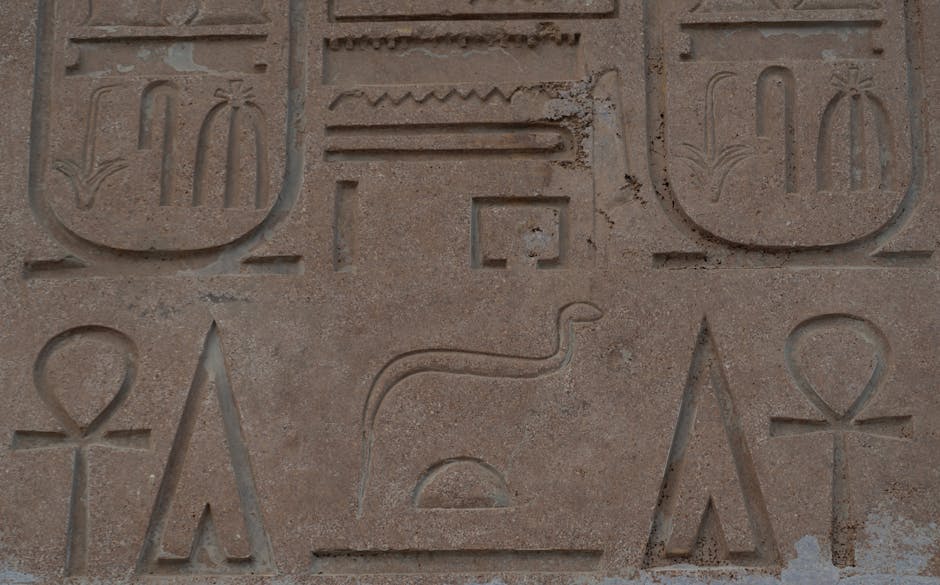
Here's what makes Indus decipherment harder than, say, Egyptian hieroglyphics: we have no bilingual text. Ancient Egyptian hieroglyphics were decoded by comparing them to Greek text on the Rosetta Stone—a translation key. No such key exists for the Indus script.
Moreover, inscriptions are very short, with an average length of around five signs. That brevity makes it nearly impossible to infer grammar or morphology (the patterns of how words change and combine)—the very structures that would tell us whether one sign's use differs systematically from another's.
Yet the real difficulty isn't ignorance. It's uncertainty about what we're looking at. Are we deciphering one language frozen in time? A family of dialects distributed across geography? A writing system flexible enough to serve multiple tongues? Scholars debate whether the variation we see in the seals reflects genuine linguistic difference or merely the habits of individual scribes. Until we know what question the inscriptions were meant to answer, our tools—statistical, computational, or traditional—may be precise without being accurate.
The new computational work doesn't promise a breakthrough. But it may, for the first time, let us test whether the variation we do see in the seals reflects linguistic difference or just scribal habit. That is a smaller claim than decipherment. But it's the kind of careful, limited claim that precedes real knowledge.