Mehrgarh's Dating Dispute: Tooth Enamel Radiocarbon Study Challenges Long-Standing Chronology
A recent study using tooth enamel radiocarbon dating challenges decades-old claims about when farming arrived at Mehrgarh, Pakistan—a key site for understanding Neolithic South Asia.
Rohan Bhattacharya for SwavedaMay 22, 2026
A Buried Date Gets Questioned
In the arid scrublands of Balochistan, Pakistan, one of archaeology's foundational assumptions faces a serious challenge. The age of Mehrgarh—widely considered South Asia's gateway to farming—may be significantly younger than decades of scholarship have claimed.
For roughly fifty years, excavators and radiocarbon laboratories dated Mehrgarh's earliest Neolithic deposits to around 8000 BCE, or even earlier. That figure became textbook standard. It anchored the entire pre-Harappan chronology (the period before the Indus Valley Civilisation, roughly 2600–1900 BCE). But the accurate dating of Mehrgarh's deposits has remained contested among specialists. Implications ripple outward: When did agriculture actually reach northwest South Asia? Was it an independent development, or did farming communities migrate in from outside regions like the Fertile Crescent?
Now a radiocarbon study using a new approach—dating the inorganic mineral fraction of human tooth enamel from Neolithic burials—proposes pushing Mehrgarh's occupation substantially later: to around 5200 BCE or later, not 8000 BCE.
The result is bold. The method is sound. But the finding demands verification, and the story it enables requires careful handling.
Why Tooth Enamel Changed the Answer
For a field archaeologist, the logic is straightforward—almost mundane, which is precisely why it matters.
Most previous radiocarbon dating at Mehrgarh relied on charcoal samples. Charcoal is mobile. A root from an overlying layer can contaminate a sample. Burning from a later occupation can intrude into an older deposit. In the trench, these contaminations are invisible. The radiocarbon lab receives a sample; the lab does not know whether it truly dates the layer in question.
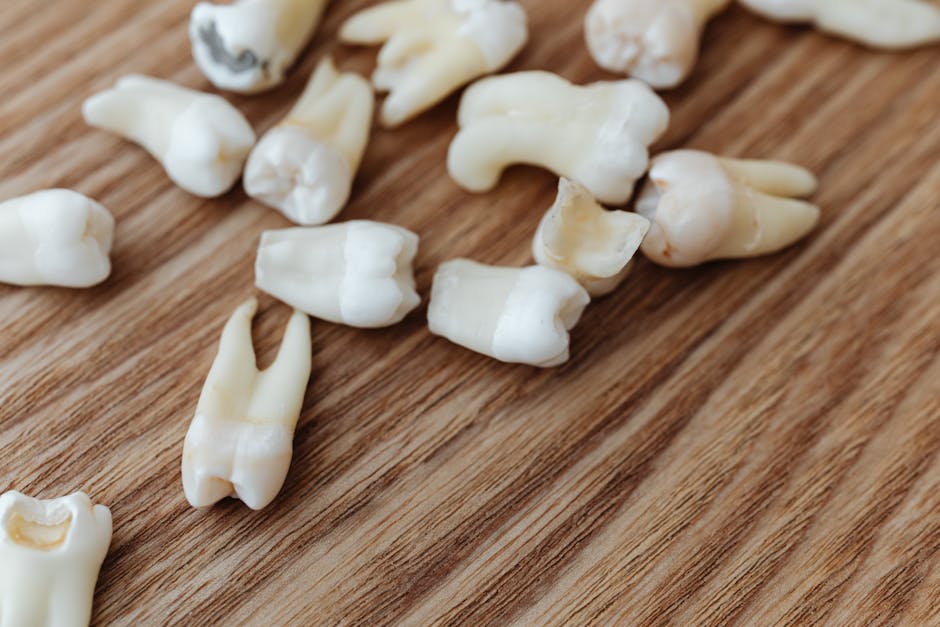
The newer approach targets tooth enamel—specifically the inorganic apatite mineral fraction. Tooth enamel preserves better over millennia than bone apatite. It is less vulnerable to "rejuvenation" by later carbon from groundwater or soil. In short: it holds a date more faithfully.
The study (exact journal and author details require independent verification against the published paper) worked from 23 graves spanning nine stratified burial levels—human remains positioned vertically in the ground, layer upon layer. Stratigraphic context was preserved. The team applied Bayesian statistical modeling, a mathematical method that weighs multiple radiocarbon dates together to narrow the probable age range.
The result they report: the aceramic (pottery-free) Neolithic cemetery at Mehrgarh began between roughly 5200 and 4900 BCE and lasted a few centuries.
The Uncomfortable Detail
Here is where the story stops being tidy.
If the earliest Neolithic at Mehrgarh truly dates to 5200 BCE or later—not 8000 BCE—then the thick layers of Neolithic deposits, previously thought to accumulate over roughly three millennia, would instead have formed in just a few centuries. Material culture—burials, structures, tools, pottery in later phases—would be compressed into a much shorter window.
This compressed chronology is uncomfortable. Not because it is necessarily wrong, but because it demands explanation. Why would occupation density be so high? Or did the settlement experience repeated cycles of use, abandonment, and resettlement, each leaving a thick cultural layer quickly? Did mudbrick structures decay and get rebuilt in rapid succession?
These are stratigraphic questions. They belong in the excavation notebooks from the 1970s and 1990s digs. They belong in conversations among excavators who can read trowel marks and soil color. A compressed date sequence is only meaningful if the physical evidence in the ground can account for it.
This is the boring detail that matters to archaeologists. A missing layer. A burned level. The thickness of a deposit relative to its timespan. These observations are the archaeologist's footprint. New dates demand revisiting old field notes.
What We Know and What Remains Contested
The implications, if confirmed, are significant.
A younger Mehrgarh would suggest that agriculture spread to the Indus region as a wave of settlement from outside—a diffusion, rather than an independent innovation. But this narrative rests on comparison to the Fertile Crescent, where grain farming did emerge earlier. The dates tell us when. They do not yet tell us how or why. That distinction matters.
The revised chronology will also force reconsideration of later periods at Mehrgarh—the phases with pottery, the eventual slide into early Harappan culture. If the aceramic Neolithic compressed, did subsequent periods shift earlier too? The study hints at cascading reordering. But the full cascade remains unfinished business.
Before this finding is integrated into standard accounts, several things must happen. The publication venue, lead author, and exact date of the study require independent confirmation. Earlier sources claiming a 3,000-year span for Mehrgarh's Neolithic occupation should be cited by name—who first proposed this figure? Specialists in Baloch prehistory, particularly those familiar with the original excavations, will likely publish responses in journals like Antiquity, Puratattva (the journal of Indian archaeology), or through the Archaeological Survey of India.
Some scholars may argue that the tooth enamel study excluded statistical outliers without sufficient justification. Others may embrace the new dates. That friction is part of the process.
The Mehrgarh chronology is not settled. It is tested. And the test—microscopic, careful, unglamorous—reminds us that buried sequences still yield their secrets to patience and to skepticism in equal measure.