Iron Weapons, Wide Margins: What Thermoluminescence Really Tells Us About Kurukshetra
Thermoluminescence dates from Kurukshetra iron weapons span 2,300 years. Scholars remain deadlocked, revealing why archaeology cannot resolve what tradition claims with precision.
Vikram Joshi for SwavedaMay 7, 2026
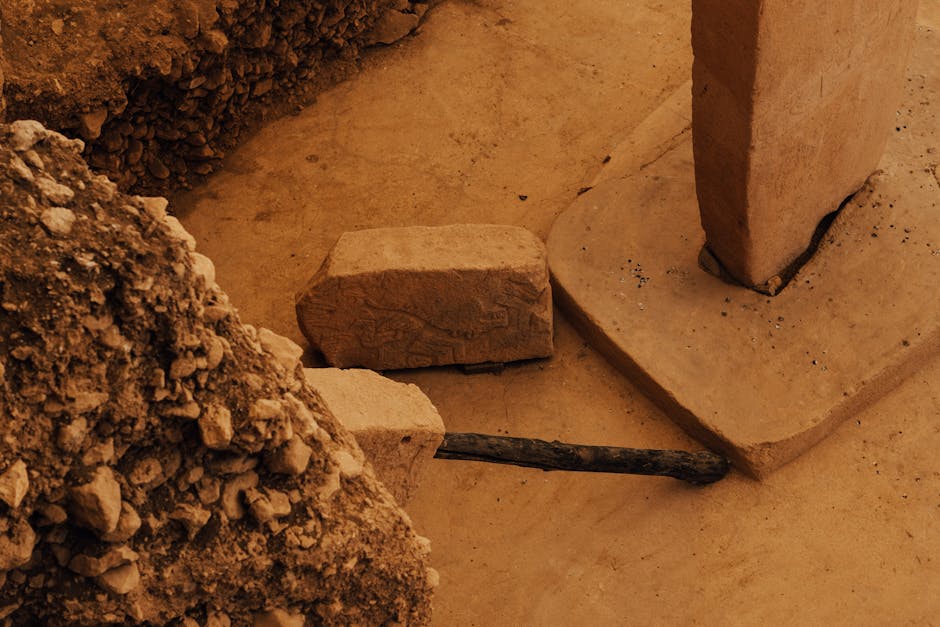
The iron arrowheads and spearheads unearthed from Kurukshetra tell a frustrating story. After more than four decades of thermoluminescence testing, scholars have radioactive decay data in hand. And yet the weapons refuse to give a date.
Thermoluminescence works by measuring trapped electrons in minerals. Radioactive elements in soil bombard quartz and feldspar grains with radiation over centuries. When archaeologists heat an artifact in the lab, those electrons release light—the more light, the longer ago the object was last heated. In theory, it's precise. In practice, when applied to Kurukshetra's iron cache, thermoluminescence produces a range spanning 2,300 years: from roughly 3100 BCE to 800 BCE.
That's not a margin of error. That's an abyss.
The data itself is real, but its scope matters. Multiple excavations at Kurukshetra and adjacent sites have recovered iron weapons alongside pottery and ash layers. The Archaeological Survey of India and regional research institutes have conducted thermoluminescence testing on these objects. Different excavations have produced dates scattered across the 3100–800 BCE window. Some scholars cite findings anchored near 3100 BCE; others point to roughly 1200–800 BCE, where Painted Grey Ware pottery—a ceramic style widely recognized as a Late Vedic chronological marker—appears at dozens of sites across North India, including several locations named in the Mahabharata text.
The tradition itself holds firm on a date. The Mahabharata does not equivocate: internal passages and later commentaries place the Kurukshetra War at 3102 BCE. This figure comes from a calculation made by later scholars using the 6th-century astronomer Aryabhata's system for computing the Kali Yuga epoch—not from Aryabhata's own historical dating of the war. Other textual traditions propose dates around 1500–1000 BCE. The logic is straightforward: an ancient memory should have precision. The Vedas don't hedge. Neither, the argument goes, should the war.
But archaeology does hedge. It hesitates. And for good reason.
The problem is not incompetence. Thermoluminescence is a legitimate tool. It has dated Egyptian pottery, Neolithic hearths, and Roman kilns with reasonable success. But the method carries inherent limits—especially when applied to iron weapons rather than ceramics. Iron objects don't reset their "clock" the way fired clay does. An arrowhead might retain trapped electrons from multiple heating events across centuries: the forge that shaped it, a fire in an ancient building, exposure to sunlight during burial. Thermoluminescence cannot always distinguish which heating event it's measuring. The radiation dose accumulated by an object also depends on the local soil composition, moisture levels, and depth of burial—variables that are difficult to reconstruct with precision after millennia. A small error in estimating ancient radiation levels produces a large error in the final date.
When the thermoluminescence spread is so wide that it spans three millennia, the method is telling you something important: it cannot narrow the date further given the available evidence.
Archaeologist B.B. Lal, who excavated Hastinapur in the 1950s and became central to Mahabharata chronology debates, initially argued that Painted Grey Ware pottery correlated strongly with the Mahabharata's geography—suggesting a Late Vedic date around 1200–800 BCE. Scholars debate whether his later work shifted emphasis toward earlier dates, though consensus on the precise trajectory of his position remains fluid among specialists.
Other scholars have used astronomical references in the text—descriptions of planetary positions, eclipses, star alignments—to propose dates. The range of these calculations spans from around 3000 BCE to 1200 BCE, depending on which simulation method scholars employ and which manuscript verses they prioritize. Scholars debate which astronomical references are ancient observations and which are theological embellishment.
The core issue is this: the Mahabharata is not a simple historical chronicle. It is a text with layers. The earliest portions resemble Vedic Sanskrit (suggesting composition before 1000 BCE). But the epic was also continuously revised, expanded, and reinterpreted over many centuries—probably until the 4th century CE. Some verses appear to reference real astronomical events; others are theological or literary additions. Scholars cannot always agree on which is which.
Thermoluminescence cannot solve a textual problem. It cannot tell you which verses are old and which are late. It cannot separate the memory of an actual conflict from the accumulated religious and poetic embellishment surrounding it.
What the data can tell us is this: Iron weapons were being used at Kurukshetra and nearby sites during the Late Vedic period, probably between 1200 and 800 BCE, when Painted Grey Ware pottery flourished across the region the Mahabharata names. Whether those weapons belonged to a single catastrophic conflict or to repeated, smaller struggles across generations—whether they mark the "real" war or just a typical era of regional warfare—thermoluminescence cannot say. The tradition claims one great war. The earth offers traces of a culture, a time, a place. It does not confirm a narrative.
The wideness of the thermoluminescence range is itself instructive. It reminds us that hard science has real constraints. It humbles the impulse—common on both sides of the Mahabharata debate—to declare the question "solved." Tradition preserves something. Archaeology confirms that kingdoms, cities, weapons, and conflicts existed where the epic locates them. But archaeology does not confirm names, dates to the year, or the eighteen-day span of the battle. To confuse verification of elements with verification of the narrative is to ask the earth to give answers it cannot.
The thermoluminescence dates remain contested. The scholarly consensus, such as it is, clusters around a historical core conflict occurring sometime in the Late Vedic period (roughly 1500–1000 BCE), heavily elaborated with philosophical, religious, and poetic material. Some scholars hold out for earlier dates. Others argue for later ones. The tradition speaks with more certainty than the evidence permits. And that gap—between what the text claims and what the atoms reveal—is the real story the iron weapons have to tell.